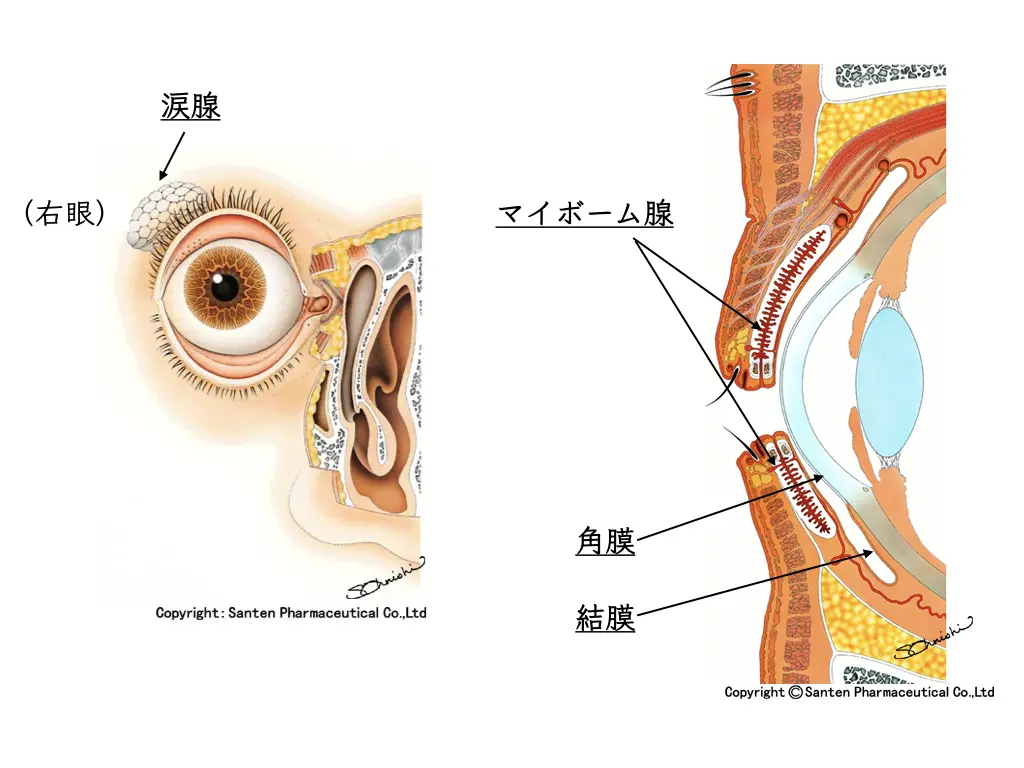
The meibomian glands lie deeper than the base of the eyelashes.
If you look closely in a mirror, you may see a row of dots (the openings of the meibomian glands).
Inside line (inside makeup / waterline eyeliner):
Drawing eyeliner on the (openings of the) meibomian glands can
have a harmful effect on the eyes.
Inside-Line Eyeliner Tattoos: Why They Damage the Ocular Surface
The meibomian glands are
the places that constantly release the “oil” that becomes part of the tear film and keeps the tears covering the eye surface from evaporating,
and they do an important job.
Inside-Line Eyeliner Tattoos: Why They Are Dangerous for the Eyes
Here I describe the eye diseases they can cause and how to deal with them.
Dry eye
When you blink, the surface of the cornea is covered with a thin film of tears.
Under magnification it has three layers (oil layer / water layer / mucin layer).
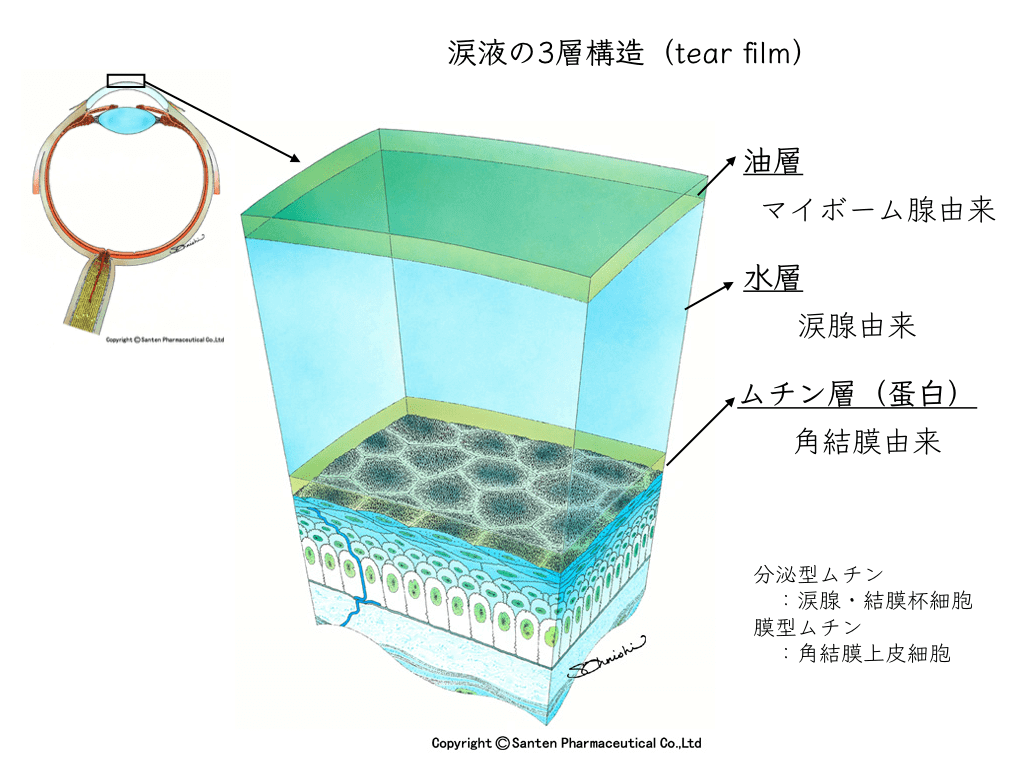
When meibomian gland dysfunction develops, the oil layer is affected
→ Tear evaporation can no longer be prevented, leading to discomfort on the eye surface from dry eye.
Meibomian gland dysfunction (MGD)
can be a main cause of eye discomfort.
You can also see that each of the dots you saw in the mirror above is swollen.
(* It was introduced on NHK television as the “tapioca sign.”)
Program: Gatten!
“Check your eyelids and know at once! New soothing tricks for tired, dry eyes”
Wednesday, July 22, 2020, 7:30 p.m.
http://www9.nhk.or.jp/gatten/articles/20200715/index.html
Remove the eyeliner you drew on the inside line
Use a cotton swab to keep the area around the meibomian gland openings clean, and warm it from time to time (with a towel in the bath)
→ The oil layer can melt out, and dry eye symptoms sometimes improve.
Allergic conjunctivitis
The conjunctiva is:
the transparent membrane covering the inside of the eyelids and the white of the eye,
a tissue rich in blood vessels and lymphatic vessels that is prone to inflammation.
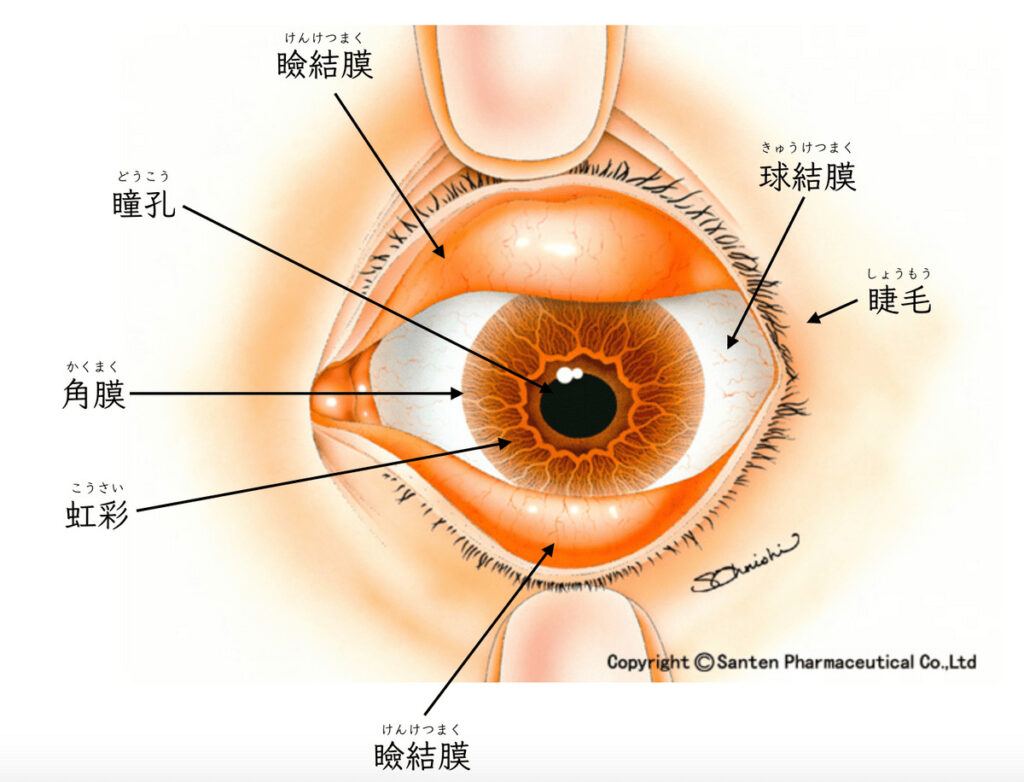
Antigens (allergens) contained in makeup
→ cause an allergic inflammatory reaction in the conjunctiva.
Eyelash extensions can also be a cause.
I take photographs of the inside of the eyelid to show patients.
We use anti-inflammatory eye drops and antiallergy eye drops.
Chalazion (stye)
Blocked meibomian glands (meibomian gland obstruction)
→ Oil that can no longer come out collects inside the eyelid and causes sterile inflammation.
This is what is commonly called a “stye.”
If eye drops do not help,
an incision may be made in the eye clinic.
Corneal infection
The area around the meibomian gland openings touches the cornea, which raises the risk of corneal infection.
The description of corneal infections related to contact lens wear is a useful reference.
Treatment is based on antibiotic eye drops and ointment,
with oral or intravenous antibiotics depending on the situation.
In severe cases, a corneal transplant may be needed.