![Takeru Eye Clinic | Takatori Shopping Street, Sawara-ku, Fukuoka City [Nishijin Station / Fujisaki Station]](https://takeru-eye.com/wp-content/uploads/2022/10/takeru_logo_for-WP-header.png)
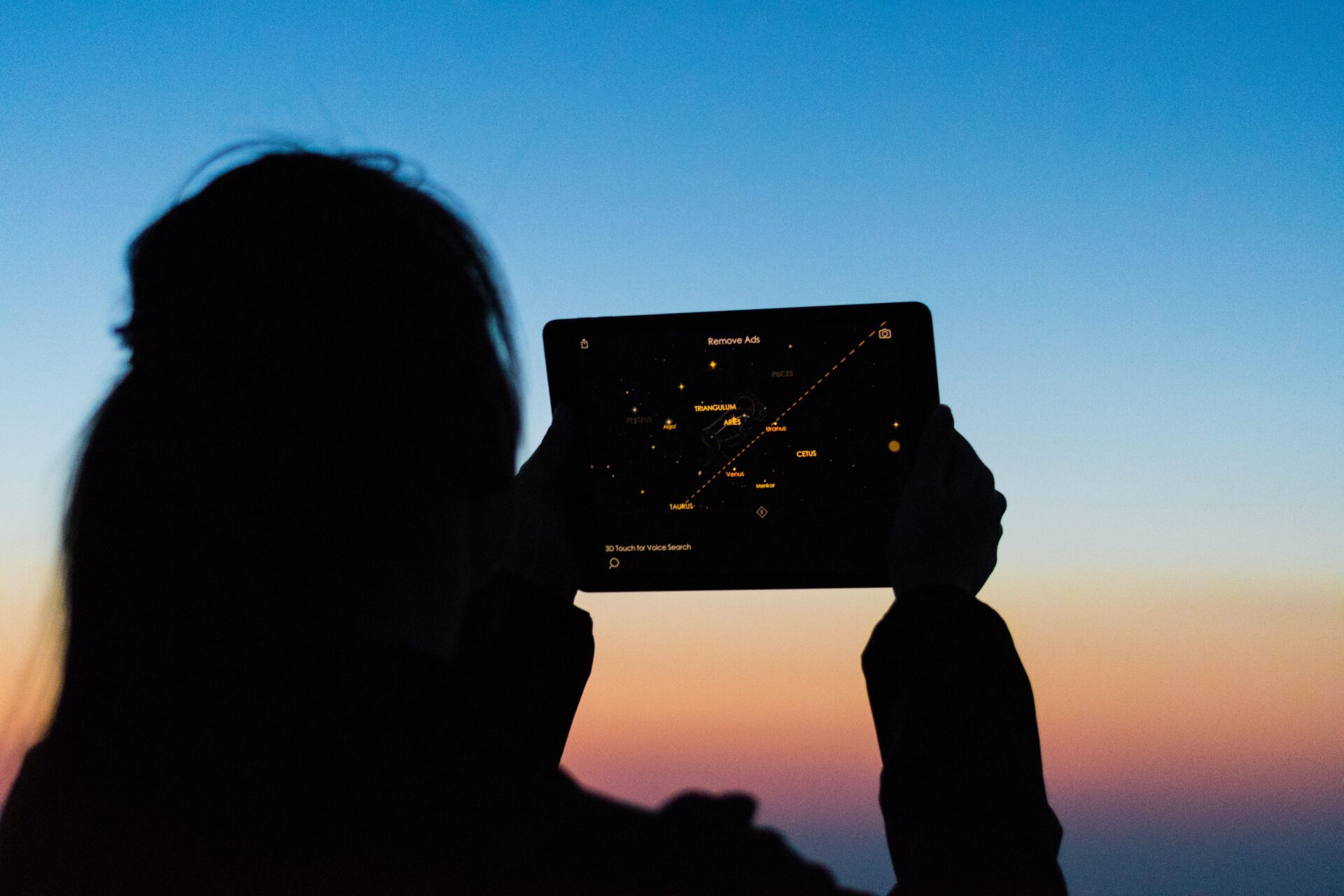
Digital devices developed in the United States, such as the iPhone, Mac, Windows PCs, and Android phones, have brought revolutionary progress, but over the past 20 years they have also become a source of eye strain for many people.
“Digital eye strain”
It goes by many names: IT eye disease, VDT syndrome, techno-stress eye disease, smartphone presbyopia,
computer vision syndrome (CVS),
visual fatigue (VF),
and so on.
This article introduces a review in BMJ Open Ophthalmology (British Journal of Ophthalmology),
and describes how we examine and what you can do about it.
Statistics comparing 2011 and 2017 (United Kingdom and United States):
○ By age 3, 68% of children use a computer,
and 54% of those use the internet
○ Adults use digital devices for 4 hours 45 minutes, and those aged 30–49 for more than 5 hours
Symptoms reported by 520 people who work at computers (New York)
○ Blurred vision when looking at the computer
○ Blurred vision when looking far
○ Difficulty focusing when shifting gaze from near to far or far to near
○ Eye pain
○ Dry eye
○ Eye strain
○ Headache
○ Glare sensitivity
○ Eye discomfort
Compared with the West, in present-day Japan
people use digital devices such as smartphones and PCs for far longer than in the West, and my impression is that very many people have the symptoms above.
Care for “Digital eye strain”
“Digital eye strain” symptoms fall into two categories
(1) Dry eye (external symptoms)
(2) Refractive error / presbyopia / accommodation / convergence (internal symptoms)
(1) Care that treats inflammation of the eye as the main problem.
About dry eye
(2) After checking the state of the focusing muscle (ciliary muscle) with the accommodation analyzer,
• Glasses or contact lenses do not fit
→ Refractive error: myopia, hyperopia, astigmatism, presbyopia
We prescribe appropriate glasses or contact lenses, taking each person’s work environment (the usual distance at which they look at things) into account
• Abnormal eye alignment / convergence insufficiency
→ Prescribe prism glasses
• Strong tension when looking at near objects
→ Prescribe low-addition contact lenses to try to help focus adjustment
A lifestyle with “long periods of near viewing”
With contact lenses, sheet music is easy to see
In addition to this,
(3) We talk about each person’s daily habits and work.
The 20-20-20 rule
• After looking at something near for 20 minutes, take a 20-second break
• Look at something about 20 feet (about 6 meters) away
20-20-20 rule
(a 20s break every 20min to view a distant object at 20 feet)
“Looking at green is good for the eyes”
“Gazing at mountains improves eyesight”
“Looking at the stars at night is good for the eyes,” and so on
I think they can be considered the same thing.
It originally
started when tech blogger Amit Agarwal introduced a method recommended by his doctor on his own blog (Digital Inspiration).
An article from 2010:
» Reduce Computer-Caused Eye Strain with the 20-20-20 Rule
A variation of this “20-20-20 eye rule” was proposed by Dr. Jack T. Dennerlein of Boston:
He is a professor at Northeastern University and Harvard University,
and runs a laboratory on ergonomics and occupational safety.

https://www.northeastern.edu/ergonomics/
Sitting and working at a computer for a long time makes you unwell.
He improved the “20-20-20 eye rule” and said:
every 20 minutes, move for 20 seconds, 20 feet (6 meters)
.
Stop by a co-worker’s desk. Get a cup of coffee. Pace. Just don’t sit.
Stop by a coworker’s desk. Have a coffee. Just don’t stay seated.
For the eyes alone, it seems good to try the “20-20-20 rule” as well.
» Use the 20-20-20 Rule to Fight the Effects of Sitting All Day Long
The Japan Ophthalmologists Association says, if you use IT devices:
Use them at a state where you can see comfortably at 50 cm.
Use continuously for no more than 50 minutes.
Make it a habit to look at them from at least 50 cm away.
Remember: 50 cm, 50 minutes, 50 cm.
(To prevent IT eye disease: Japan Ophthalmologists Association)
How the accommodation analyzer works
State of the ciliary muscle (the muscle that focuses the eye)
Looking into the machine and trying hard to focus on a picture of fireworks coming toward you, we focus on
accommodative microfluctuations
high frequency component (HFC): related to the pulsation of the ciliary artery
When the HFC is strong, the graph is shown in yellow to red.
It can also tell us how much digital eye strain a person has.