![Takeru Eye Clinic | Takatori Shopping Street, Sawara-ku, Fukuoka City [Nishijin Station / Fujisaki Station]](https://takeru-eye.com/wp-content/uploads/2022/10/takeru_logo_for-WP-header.png)

“Computer glasses (blue-light-blocking) are not recommended”
This introduces a November 2019 article and view from the American Academy of Ophthalmology.
Blue Light and Digital Eye Strain
Blue light glasses
Are eyeglasses with special blue light-blocking filters worth the expense?
(Are blue-light-blocking computer glasses worth using?)
Computer glasses (blue-light-blocking) are said to:
• improve sleep
• reduce digital eye strain
• prevent eye disease
Everyone wishes for these, but you do not need to spend money on special glasses for computers.
The reasons:
○ Blue light from computers is not related to the development of eye disease.
It has been shown many times that blue light and ultraviolet rays from the sun raise the risk of eye disease,
but it has never been shown that blue light from computers harms the eyes.
○ Sleep improves without special glasses.
You do not need to buy expensive glasses to improve your sleep.
Simply reduce the time you spend looking at computers and digital devices at night, and set them to night mode.
○ Digital eye strain is not caused by blue light.
Signs of eye strain come from how the device is used, not from the blue light from the device.
» “Digital eye strain”
Computer / digital eye strain
Using a device itself is not thought to cause permanent damage to the eyes.
But staring at a digital device for a long time can cause temporary eye strain.
It shows up as a variety of symptoms:
• Dry eye
• Blurred vision
• Tearing
• Headache
When we stare at a digital device, we blink less
→ This is the cause of digital eye strain.
People normally blink about 15 times a minute. This “blink rate” falls by about half during close work such as staring at a computer screen or reading.
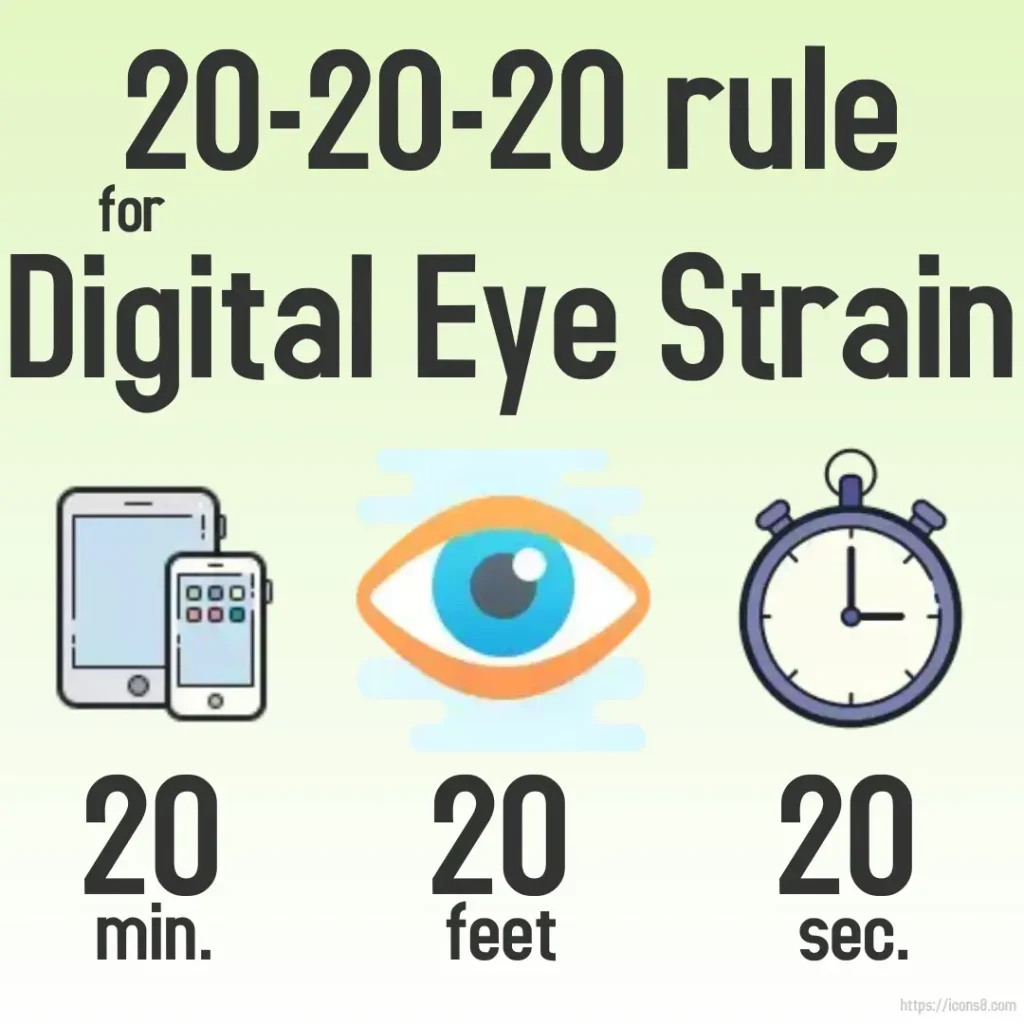
○ Use the “20-20-20 rule” to give your eyes regular rest.
Every 20 minutes, look away from the monitor and look at something 20 feet (about 6 meters) away for about 20 seconds.
This resets the eyes’ accommodative tension.
○ When your eyes feel dry, try using artificial tears to lubricate the surface of the eye.
○ Set the monitor about 25 inches (63.5 cm) away, and at a height where you look slightly downward.
(* For Japanese body sizes, about 50 cm seems appropriate.)
○ Glass monitors can cause glare (discomfort from light, dazzle).
Consider using a semi-matte monitor filter on digital devices. Adjusting brightness and contrast, and reducing the lighting near the monitor, may reduce eye strain.
○ I recommend glasses over contact lenses.
Contact lenses can lead to dryness and discomfort. For jobs involving long computer use, glasses are recommended.
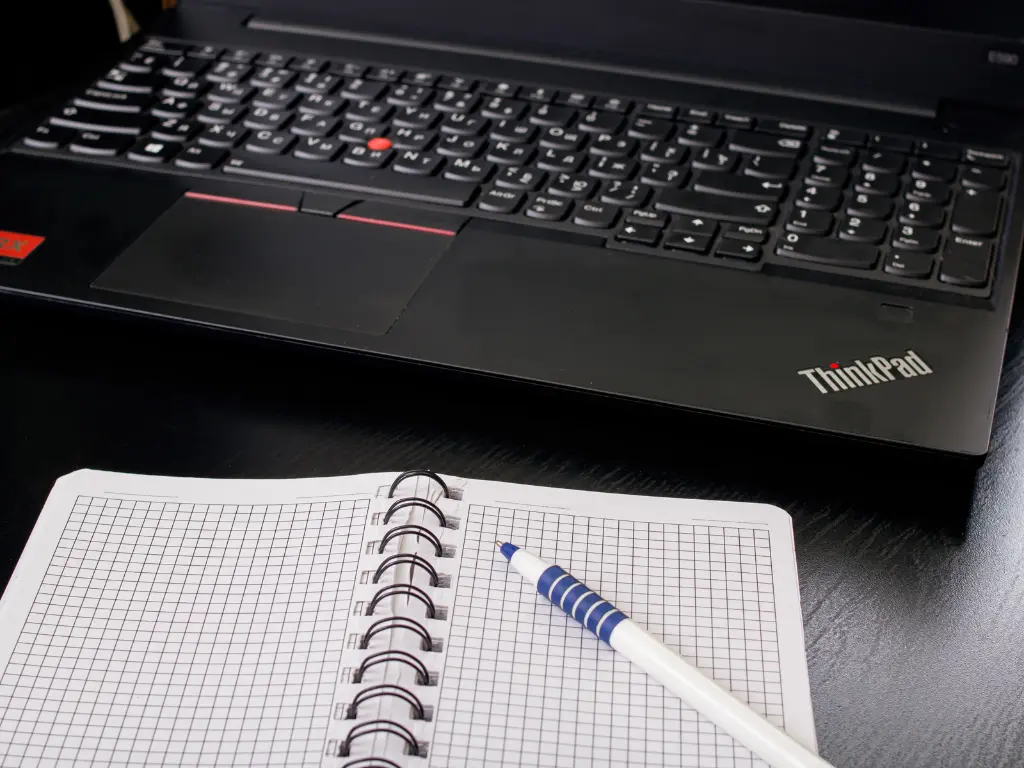
Some ThinkPad models have software called Lenovo Vantage installed. It has an “Eye Care” feature for carrying out the 20-20-20 rule.
When you set it up, a notification prompting a break appears every 20 minutes.
Here is how to enable the eye care feature using Lenovo Vantage:
- Open Lenovo Vantage: Open “Lenovo Vantage” from the desktop or the Start menu.
- Select eye care: From the Vantage menu, choose the “Device” tab and go to the “Display & Camera” section.
- Enable eye care: Find the “Eye Care” option here and turn on the “20-20-20 rule.”
Lenovo: smart features
https://support.lenovo.com/jp/ja/solutions/ht511536-smart-features
About children’s use of digital devices
When you have a baby or small child, as a parent you think about how much time you will allow for computers, smartphones, and other digital devices.
There are many good reasons to limit usage time, but there is no scientific evidence that it is harmful to children’s eyes or the development of their vision.
But there is research showing that long use of digital devices is related to health:
○ Attention-related disorders
A Canadian study reported that children who use digital devices for more than 2 hours a day were 8 times more likely to develop ADHD (Attention Deficit Hyperactivity Disorder) than children with shorter use.
○ Obesity
Long use of digital devices shortens outdoor activity, which is important for staying healthy. As a result, the risk of childhood obesity rises.
○ Myopia (“poor eyesight”)
The myopic population in the United States and Asia has risen sharply since the 1970s.
There is research on the length of digital device use and the length of indoor activity:
It has been reported that there is scientific evidence that spending more time playing outdoors from a young age slows myopia progression.
There are no guidelines on digital device use.
The American Academy of Pediatrics recommends the following:
○ Until age 2, avoid digital devices entirely.
(Except for video chat such as FaceTime and Skype)
○ From age 2 to 5, do not use digital devices for more than 1 hour.
Time spent moving the body and playing at home is the foundation of a child’s physical and intellectual growth.
Blue Light and Digital Eye Strain – American Academy of Ophthalmology
https://www.aao.org/eye-health/tips-prevention/blue-light-digital-eye-strain
Are Computer Glasses Worth It? – American Academy of Ophthalmology
https://www.aao.org/eye-health/tips-prevention/are-computer-glasses-worth-it
Caution about Blue-Light-Blocking Glasses for Children
In April 2021, a joint statement from
the Japanese Ophthalmological Society, Japan Ophthalmologists Association, Japanese Myopia Society, Japanese Association of Strabismus and Amblyopia, Japanese Society of Pediatric Ophthalmology, and Japanese Orthoptic Association
said the following.
There is no basis for recommending that children wear blue-light-blocking glasses; in fact, wearing them could adversely affect development.
(Quotation)
Blue-light-blocking glasses currently sold to the public claim to reduce sleep disturbance and eye strain when using digital devices and to prevent damage to the eyes. Regarding the relationship between the so-called body clock and blue light, there are several papers, and it has been pointed out that exposure to the strong light of digital devices late into the night may cause sleep disturbance. Therefore, blocking blue light in the evening and later may have a certain effect. However, the evidence for other claims is poor, and there are several problems.
- It has been reported that the blue light emitted from the liquid crystal screens of digital devices is less than natural light on a cloudy day or through a window, is at a level that does not damage the retina, and that there is no need to fear blue light needlessly.
- For children, sunlight has a positive effect on physical and mental development. In particular, not getting enough sunlight raises the risk of myopia progression in children. We cannot rule out that wearing blue-light-blocking glasses may be more harmful than exposure to blue light itself.
- A randomized controlled trial published in a leading recent American scientific journal reported that blue-light-blocking glasses have no effect at all on reducing eye strain.
- Considering the body clock, the usefulness of deliberately wearing blue-light-blocking glasses during the day, as opposed to before bedtime, lacks evidence. In the field of occupational health, it is recommended to do daytime work in a bright environment by a window.