![Takeru Eye Clinic | Takatori Shopping Street, Sawara-ku, Fukuoka City [Nishijin Station / Fujisaki Station]](https://takeru-eye.com/wp-content/uploads/2022/10/takeru_logo_for-WP-header.png)

Twitching of the eyelid (under the eye)
Spasm of the eyelid (under the eye)
Most of these cases are a condition called “eyelid myokymia.”
It occurs in only one eyelid and is often relatively mild.
The symptom of “eyelid spasm”in most casesdoes not lead to a diagnosis of “blepharospasm.”
The state of blepharospasm (essential blepharospasm):
・It is hard to keep the eyes open
・The eyes close on their own
・It is more comfortable to keep the eyes closed, and so on.
We check whether there is “difficulty opening the eyelids.”
Botox treatment (covered by insurance) is for blepharospasm (essential blepharospasm).
It is distinguished from “eyelid myokymia.”
We check whether the eyelids can be opened and closed normally.
(It is eyelid myokymia, not “myokinia.”)
Twitching Eyelids: How to Tell How Serious It Is

The Difference Between “Blepharospasm (Essential Blepharospasm)” and “Eyelid Myokymia,” and How to Tell Them Apart
“Blepharospasm (essential blepharospasm)” and “eyelid myokymia” are distinct conditions.
“Blepharospasm (essential blepharospasm)”: a relatively severe condition that is eligible for Botox treatment.
Most cases begin after age 40, and it occurs overwhelmingly more in women.
The easiest way to tell is whether blinking can be done rhythmically.
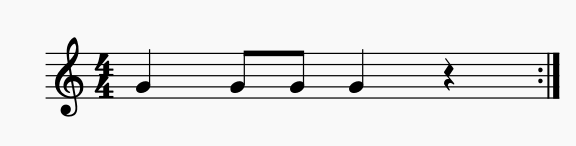
Rapid Blink Test
A test in which you blink lightly, as fast as possible, continuously.
For 10 seconds, or 30 seconds if possible.
・Strong blinking: cannot make quick movements
・A different blink gets mixed in during blinking
・The face scrunches up strongly
If any of these apply, the test is “positive.”
Light Blink Test
A test in which you blink lightly and rhythmically.
・The blinks become strong, with the eyebrows moving as well
・Spasm-like blinks increase
・Blinking itself cannot be done
If any of these apply, the test is “positive.”
Strong Blink Test
A test in which you close the eyes tightly, then open them, and repeat this.
・Cannot open the eyes again after closing them
・The face scrunches up strongly
If any of these apply, the test is “positive.”
If positive, blepharospasm (essential blepharospasm) is suspected.
Here is a video that explains it very clearly.
https://gskpro.com/ja-jp/disease-info/bs/test/
“Eyelid Myokymia,” Which Often Resolves on Its Own
・A condition in which only part of the upper or lower eyelid twitches as if an insect were crawling, usually on one side.
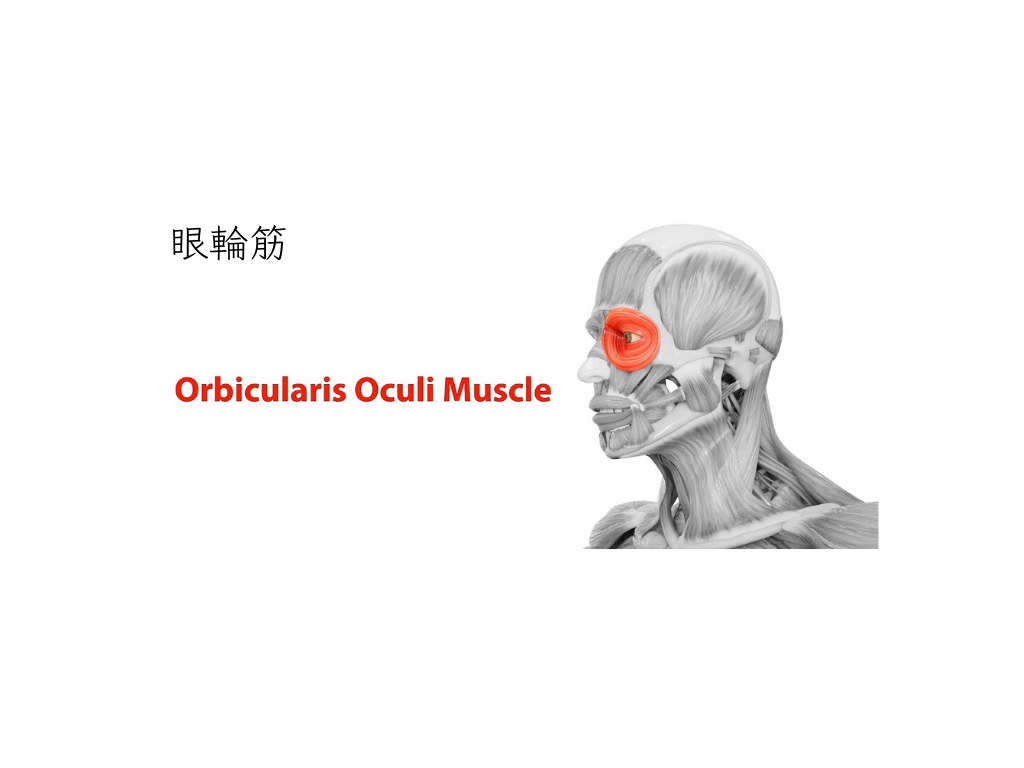
・Involuntary movement of the orbicularis oculi muscle: finer than a tic, irregular, and long-lasting.
* It is a state in which the “muscles around the eye” move on their own.
Orbicularis oculi muscle (Orbicularis Oculi Muscle)
Causes of “Eyelid Myokymia”:
It can be triggered even in healthy people byeye strain, stress, lack of sleep, and so on.
In ophthalmology, we sometimes look at the state of eye strain in detail.
We use an accommodation analyzer.

With plenty of rest, the twitching of the eyelid (under the eye) often goes away on its own before you notice.
What differs from “blepharospasm (essential blepharospasm)” is:
・Subjective symptoms are mild
・Opening and closing of the eyelids is not impaired
(there is little effect on opening and closing the eyelids)
Hemifacial Spasm: From Contact with a Basilar Vessel
When the eyelid twitches or has a spasm,
what we need to watch out for is the possibility of a condition called
「hemifacial spasm」
.
When the root of the facial nerve at the brainstem is in contact with a vessel at the base of the brain,
similar symptoms can occur.
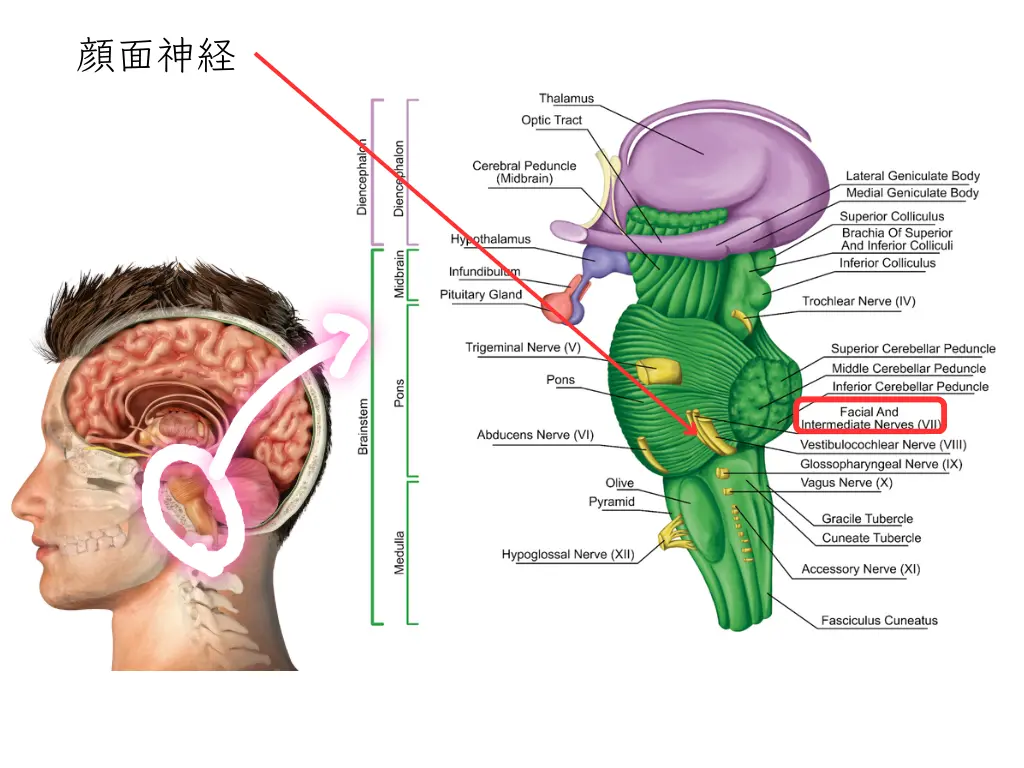
If judged necessary, we may take an MRI.
A tumor in contact with the facial nerve is sometimes found.
Blepharospasm Clinical Practice Guidelines (Japanese Ophthalmological Society)
https://www.nichigan.or.jp/Portals/0/resources/member/guideline/keiren.pdf
“Eyelid Myokymia” and Digital Device Use: From the Latest 2024 Research
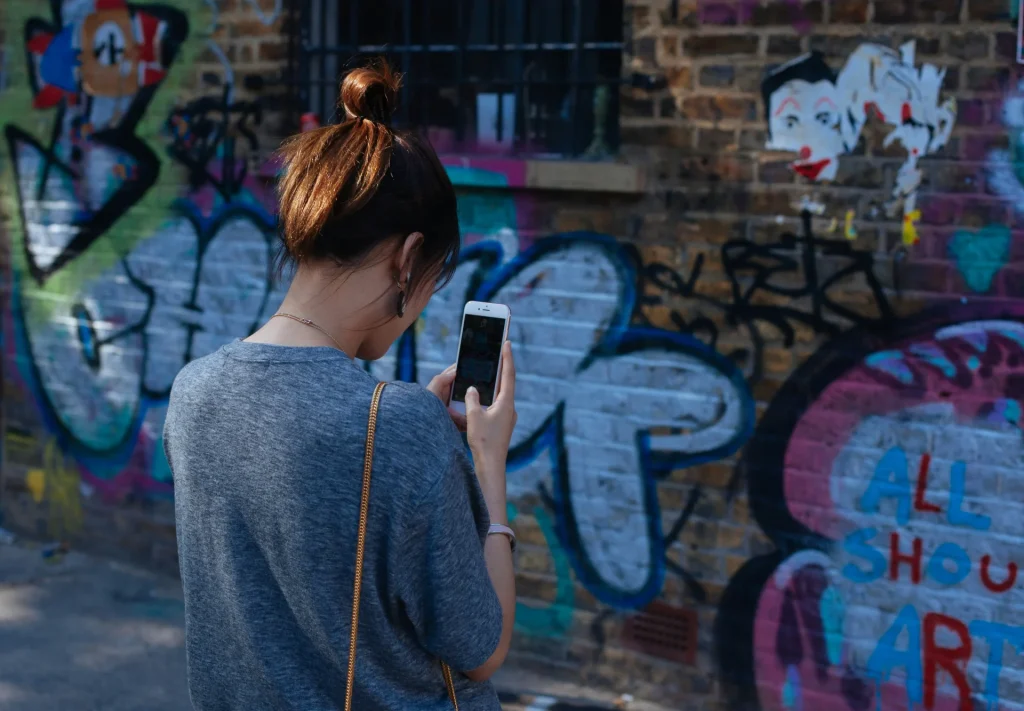
Recent research has revealed an association between time spent on digital devices and eyelid twitching (eyelid myokymia). In a survey conducted from February 2023 to June 2024, the group of patients complaining of eyelid myokymia was found to spend significantly more time per day on digital screens than the healthy control group.
Eyelid myokymia group: an average of6.88hours of digital screen use per day
Control group: an average of4.84hours of digital screen use per day
Furthermore, a strong positive correlation was seen between digital screen time and the duration of eyelid myokymia.
In other words, the longer digital devices are used, the longer the eyelid twitching tends to last.
Gunes et al. cite the following factors as causes of this phenomenon:
Eye strain from the strong light of digital screens
Reduced blinking when looking at screens
Prolonged tension of the orbicularis oculi muscle (the muscle that moves the eyelid)
On the other hand, this study also showed the following:
・No significant association was found between uncorrected refractive error (vision problems) and eyelid myokymia.
・No association with eye pressure or glaucoma was found either.
・No significant association was found between blood electrolyte levels (calcium, sodium, potassium, magnesium) and eyelid myokymia.
From these results,
prolonged use of digital devicesis likely to be one of the main causes of eyelid myokymia.
As a measure, limiting the time spent on digital devices is recommended.
Taking regular breaks while using digital devices and blinking consciously are also thought to be effective ways to reduce eye strain.
Gunes, I.B., 2024. Association Between Eyelid Twitching and Digital Screen Time, Uncorrected Refractive Error, Intraocular Pressure, and Blood Electrolyte Imbalances. Cureus. https://doi.org/10.7759/cureus.69249