![Takeru Eye Clinic | Takatori Shopping Street, Sawara-ku, Fukuoka City [Nishijin Station / Fujisaki Station]](https://takeru-eye.com/wp-content/uploads/2022/10/takeru_logo_for-WP-header.png)

This is about “crocetin,” a component of saffron, a widely used spice, and its effect on myopia control (prevention).
– About 80% of elementary school children and about 95% of junior high school students in Tokyo are myopic –
The myopic population is growing rapidly, and it is estimated that by 2050, 4.76 billion people (49.8% of the world’s population) will be myopic.
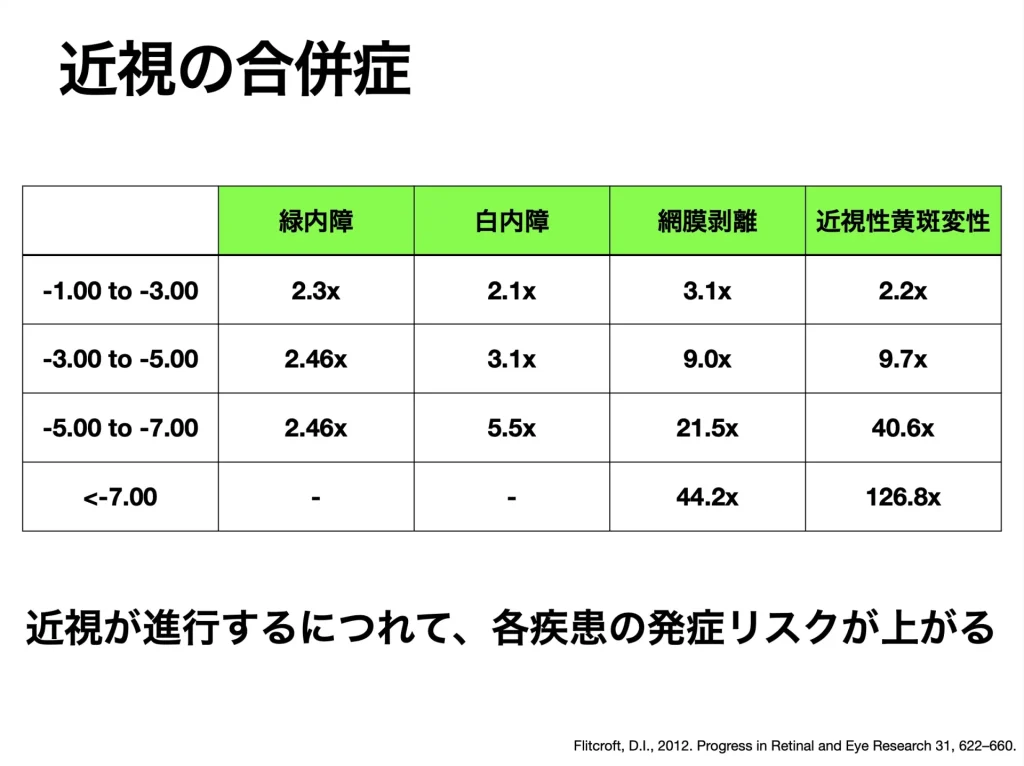
When high myopia progresses to pathologic myopia,
there is concern about developing glaucoma and retinal disease (myopic maculopathy, retinal detachment, and so on) in the future.1。
Myopia control (prevention) during childhood is very important.
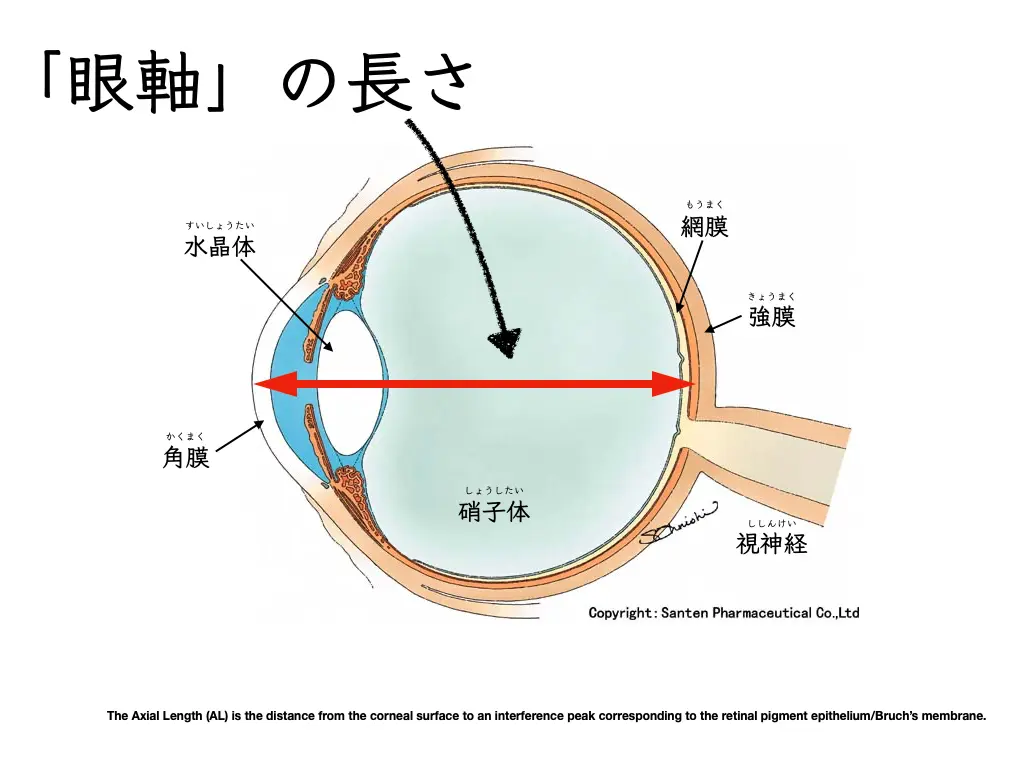
It slows the lengthening of the axial length (the eye getting longer from front to back) that comes with growth.
Even in the past few years, there has been remarkable academic progress.
For myopia control (prevention) in children, these are the three things I discuss in the clinic now:
(1) Playing outdoors for at least 2 hours a day
Exposure to violet light also has an effect2。
(2) Low-dose atropine eye drops
Myopia and refractive errors in children
(3) Orthokeratology
“Orthokeratology” is ready
Takeru Eye Clinic has offered (2) and (3) since we opened, and now many children come to see us.
I believe that combining (2) and (3) can also be effective.
* Multifocal contact lenses (EDOF):
I judged them difficult and dangerous to handle for elementary school children, so I do not recommend them.
They are dangerous even during a nap.
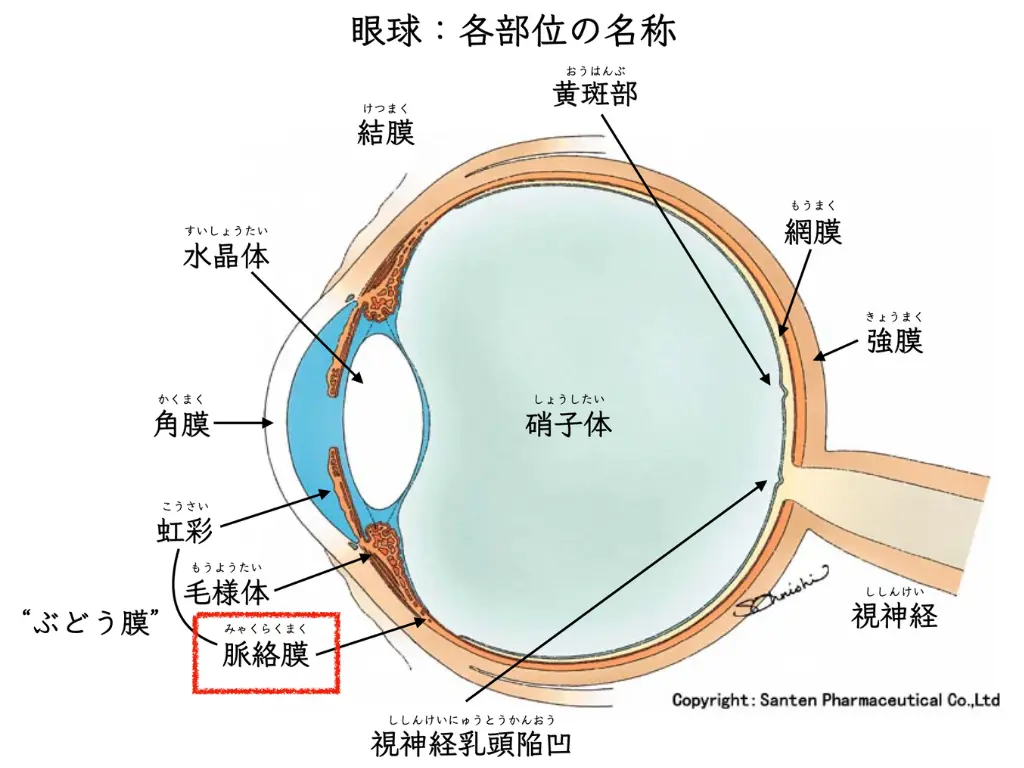
In people with strong myopia, OCT (cross-sectional imaging of the inside of the eye) shows that the “choroid” has become thinner.
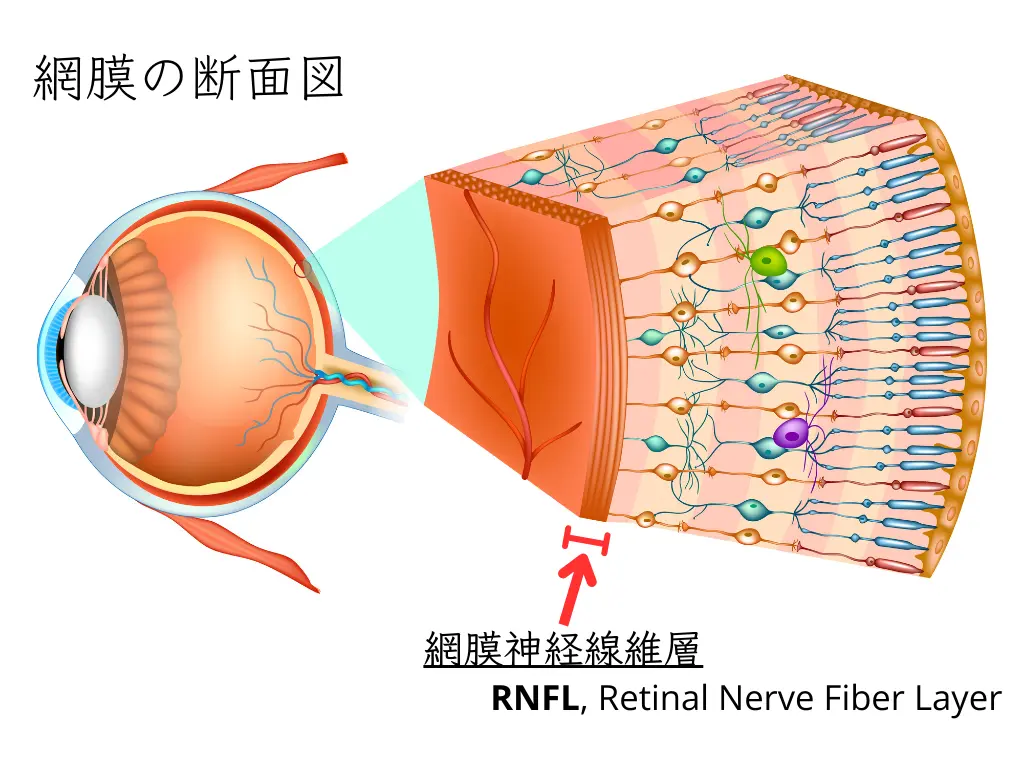
It lies behind the “retina,” which senses light, and inside the “sclera,” the wall that forms the eyeball.
The choroid is the most densely vascularized place in the body and can reflect inflammation throughout the body (= uveitis).
Supplements for Myopia Control (Prevention) in Children
Last year, the departments of ophthalmology at Keio University and Osaka University announced the usefulness of a supplement.
The Effect of Dietary Supplementation of Crocetin for Myopia Control in Children: A Randomized Clinical Trial.
The effect of crocetin on myopia control in children3
This is a study of 69 children aged 6 to 12 with myopia of -1.5 D to -4.5 D.
30 children in the placebo group, 39 in the crocetin group:
After 24 weeks, the crocetin group showed significant differences in
✔ axial length elongation
✔ change in spherical equivalent
✔ choroidal thickness
and the report states that it suppressed myopia progression.
No adverse events related to crocetin were reported.
Press release (from the Keio University Department of Ophthalmology):
Crocetin suppresses myopia progression in children – a new approach to rising myopia –
https://www.keio.ac.jp/ja/press-releases/files/2019/1/24/190123-1.pdf
Saffron is a spice used in paella and saffron rice,
and it has long drawn attention as a medicine as well.4。
Crocetin is a component of the fruit of saffron and gardenia (Gardenia jasminoides), and studies report that it
increases the oxygen supply to the lungs5 and
improves the oxygen supply to the blood vessels of the brain6.
The usefulness of saffron has also been described for age-related macular degeneration, glaucoma, and diabetic retinopathy.7。
Supplying oxygen to small blood vessels and improving blood flow is also important for myopia control (prevention).
By taking a crocetin supplement,
✔ the hope is to “increase blood flow to the choroid, thicken it, and keep the eye from lengthening.”
(References)
1. Holden, B.A., Fricke, T.R., Wilson, D.A., Jong, M., Naidoo, K.S., Sankaridurg, P., Wong, T.Y., Naduvilath, T.J., Resnikoff, S., 2016. Global Prevalence of Myopia and High Myopia and Temporal Trends from 2000 through 2050. Ophthalmology 123, 1036–1042. https://doi.org/10.1016/j.ophtha.2016.01.006
2. Torii, H., Kurihara, T., Seko, Y., Negishi, K., Ohnuma, K., Inaba, T., Kawashima, M., Jiang, X., Kondo, S., Miyauchi, M., Miwa, Y., Katada, Y., Mori, K., Kato, K., Tsubota, Kinya, Goto, H., Oda, M., Hatori, M., Tsubota, Kazuo, 2017. Violet Light Exposure Can Be a Preventive Strategy Against Myopia Progression. EBioMedicine 15, 210–219. https://doi.org/10.1016/j.ebiom.2016.12.007
3. Mori, K., Torii, H., Fujimoto, S., Jiang, X., Ikeda, S., Yotsukura, E., Koh, S., Kurihara, T., Nishida, K., Tsubota, K., 2019. The Effect of Dietary Supplementation of Crocetin for Myopia Control in Children: A Randomized Clinical Trial. JCM 8, 1179. https://doi.org/10.3390/jcm8081179
Heitmar, R., Brown, J., Kyrou, I., 2019. Saffron (Crocus sativus L.) in Ocular Diseases: A Narrative Review of the Existing Evidence from Clinical Studies. Nutrients 11, 649. https://doi.org/10.3390/nu11030649
4. GIACCIO, M., 2004. Crocetin from Saffron: An Active Component of an Ancient Spice. Critical Reviews in Food Science and Nutrition 44, 155–172. https://doi.org/10.1080/10408690490441433
5. Holloway, G.M., Gainer, J.L., 1988. The carotenoid crocetin enhances pulmonary oxygenation. J. Appl. Physiol. 65, 683–686. https://doi.org/10.1152/jappl.1988.65.2.683
6. Seyde, W.C., McKernan, D.J., Laudeman, T., Gainer, J.L., Longnecker, D.E., 1986. Carotenoid Compound Crocetin Improves Cerebral Oxygenation in Hemorrhaged Rats: Journal of Cerebral Blood Flow & Metabolism. https://doi.org/10.1038/jcbfm.1986.126
7. Heitmar, R., Brown, J., Kyrou, I., 2019. Saffron (Crocus sativus L.) in Ocular Diseases: A Narrative Review of the Existing Evidence from Clinical Studies. Nutrients 11, 649. https://doi.org/10.3390/nu11030649