Glasses and contact lenses fitted until now may have become “over-corrected.”
This is because the focusing effort was working strongly when they were fitted.
By addressing each person’s different state of “accommodation,” improvement can be expected.
Your Glasses or Contact Lens Prescription May Be the Cause of Feeling Unwell

“Accommodative excess” when using over-corrected glasses or contact lenses
When looking at near objects,
the eye is always kept in a state of accommodating.
: the ciliary muscle (= the muscle around the lens that focuses) is tense.
Accommodative excess
Glasses / contact lens prescription and how you feel:
Various changes in how you feel can appear.
・Getting tired after looking at near objects for just a little while
・Getting a headache after looking at near objects for just a little while
・Things look hazy
・Difficulty keeping concentration
・A feeling as if the area around the eyes is being pressed
・Letters seem to move
How to improve
Try the 20-20-20 rule
After concentrating on near work for 20 minutes, look far away (20 feet = about 6 meters) for just 20 seconds.
Relax the ciliary muscle:
“Looking at greenery is good for the eyes,”
“Gazing at mountains improves your eyes,”
“Looking at the stars at night is good for the eyes,”
and so on can be thought of as the same thing.
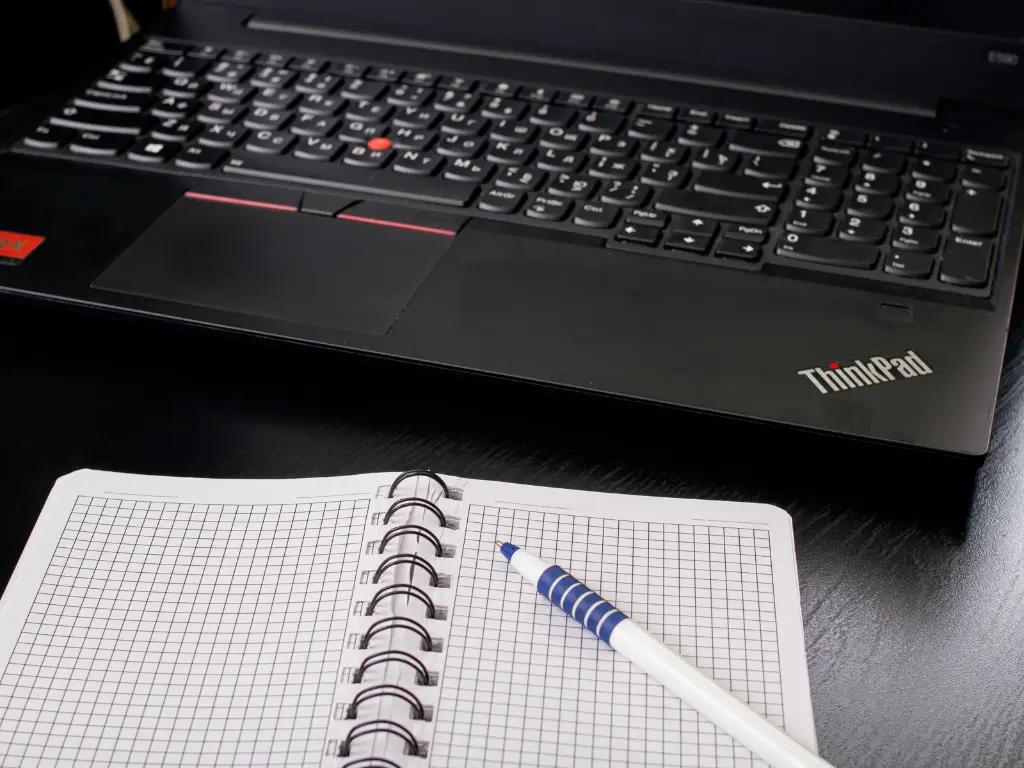
On some ThinkPad models, you can enable a mode that supports the 20-20-20 rule.

Use the Pomodoro Techniquefor how you use time for study and work
: a method of dividing concentrated time into 25-minute blocks with relaxed breaks in between.
When it was devised, the story was about using a tomato-shaped timer.
Today there are iPhone apps and the like.
○ Appropriate glasses and contact lens prescriptions
○ Using eye drops that act on accommodation
Learn your accurate eye prescription with a test that removes the influence of accommodation
When looking at near objects,
the lens bulges and the eye temporarily becomes more myopic.
If glasses are fitted as they are, they will be over-corrected.
This also corresponds to what was previously called “pseudomyopia.”
What is used to remove the influence of accommodation is
the fogging method:
lenses are used to create a period in which the image is out of focus.
Even so, the effect may be insufficient.
For refractive errors (myopia, hyperopia, astigmatism),
it is necessary to know the accurate eye prescription with the influence of accommodation removed.
[In actual practice]
Accommodation analyzer (Accommoref)is used to graph the state of the eye’s accommodation and explain it.
Depending on the state,
○ We talk about the “20-20-20 rule” and the “Pomodoro Technique” above
○ We prescribe eye drops that relieve accommodative tension
○ We prescribe appropriate glasses
We consider an appropriate glasses prescription according to the Accommoref results.
・Eye alignment (movement of both eyes)
・Convergence (whether the eyes turn inward properly when looking at near objects)
are also taken into account.
Certified orthoptistscarry out the tests.
In examining children’s eyes,
cycloplegic eye drops (eye drops that dilate the pupil) are sometimes used.
This lets us know the accurate eye prescription, “refraction.”
In the order 1.–3.,
the period of glare and the period when focusing does not work differ.
(1) Midrin®
This is the method we use most often. Normal vision returns after 4–5 hours / within the same day.
(2) Cyplegin®
Vision is hard to use for 2–3 days.
It is often done around weekends and long vacations (spring, summer, and winter breaks).
(3) Atropine
We use this for children suspected of having accommodative esotropia or high hyperopia.
We ask you to instill atropine diluted to 0.5% twice a day, and have you visit one week later.