“Why does my child or baby blink so much, flutter their eyes, squint at light, or squeeze their eyes shut? I’m worried.”
“I can’t decide whether to go to a pediatrician or an eye doctor.”
Frequent blinking is sometimes accompanied by an eye disease or abnormality.
I have written about the causes of frequent blinking in children and how we examine and treat it in the eye clinic.
Frequent Blinking in Children
Causes
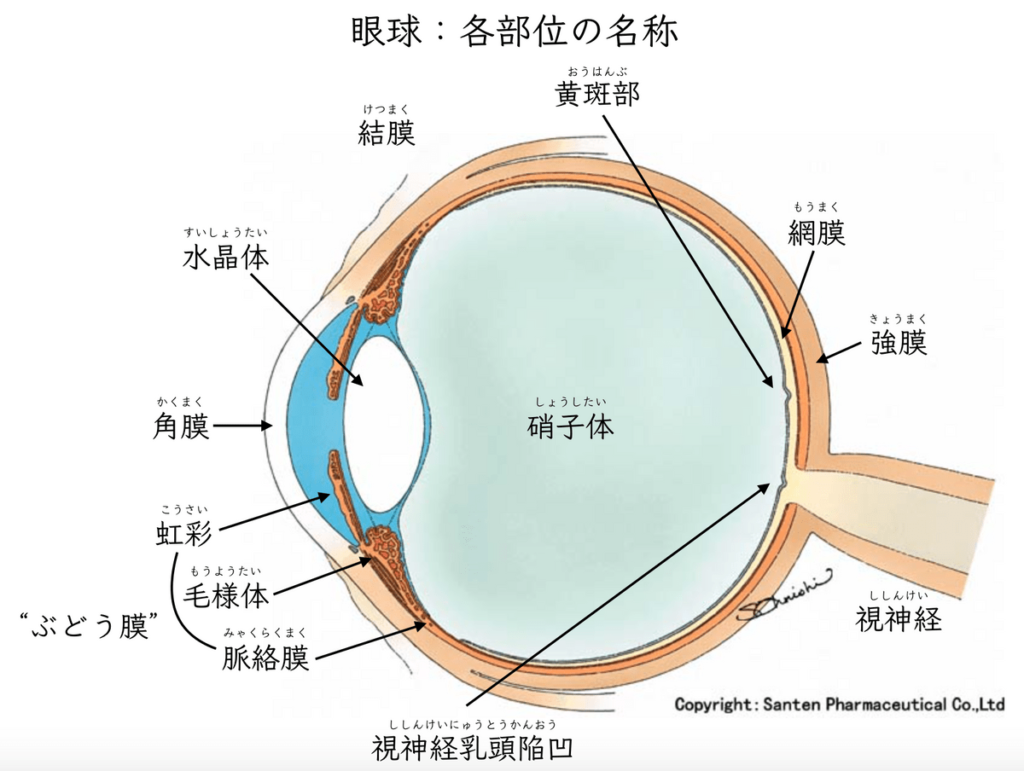
An abnormality of the cornea or conjunctiva (a problem in the front of the eye)
✔︎ Dry eye
✔︎ Eyelashes turning inward (entropion / epiblepharon)
✔︎ Something in the eye (a foreign body on the conjunctiva)
✔︎ Rubbing the cornea / a scratch on the eye (corneal erosion)
✔︎ Allergic conjunctivitis
A habit
Frequent blinking is known as a main symptom oftics.
But most tics are not a problem.
They may also accompany stress, anxiety, fatigue, or boredom.
They often disappear on their own as the child grows.
Not noticing a vision problem that needs glasses (refractive error)
✔︎ Myopia (nearsightedness)
✔︎ Hyperopia (farsightedness)
✔︎ Astigmatism
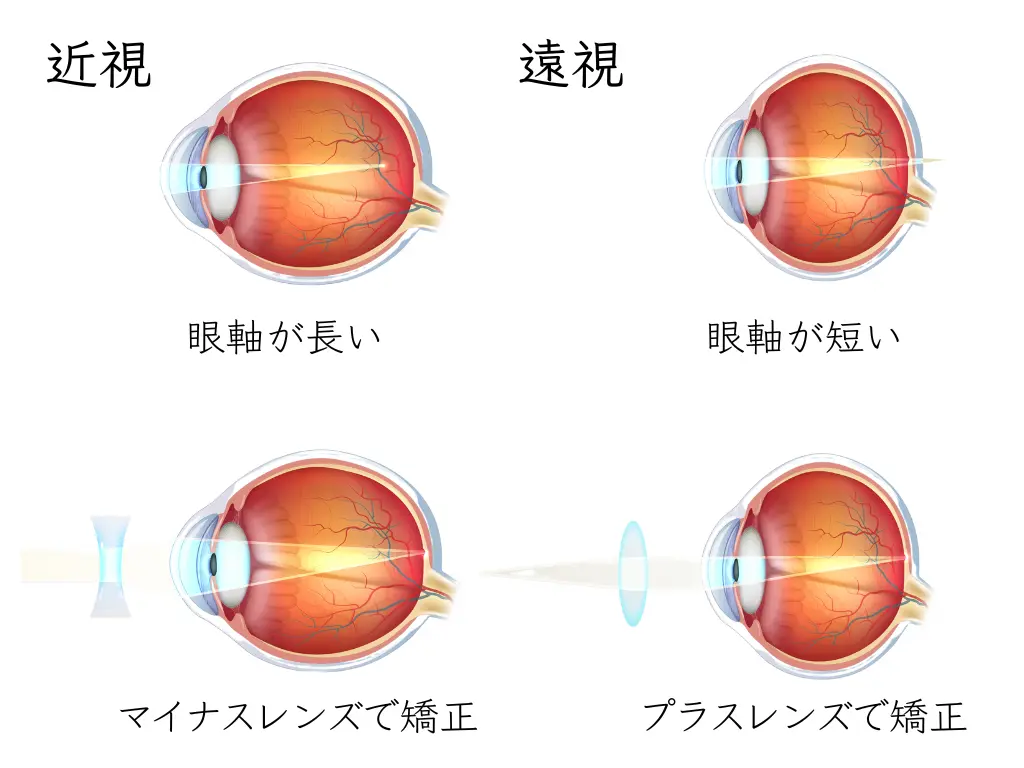
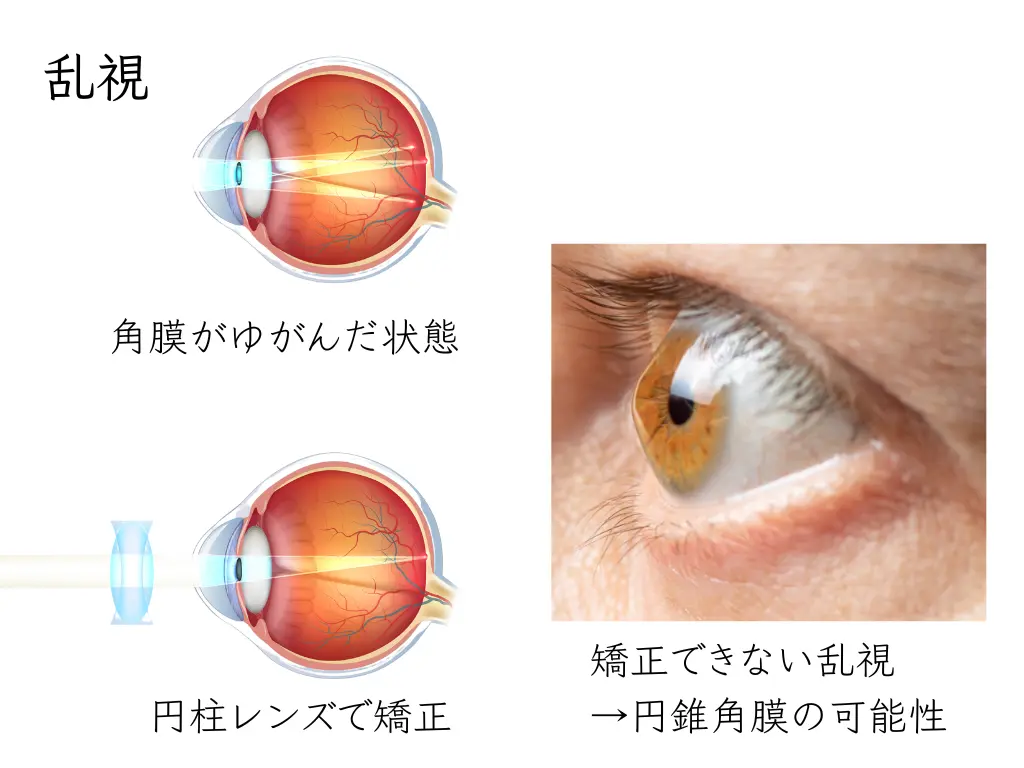
Refractive amblyopiais ruled out.
Strabismus or phoria that has gone unnoticed
✔︎ Intermittent exotropia
Tired eyes
✔︎ A state of strong accommodative tension (eye strain)
Tests and examination
○ Detailed observation of the eye surface with a slit-lamp microscope
✔︎ Checking for scratches on the cornea, and so on (fluorescein staining)
(whether there are any injuries to the eye)
○ Checking eye movements
✔︎ We check eye alignment and eye movements in detail.
Whether both eyes move together normallyis what this test checks.
Sometimes a “phoria” that could not be seen from appearance alone is found.
○ Checking vision
✔︎ Confirming whether glasses are needed
○ Checking the state of the eye’s focusing (accommodation)
✔︎ An accommodation analyzeris used.
A full-timecertified orthoptistperforms the detailed tests.
All results are explained with images shown on the monitor or iPad in the exam room.
Treatment
○ If there are eyelashes or foreign bodies touching the eye, we remove them
✔︎ In small children, eyelashes may turn inward, and this often improves naturally as the child grows.
So we sometimes simply watch how it goes.
○ Allergy,dry eye
✔︎ We mainly prescribe eye drops.
○ Corneal damage
✔︎ Eye drops and ointment
○ Refractive error (myopia, hyperopia, astigmatism)
✔︎ We prescribe appropriate glasses.
○ Strong accommodative tension (eye strain)
We show the degree of accommodative function as a graph.
:Accommodation analyzer (Accommoref)
» Do glasses make your eyes worse? Today, “full correction” is recommended
» “Glasses” that develop a child’s ability to see
○ Strabismus or phoria
✔︎ Glasses sometimes improve it.
✔︎ We may also do training to look at small things up close (strabismusand amblyopiatraining).
* Sometimes strabismus that requires surgery is found.
○ When it is a “habit”
In many cases no treatment is needed.
We simply watch how it goes.
After confirming that there are no eye abnormalities or diseases like those above, for the next several months
I tell parents not to worry about anything.
I also think it is important not to make the child feel stressed.
At follow-up visits:
We confirm that no new eye abnormalities like those above have appeared.