![Takeru Eye Clinic | Takatori Shopping Street, Sawara-ku, Fukuoka City [Nishijin Station / Fujisaki Station]](https://takeru-eye.com/wp-content/uploads/2022/10/takeru_logo_for-WP-header.png)

Hyperopia, myopia, and astigmatism:
What kind of conditions are they, really?
Is it hard to see far away (or up close)? Do things look distorted?
If it is hard to see up close, does that mean presbyopia?
What the view looks like:
Trying to understand them from the meaning of the Japanese charactersseems to make them harder to grasp.
This is a general explanation.
Hyperopia, Myopia, and Astigmatism: An Easy Way to Understand Them

Understanding Hyperopia, Myopia, and Astigmatism Through the Shape of the Eye
When light enters the eye, its path is bent (refracted) so that it reaches the retina inside the eyeball.
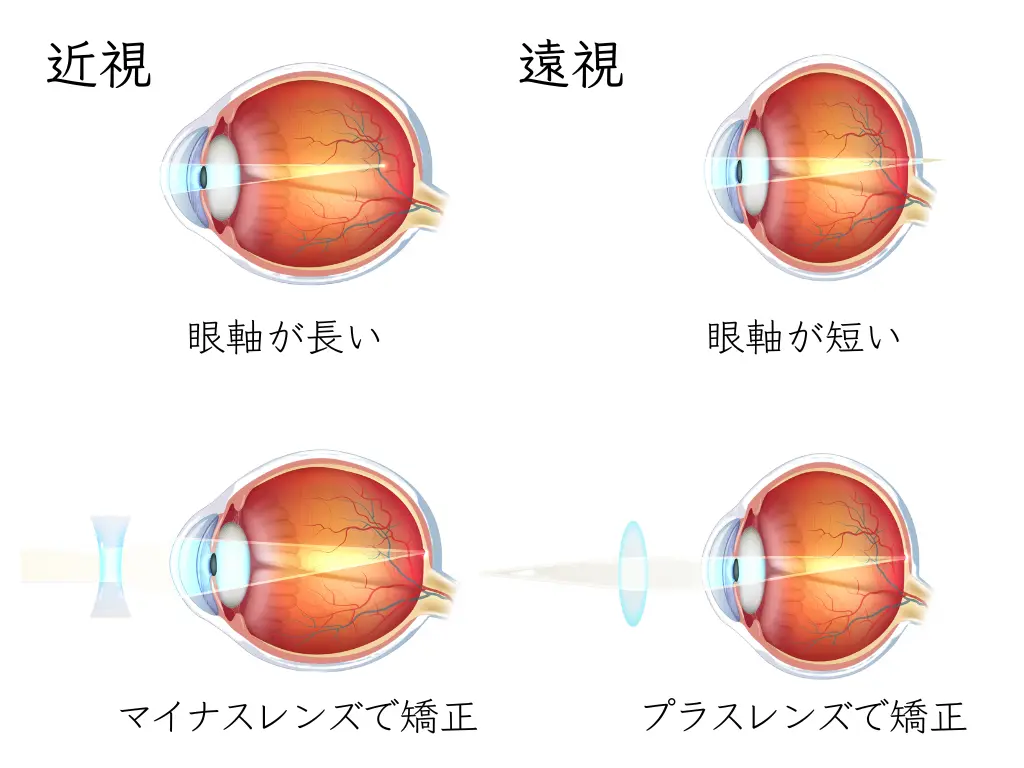
The depth of the eyeball (= axial length)
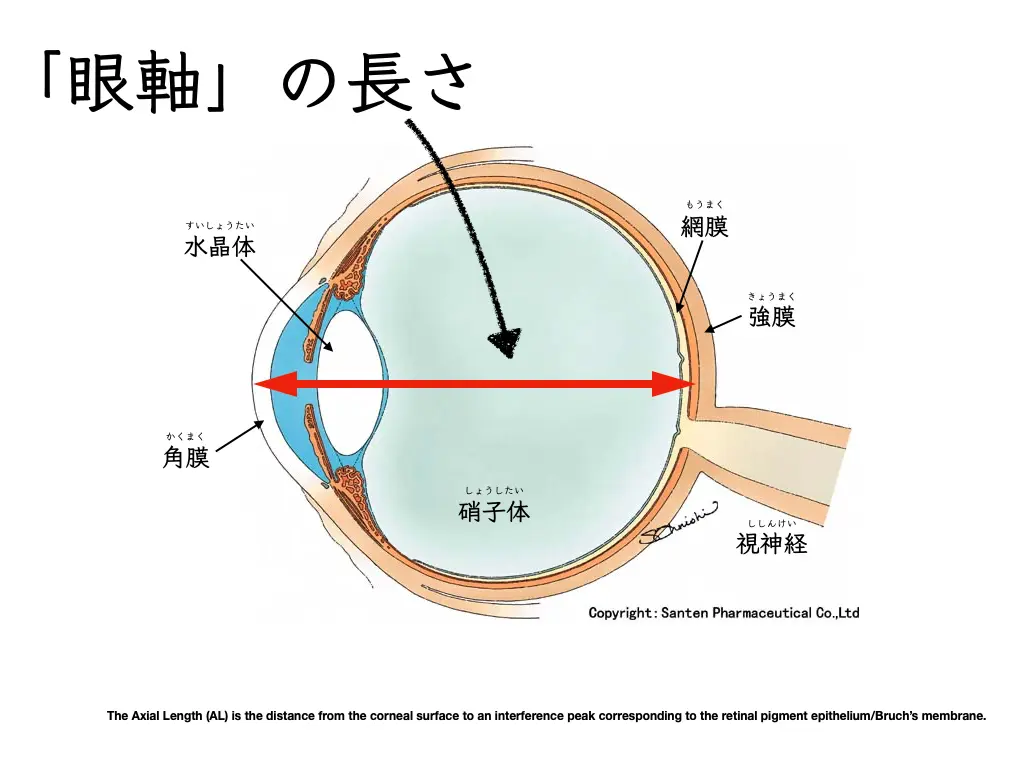
・Hyperopia: the axial length isshort
・Myopia: the axial length islong
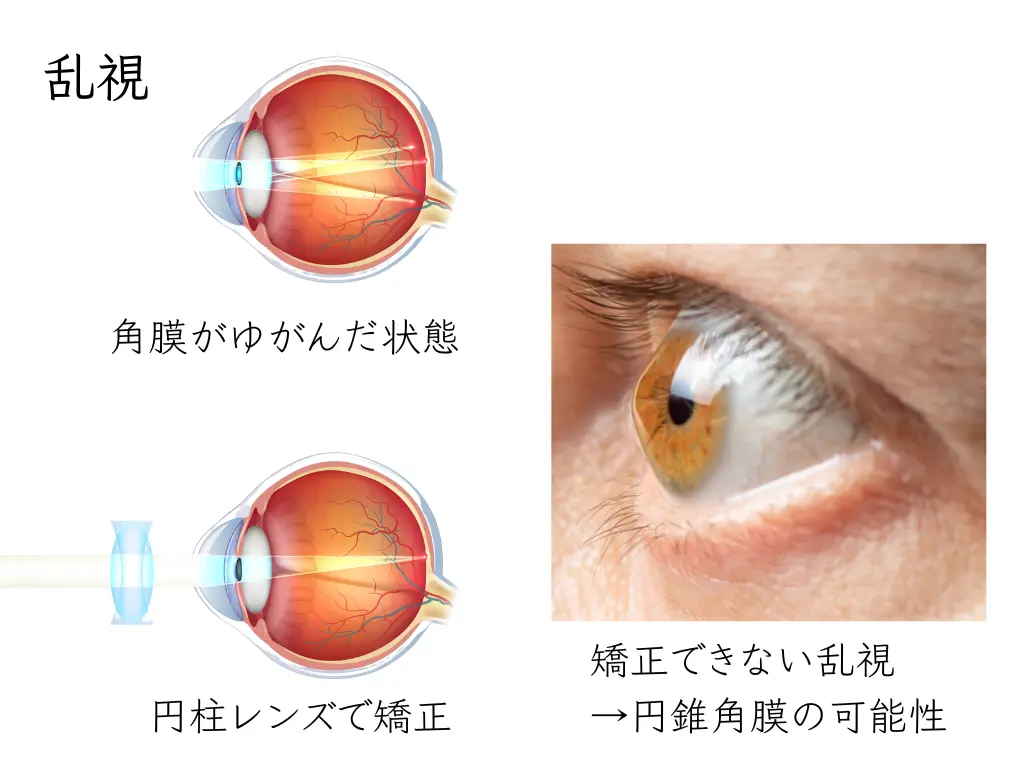
・Astigmatism: distortion of thecornea (the surface of the eye)
Hyperopia, myopia, and astigmatism do not describe how things look.
All of them refer only to the “shape of the eye.”
What they all have in common in how things look is that they areblurry
and it seems best to keep that one word in mind
as your understanding.
The cornea is always slightly distorted
(= everyone has “astigmatism”)
“Refractive error”: everyone falls under the above.
(= everyone has a “refractive error” of hyperopia, myopia, or astigmatism)
With lenses, we can make things look clear.
What if they do not? Then we think about what comes next.
What matters: can corrected vision be achieved?
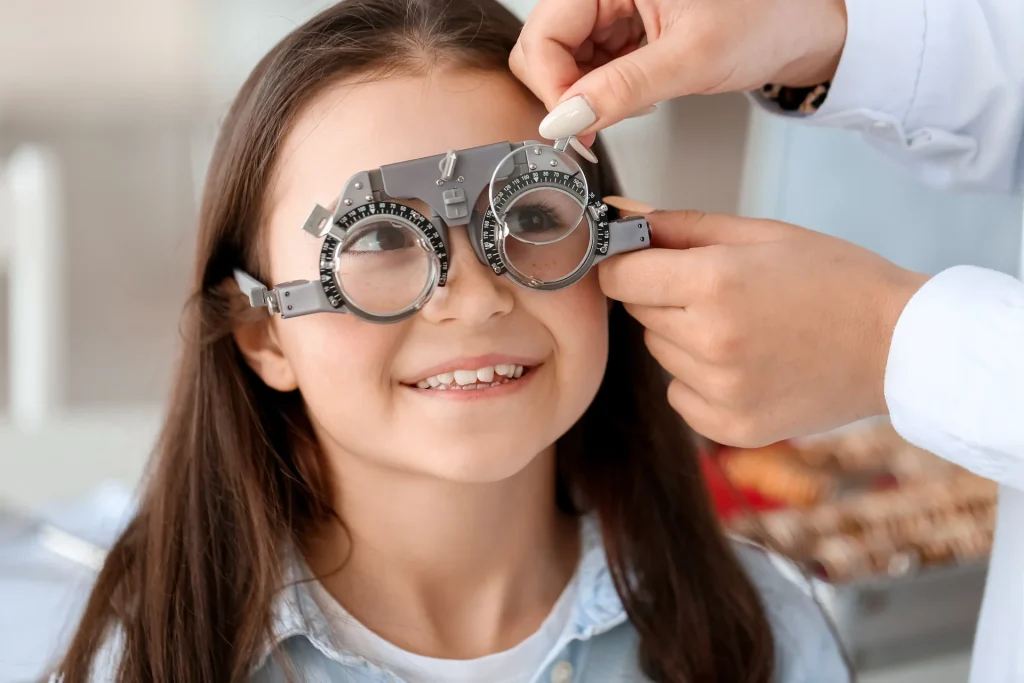
Visual acuity in ophthalmology means
corrected visual acuity
.

At the eye clinic, thecertified orthoptistscarry out the tests.
We place various lenses in front of the eyes to find the best vision (= corrected visual acuity).
It works by the patient answering according to what they see,
so it is a subjective test.
The lens power that gives a
clear view
is the person’s refractive power.
This leads to the prescription for glasses or contact lenses.
In practice, based on this data, we fit glasses or contact lenses while trying them on.
To summarize,
a long axial length is “myopia,”
a short axial length is “hyperopia,”
and distortion of the surface of the eye is “astigmatism.”
Far, near, distorted: don’t think about the meanings of these words,and the meanings of hyperopia, myopia, and astigmatism become easier to understand.
What we pay attention to in each case is whether the eye can be corrected.
If corrected visual acuity does not reach 1.0: the need to look for the cause
If there is myopia, hyperopia, or astigmatism that cannot be corrected
(= visual acuity does not reach 1.0 even with the best lens)
Where is the cause (the reason corrected vision is not good)?
That is where the eye examination begins.
Cornea, lens, uvea, retina, optic nerve, brain, and so on:
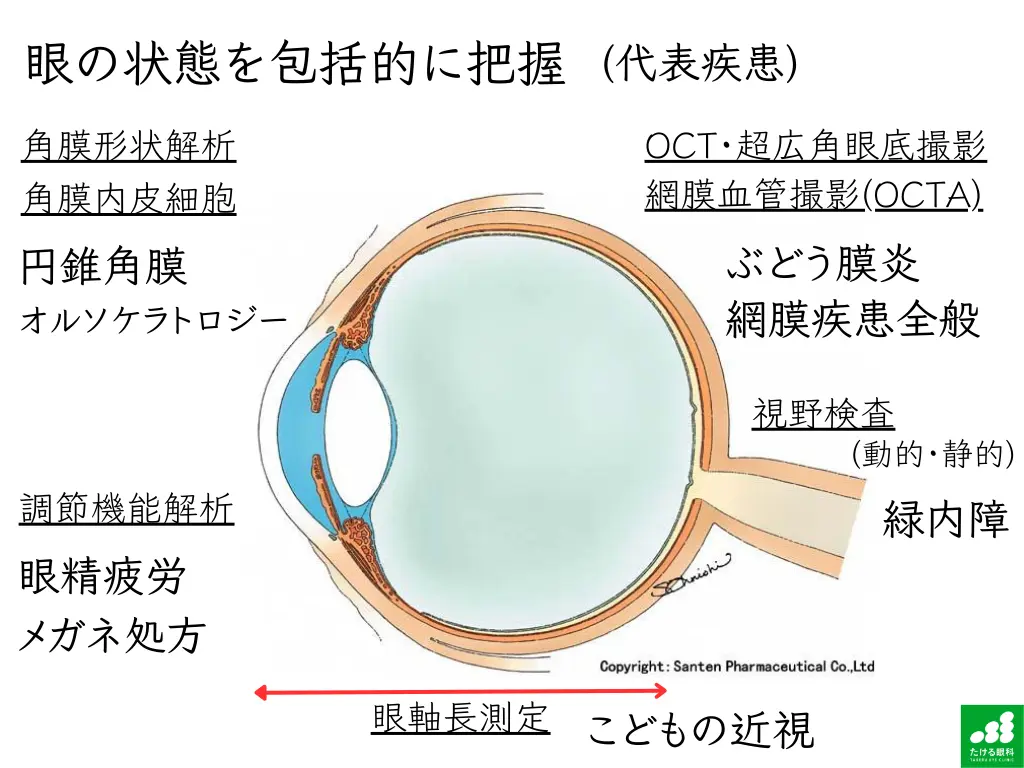
we look for where the abnormality is.
Is the cornea cloudy? →keratitis
Is the cornea strongly distorted? →keratoconus
Is the lens cloudy? →cataract
Is there cloudiness in the anterior chamber? →uveitis
Is there cloudiness in the vitreous? →uveitis、vitreous hemorrhage
Is there damage to the retina? →macular degeneration、uveitis、central serous chorioretinopathy
Is there damage to the optic nerve? →glaucoma, optic neuritis
Could the brain (the visual cortex in the occipital lobe) not have developed? → in children,amblyopia
Even listing only the typical ones, there are many.
There are countless diseases in the world.
Doctors have studied a great many diseases.
Even so, every day is a day of study.
Medical professionals keep studying for life.
It is important not to search for diseases from symptoms.
There are so many diseases that it only fuels anxiety.
・Other parts of the body may start to feel unwell
・Smartphone esotropia: long smartphone sessions can leave the eyes turned inward and unable to return to normal
These are also things we need to watch out for.