![Takeru Eye Clinic | Takatori Shopping Street, Sawara-ku, Fukuoka City [Nishijin Station / Fujisaki Station]](https://takeru-eye.com/wp-content/uploads/2022/10/takeru_logo_for-WP-header.png)

MiSight® 1 day myopia control treatment started more than a month ago. Already more than ten people have started this treatment. As interest grows, questions about astigmatism naturally increase as well.
There are many children who need myopia control even with astigmatism. The choices change with the amount and axis of the astigmatism, but it is not true that “nothing can be done because there is astigmatism.” In this article I sort out the relationship between astigmatism and MiSight and explain what to choose in which case.
Eye examinations are handled byorthoptists.
First, what is “astigmatism”?

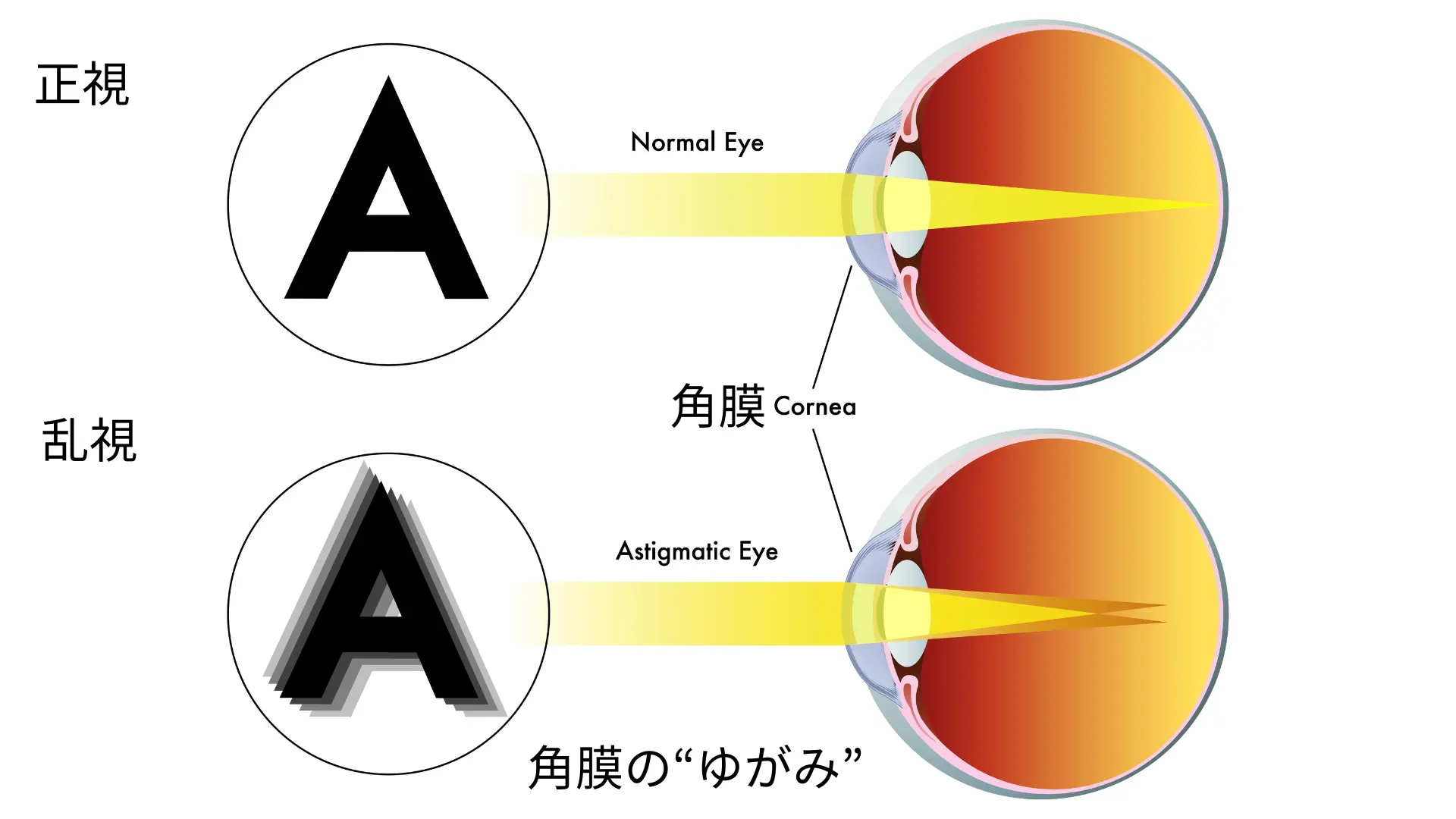
When people hear astigmatism, they picture “blurred vision” or “things looking distorted,” but this is not necessarily accurate.
Astigmatism refers to the shape of the black of the eye (the cornea).
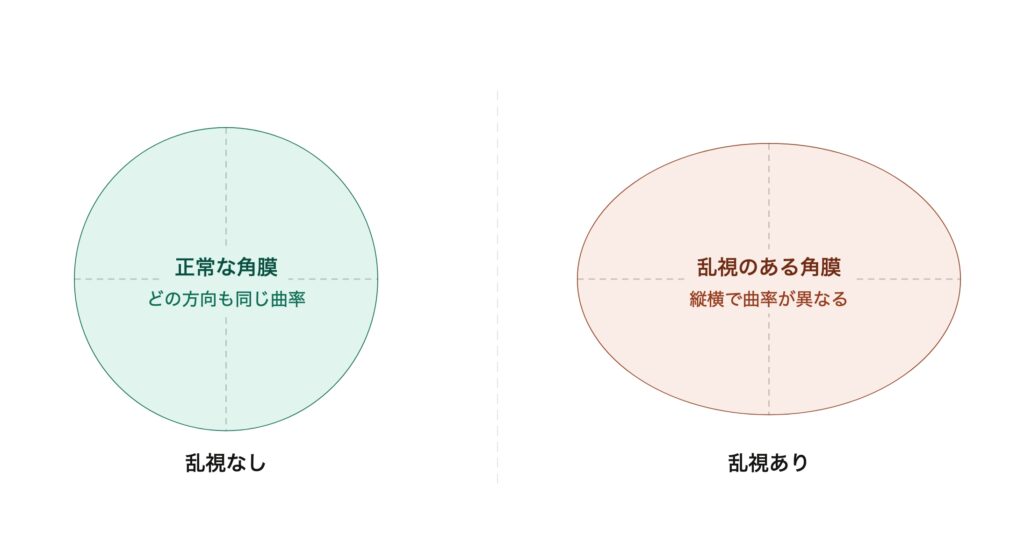
The cornea is basically close to a sphere that has the same curvature when seen from any direction. Astigmatism is a state in which the curvature differs between the vertical and horizontal directions of the cornea. It refers to a shape closer to an ellipsoid than a sphere, slightly distorted in a certain direction.
What matters is that astigmatism is something “everyone has.”
Organs of the human body are not perfectly symmetrical. The cornea is one of them, and mild astigmatism (about 0.25–0.50 D) is naturally present in many children. At that level it has almost no effect on vision, and in most cases no correction is needed. It becomes a problem when the amount of astigmatism exceeds a certain level.
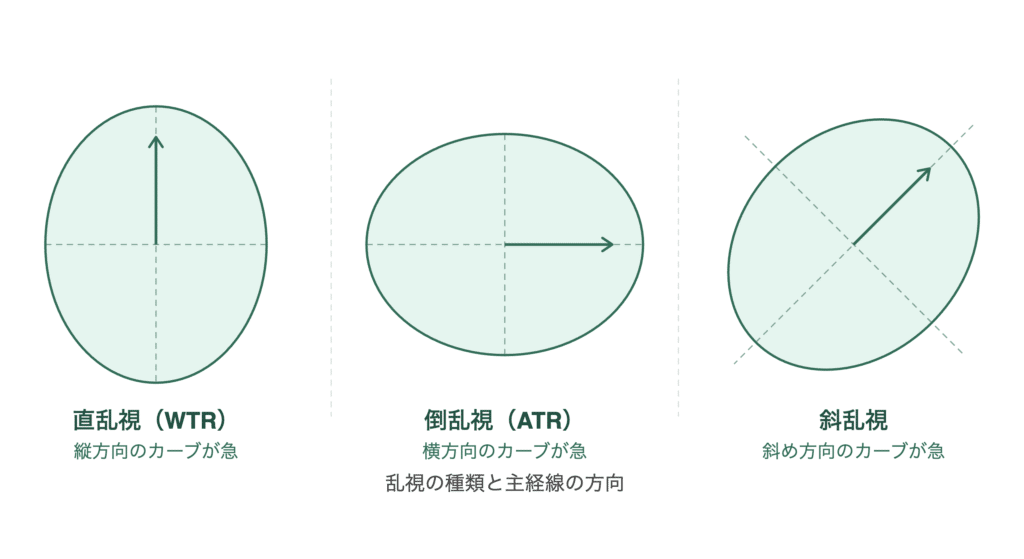
Astigmatism also has an “axis.” Typical forms are with-the-rule astigmatism (WTR), in which the vertical curve is steeper, against-the-rule astigmatism (ATR), in which the horizontal curve is steeper, and oblique astigmatism, in an oblique direction. The axis changes the effect on vision and the treatment options.
What is most common in children is with-the-rule astigmatism, and it is known to shift toward against-the-rule astigmatism with growth.
What kind of lens is MiSight 1 day?
MiSight 1 day (CooperVision) is a soft contact lens designed to slow the progression of myopia. It is a daily disposable lens, and a new lens is used every day.
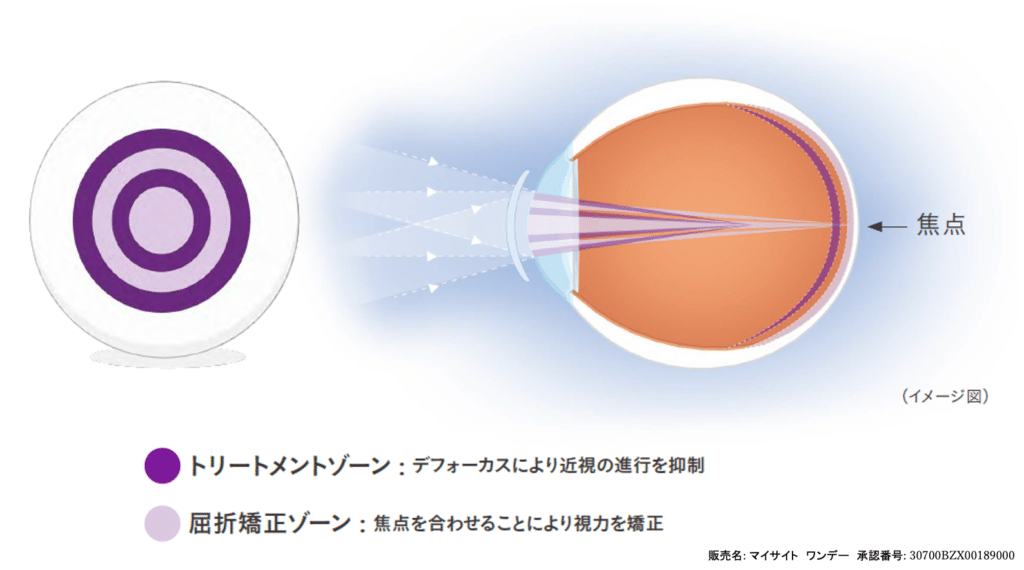
Its optical design is distinctive. The central part corrects distance refraction. Meanwhile, the “treatment zones” arranged alternately on the outer side constantly give an optical signal that focuses in front of the retina (myopic defocus). This stimulus is the mechanism that suppresses elongation of the axial length1。
In a 3-year randomized controlled trial (RCT), compared with single-vision contact lenses it was reported to slow myopia progression by about 59% and axial length elongation by about 52%2. Long-term 6-year data also report sustained effect3, and a 7th-year follow-up study reported that no clear increase was shown in rapid myopia progression after stopping wear (rebound)4。
MiSight and astigmatism: how far can it be used?
While referring to the numerical range of approval, we decide suitability by giving top priority to how things actually look with trial lenses and the child’s own sense.
The approval conditions of MiSight state “astigmatism of 0.75 D or less”1. This is because MiSight is a spherical design, that is, a lens without a structure to correct astigmatism.
If astigmatism remains, the image through the lens becomes a little blurred. However, if the astigmatism is mild (0.75 D or less), it can be approximated by the spherical equivalent (the spherical power plus half of the cylinder power), and vision is corrected sufficiently. The stronger the astigmatism, the less this approximation holds.
The inclusion criterion for subjects in the main 3-year and 6-year clinical trials was astigmatism of 0.75 D or less2,3. An independent 2-year RCT conducted in Spain included some subjects with astigmatism below 1.00 D, and an effect of slowing myopia progression was confirmed5。
In actual consultations, we do not judge by numbers alone. It is important to put on trial lenses and check whether vision of 1.0 or better is obtained and whether the child feels no difficulty seeing.
Amount of astigmatism and a guide to MiSight® prescription
The following table summarizes a guide to prescription by amount and axis of astigmatism. Actual judgment in the examination room gives priority to the trial results, but this is shown as a guide for judgment.
| Amount of astigmatism | Axis direction | MiSight prescription | Comment |
|---|---|---|---|
| ≤ 0.75D | Either | ◎ Normal prescription | Within the approved range. Suitability is judged based on test results |
| 0.75〜1.00D | With-the-rule (WTR) | △ Judge by trial | Acceptable if vision is 1.0 or better and the child has no complaints |
| 0.75〜1.00D | Against-the-rule / oblique | △→× | Tends to be hard to see; other means are prioritized |
| 1.00〜1.25D | With-the-rule (WTR) | △ Trial with care | Outside approval; sufficient explanation and regular checks are the premise |
| 1.00〜1.25D | Against-the-rule / oblique | × | To orthokeratology or spectacle lenses |
| >1.25D | Either | × | MiSight is not the first choice |
With-the-rule astigmatism is relatively tolerated because vertical distortion has a relatively small effect on distance vision, and vision is easily obtained even with a spherical equivalent prescription. Against-the-rule and oblique astigmatism tend to lead to difficulty seeing and eye strain in near work (such as reading). Considering the effect on study, it is appropriate to choose a means that gives full correction early.
For children with strong astigmatism, orthokeratology is a strong option
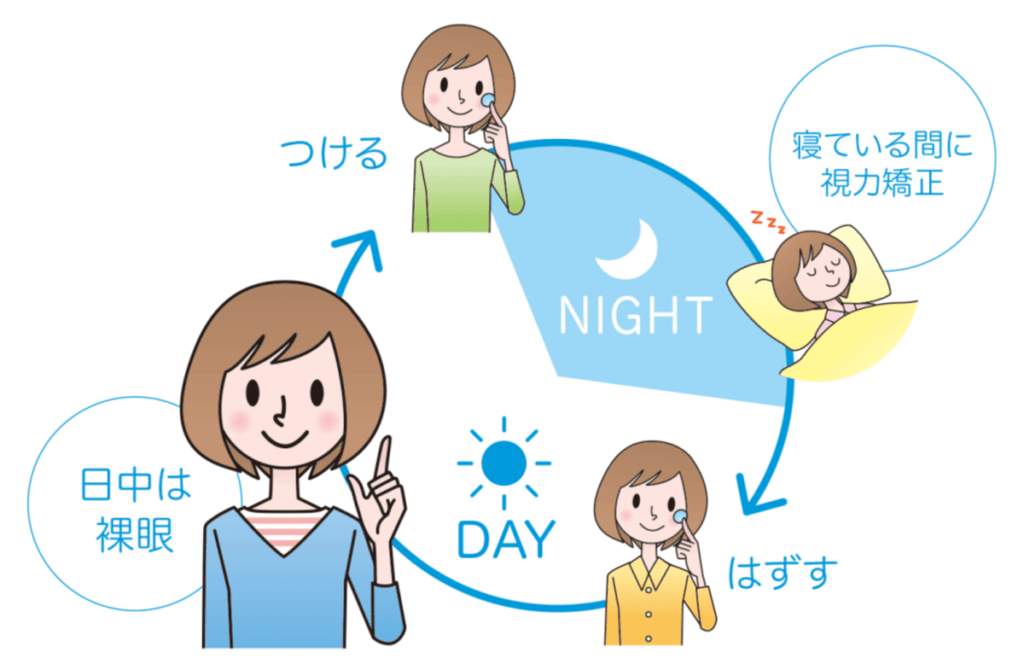
Orthokeratology (Ortho-K) is a treatment in which special hard contact lenses are worn during sleep to temporarily change the shape of the cornea, so that you can see well in the daytime without glasses or contact lenses.
Its effectiveness for myopia control has been confirmed in multiple RCTs and meta-analyses. Data show median suppression of axial elongation of 0.17 mm at 1 year and 0.30 mm at 2 years6, and it is also positioned as an effective means of myopia control in the 2025 report of the International Myopia Institute (IMI)7。
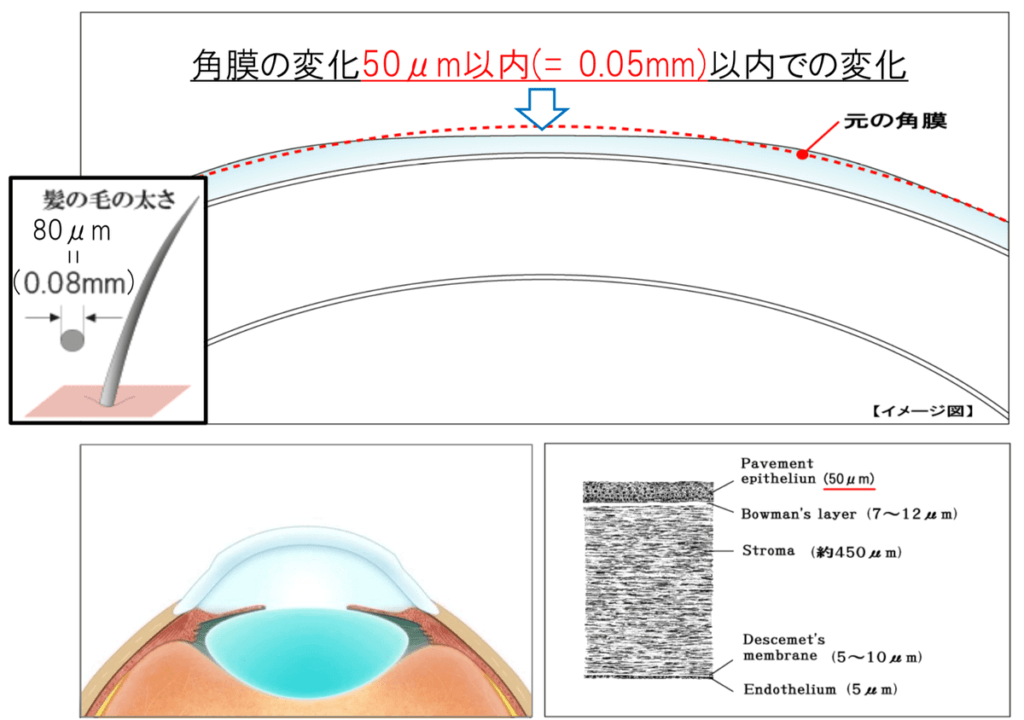
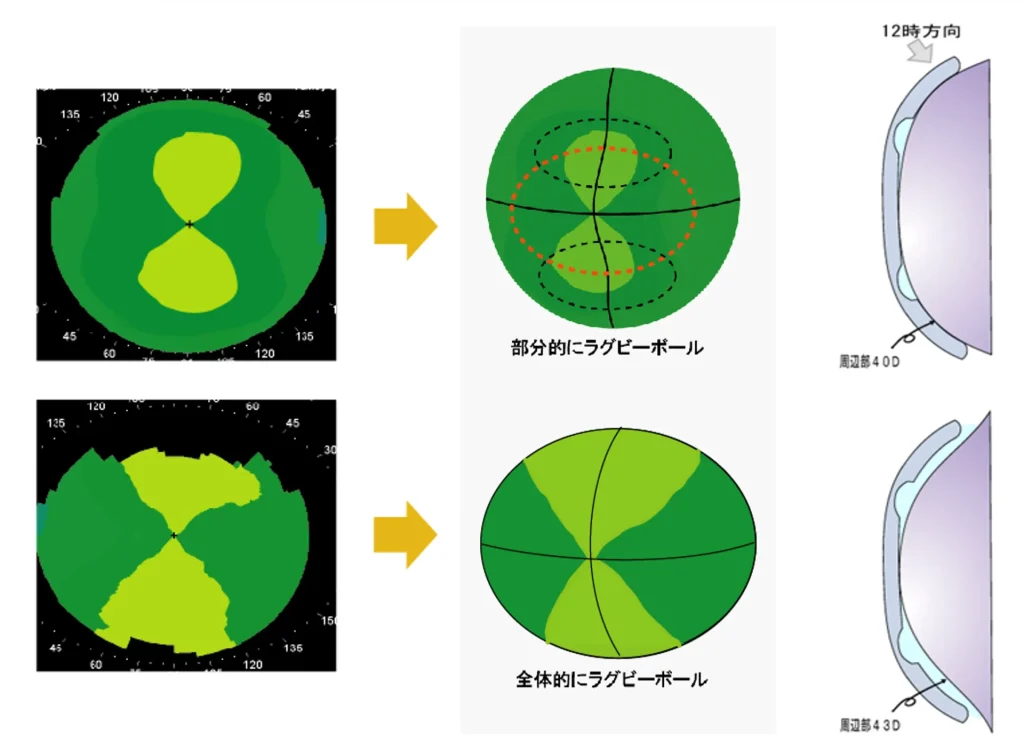
In dealing with astigmatism, it has a clear strength over MiSight. Because it changes the shape of the cornea itself, it can handle astigmatism. With the standard design it can exert myopia control while correcting up to about 1.50 D of astigmatism, and with a toric design up to about 2–3 D8。
Organizing the flow of choosing myopia control treatment
Here I organize the flow of treatment choice according to the amount of astigmatism and the situation.
When astigmatism is 0.75 D or less, MiSight is often an option. Suitability is judged from test results and lifestyle. It is a daily disposable and hygienic, and has the most extensive long-term evidence
When astigmatism is about 0.75–1.25 D and with-the-rule, we do a trial and check vision and the child’s sense. If there is no problem we continue with MiSight, and if difficulty seeing remains we consider orthokeratology.
When astigmatism exceeds 1.25 D, or when against-the-rule or oblique astigmatism is strong, we prioritize considering other options including orthokeratology. If contact lenses in general are difficult, myopia control spectacle lenses (the type with built-in defocus) will become an option in the future.
Low-concentration atropine eye drops can be used regardless of astigmatism, and there are also reports that combining them with other optical treatments can be expected to add effect9. Note that reference 9 is a study of orthokeratology combined with 0.01% atropine, and there is currently no clinical trial that directly examined combination with Ryjusea® Mini (0.025%), which started in April 2025.
However, it is known that the myopia control effect of atropine depends on concentration, and the effect of combination is an area where future research is expected. It can be considered as an option when progression is fast and you want to add some treatment.
What it means to continue myopia control treatment
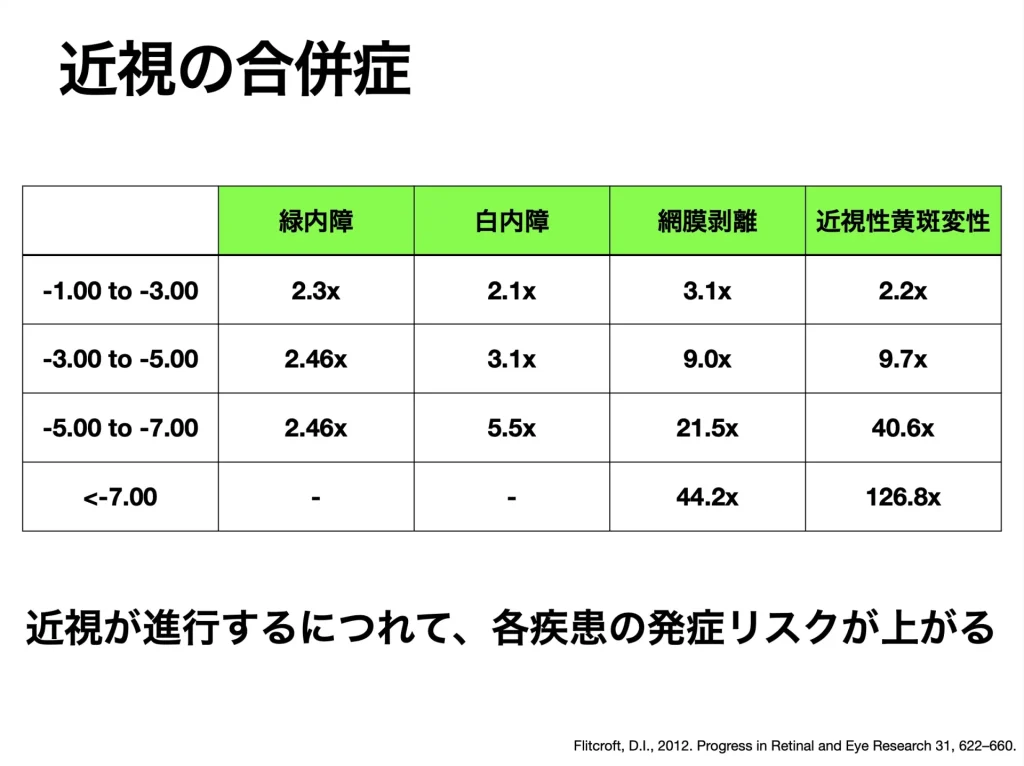
In children’s myopia, the more it progresses, the higher the risk in the future. It is known that the longer the axial length, the greater the risk of sight-threatening complications such as retinal detachment, glaucoma and myopic macular degeneration10. With high myopia (spherical equivalent −6 D or more), the risk becomes especially high.
It is not that “myopia control is difficult because there is astigmatism”; I think there is value in choosing a method suited to the amount and axis of astigmatism.
There are cases in which MiSight can be used even with astigmatism, and when astigmatism is strong there is the choice of orthokeratology. In either case, it is important to measure axial length regularly and continue treatment while checking the pace of progression.
At our clinic we always perform regular axial length measurement and confirmation of the myopia control effect, and continuously evaluate the effect of treatment using our own myopia management app.
References
- Ruiz-Pomeda A, Villa-Collar C. Slowing the progression of myopia in children with the MiSight contact lens: a narrative review of the evidence. Ophthalmol Ther. 2020;9(4):783-795.
https://pmc.ncbi.nlm.nih.gov/articles/PMC7708530/ - Chamberlain P, Peixoto-de-Matos SC, Logan NS, et al. A 3-year randomized clinical trial of MiSight lenses for myopia control. Optom Vis Sci. 2019;96(8):556-567. https://pubmed.ncbi.nlm.nih.gov/31343513/
- Chamberlain P, Bradley A, Arumugam B, et al. Long-term effect of dual-focus contact lenses on myopia progression in children: a 6-year multicenter clinical trial. Optom Vis Sci. 2022;99(3):204-212. https://pubmed.ncbi.nlm.nih.gov/35086120/
- Chamberlain P, et al. Eye growth and myopia progression following cessation of myopia control therapy with a dual-focus soft contact lens. Optom Vis Sci. 2025;Mar 25. https://pubmed.ncbi.nlm.nih.gov/40132119/
- Ruiz-Pomeda A, Pérez-Sánchez B, Valls I, et al. MiSight Assessment Study Spain (MASS): a 2-year randomized clinical trial. Graefes Arch Clin Exp Ophthalmol. 2018;256(5):1011-1021. https://pubmed.ncbi.nlm.nih.gov/29396662/
- Li X, Xu M, San S, et al. Orthokeratology in controlling myopia of children: a meta-analysis of randomized controlled trials. BMC Ophthalmol. 2023;23:441.
https://pmc.ncbi.nlm.nih.gov/articles/PMC10617145/ - Bullimore MA, Saunders KJ, Baraas RC, et al. IMI—interventions for controlling myopia onset and progression 2025. Invest Ophthalmol Vis Sci. 2025;66(12):39.
https://pmc.ncbi.nlm.nih.gov/articles/PMC12448128/ - Lawrenson JG, Shah R, Huntjens B, et al. Interventions for myopia control in children: a living systematic review and network meta-analysis. Cochrane Database Syst Rev. 2023;2:CD014758.
https://pmc.ncbi.nlm.nih.gov/articles/PMC9933422/ - Xu S, Wang M, Lin S, et al. Effect of atropine, orthokeratology and combined treatments for myopia control: a 2-year stratified randomised clinical trial. Br J Ophthalmol. 2023;107(12):1812-1817. https://pubmed.ncbi.nlm.nih.gov/36229177/
- Tideman JWL, Snabel MCC, Tedja MS, et al. Association of axial length with risk of uncorrectable visual impairment for Europeans with myopia. JAMA Ophthalmol. 2016;134(12):1355-1363. https://pubmed.ncbi.nlm.nih.gov/27768171/