![Takeru Eye Clinic | Takatori Shopping Street, Sawara-ku, Fukuoka City [Nishijin Station / Fujisaki Station]](https://takeru-eye.com/wp-content/uploads/2022/10/takeru_logo_for-WP-header.png)

“I’m now using three kinds of eye drops and can’t tell which is which.”
“If I forget my morning drop, should I use two in the evening?”
These are questions patients who use glaucoma eye drops often ask in the exam room.
There are many kinds of glaucoma eye drops: some are used once a day, some two or three times a day, and there are combination eye drops that put two active ingredients in one bottle.
This article walks through the types and features of glaucoma eye drops, their side effects, combination eye drops, newer drugs introduced since 2022, how to instill drops correctly, and what to do when you miss a dose.
Eye drops either “reduce” or “drain” the aqueous humor, side effects differ from drug to drug, and the most important thing is to keep using them
Glaucoma eye drops fall into two broad groups: drugs that reduce how much aqueous humor (the fluid circulating inside the eye) is produced, and drugs that help it drain out more easily.
The first drug prescribed is often a once-daily prostaglandin-related drug (PG-related drug)1
Side effects differ greatly by drug class. They include redness, eyelid irritation, longer eyelashes, a sunken look around the eye, and effects on asthma and heart rate. Drugs can often be switched, so please talk to us rather than putting up with a problem.
What matters most in glaucoma eye drop treatment is to use the right drug for you, at the prescribed frequency, every day.
Following three rules helps the drug work fully and reduces side effects: “one drop at a time,” “close your eye and press the inner corner after instilling,” and “wait at least 5 minutes between different drops”1
What do glaucoma eye drops actually do?
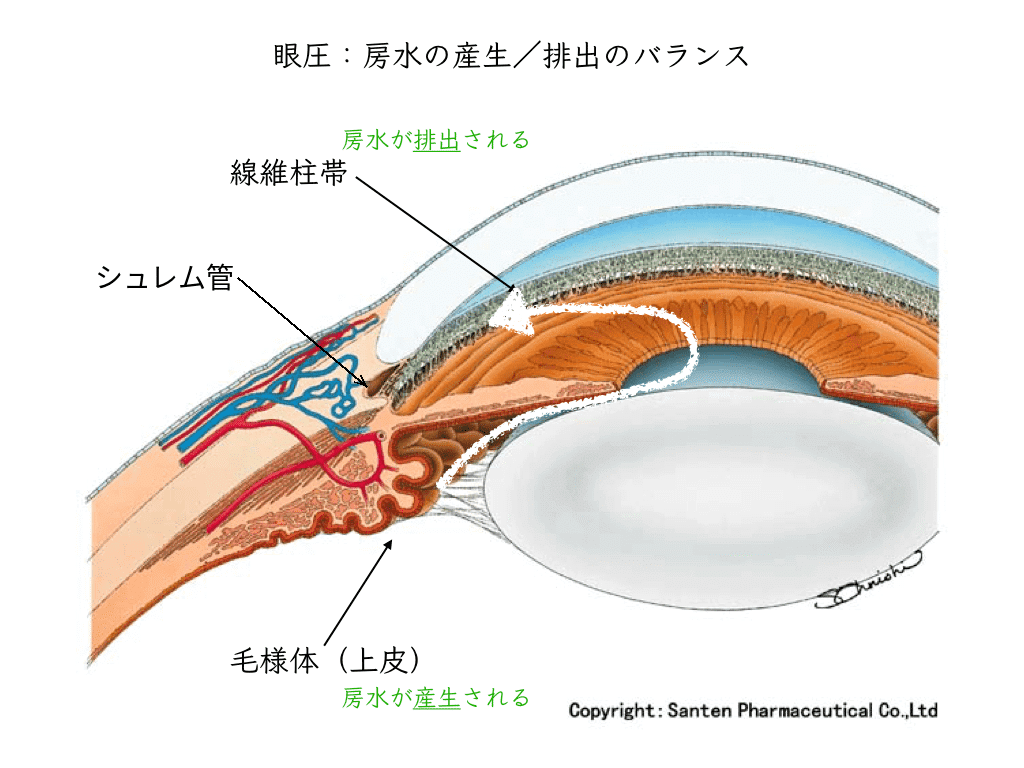
The only method proven effective in glaucoma treatment is lowering intraocular pressure.1
The front part of the eye (behind the cornea) is filled with a fluid called aqueous humor, which is produced by a tissue called the ciliary body and keeps flowing. After circulating inside the eye, the aqueous humor leaves through outflow pathways.
There are two outflow pathways.
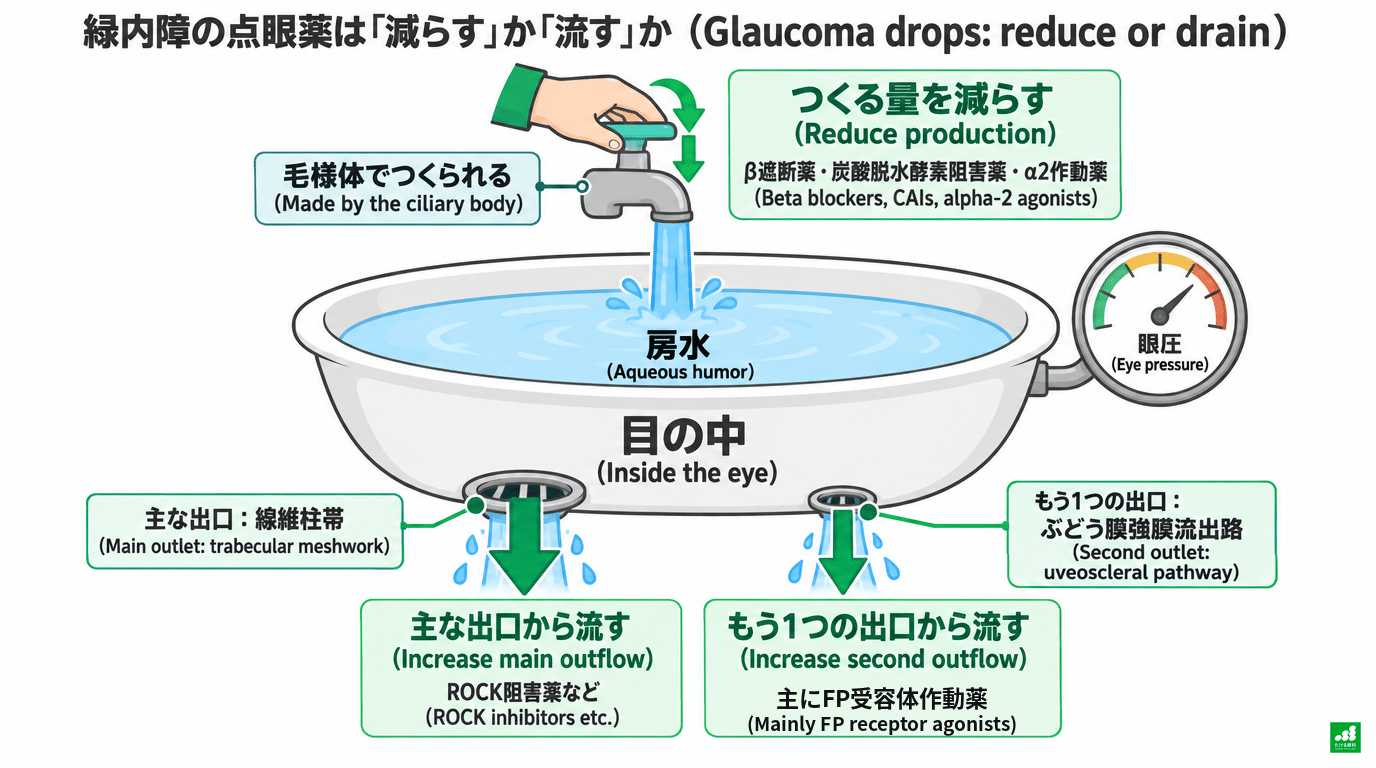
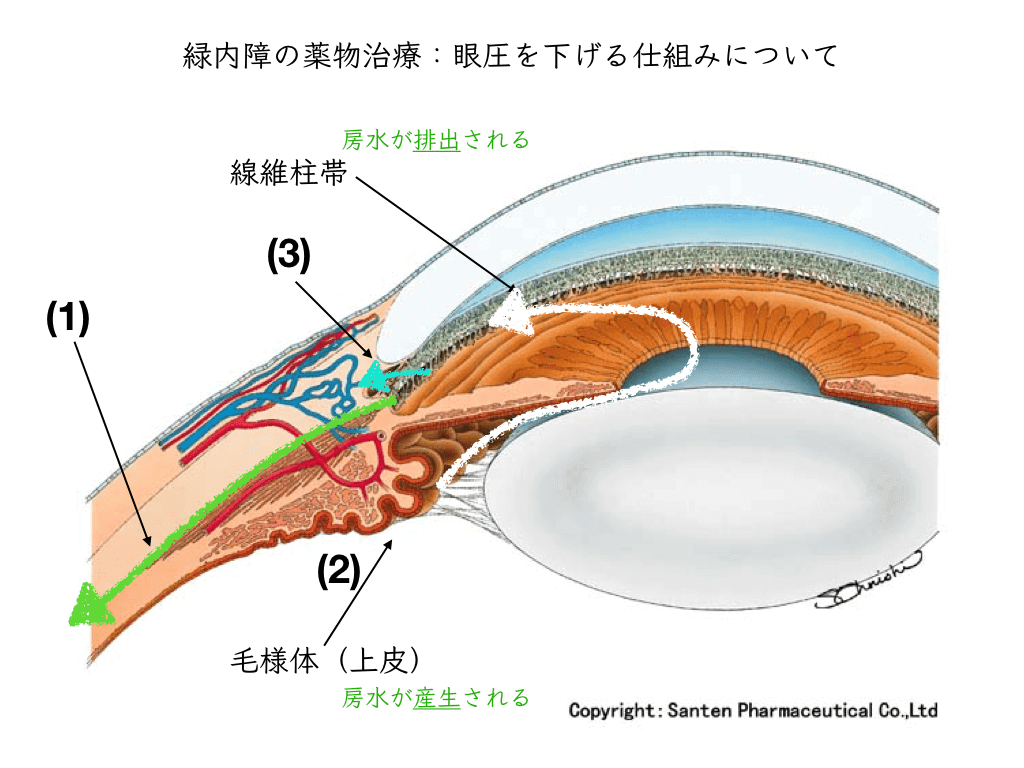
One is the “main outflow pathway,” which runs from the trabecular meshwork, located deep at the edge of the cornea (the anterior chamber angle), into Schlemm’s canal. The other is the “secondary outflow pathway” (uveoscleral outflow pathway), in which fluid seeps out through the gaps between the muscle fibers of the ciliary body to the outside of the eye.
Think of a washbasin with water coming in from the tap and leaving through the drain: eye drops work either by “turning down the tap” or by “widening the drain.”
On our glaucoma page, we divide eye drops into three groups: “drugs that drain through the main pathway,” “drugs that drain through the secondary pathway,” and “drugs that reduce production.” This article uses the same grouping.
Types and features of glaucoma eye drops
The Japan Glaucoma Society guidelines (5th edition, 2022) divide glaucoma eye drops, including combination drops, into nine classes1
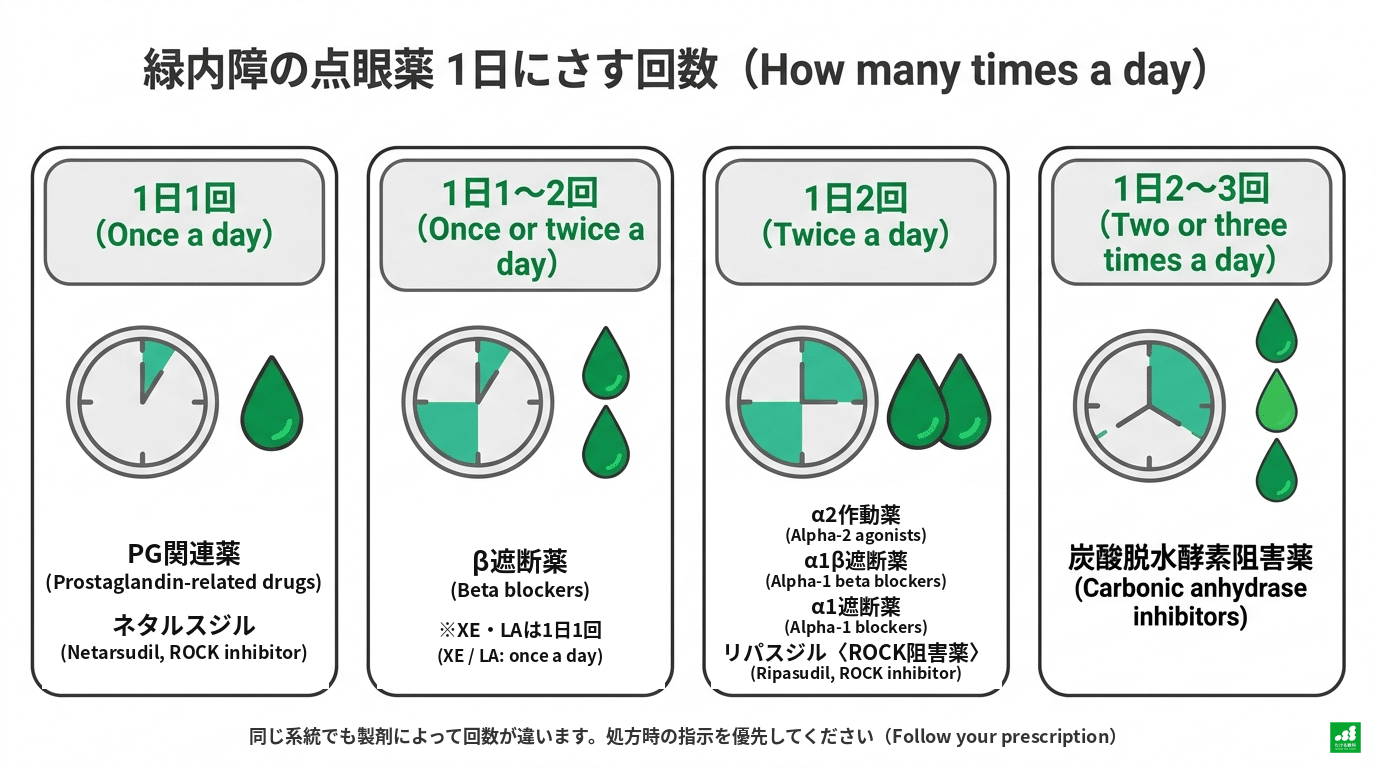
The main ones are summarized below by action, daily frequency and representative drugs.
| Class | Main action | Times per day | Representative drugs (generic name / main brand names) |
|---|---|---|---|
| FP receptor agonists (PG-related drugs) | Drain through the secondary pathway | Once | Latanoprost (Xalatan®), travoprost (Travatans®), tafluprost (Tapros®), bimatoprost (Lumigan®) |
| EP2 receptor agonists (PG-related drugs) | Drain through both the main and secondary pathways | Once | Omidenepag (Eybelis®) |
| Beta-blockers | Reduce production | Twice (once for some formulations) | Timolol (Timoptol®), carteolol (Mikelan®), betaxolol, levobunolol |
| α1β-blockers | Reduce production + drain through the secondary pathway | Twice | Nipradilol (Hypadil®) |
| Carbonic anhydrase inhibitors | Reduce production | 2–3 times (dorzolamide 3 times, brinzolamide twice; 3 times if the effect is insufficient) | Dorzolamide (Trusopt®), brinzolamide (Azopt®) |
| α2 agonists | Reduce production + drain through the secondary pathway | Twice | Brimonidine (Aiphagan®) |
| ROCK inhibitors | Drain through the main pathway | Twice | Ripasudil (Glanatec®) |
| α1-blockers | Drain through the secondary pathway | Twice | Bunazosin (Detantol®) |
| Ion channel openers | Drain through the main pathway | Twice | Isopropyl unoprostone (Rescula®) |
| Parasympathomimetics | Drain through the main pathway (indirectly) | 3–5 times | Pilocarpine (Sanpilo®) |
Source: Table 2, “Main glaucoma eye drops and their features,” Glaucoma Practice Guidelines (5th edition)1; brand names were checked against each drug’s package insert 2. Daily frequencies follow the usual dosing in the package inserts of representative drugs and differ in part from the guideline table. Frequency can also differ by formulation within the same class (Timoptol® XE and Mikelan® LA are once daily, and netarsudil [Rhopressa®], which also has ROCK-inhibiting action, is once daily, for example). Follow the instructions given when your drops were prescribed. In this table, PG-related drugs (prostanoid receptor–related drugs) are split into two rows, FP and EP2, and combination eye drops are listed in a separate table. Drugs introduced since 2022 are covered in a later section.
In the guidelines, FP receptor agonists are the most commonly used first-choice drugs for open-angle glaucoma. The reasons given are their pressure-lowering strength, once-daily dosing, and favorable side-effect profile1
Beta-blockers and EP2 receptor agonists can also serve as the first drug. However, beta-blockers cannot always be used in people with asthma or certain heart conditions, and EP2 receptor agonists cannot be used in eyes with an intraocular lens. These need to be checked before starting1,2
Carbonic anhydrase inhibitors, α2 agonists, ROCK inhibitors and similar drugs are labeled for use “when other glaucoma drugs are not effective enough.” For this reason, most are added as a second or later drug2
At Takeru Eye Clinic, we most often start with a once-daily FP receptor agonist.
If you are concerned about a sunken look around the eye or changes in your eyelashes, or if you want to avoid a visible difference between the two eyes when only one eye is treated, we will discuss an EP2 receptor agonist as an option.
The choice of first drug is almost the same for normal-tension glaucoma.
What to review before adding another drug
If the first drug does not lower eye pressure enough, a second bottle is not always added right away.
The guidelines say to consider switching to a different drug first and to aim for treatment with a single drug where possible1. They also summarize studies of adding a beta-blocker or carbonic anhydrase inhibitor to an FP receptor agonist, which found an additional pressure reduction of about 1–1.5 mmHg1. The effect varies with the added drug and the condition of the eye.
If you still do not reach your target pressure with three kinds of drugs, it is considered time to think about laser treatment or surgery as options1
Side effects: the surface of the eye, the whole body, and appearance
Side effects of eye drops are easier to understand when divided into three groups.
Those affecting the surface of the eye (redness, stinging, irritation), those affecting the whole body (asthma, effects on heart rate, drowsiness), and those affecting appearance (eyelashes, pigmentation, a sunken look around the eye).
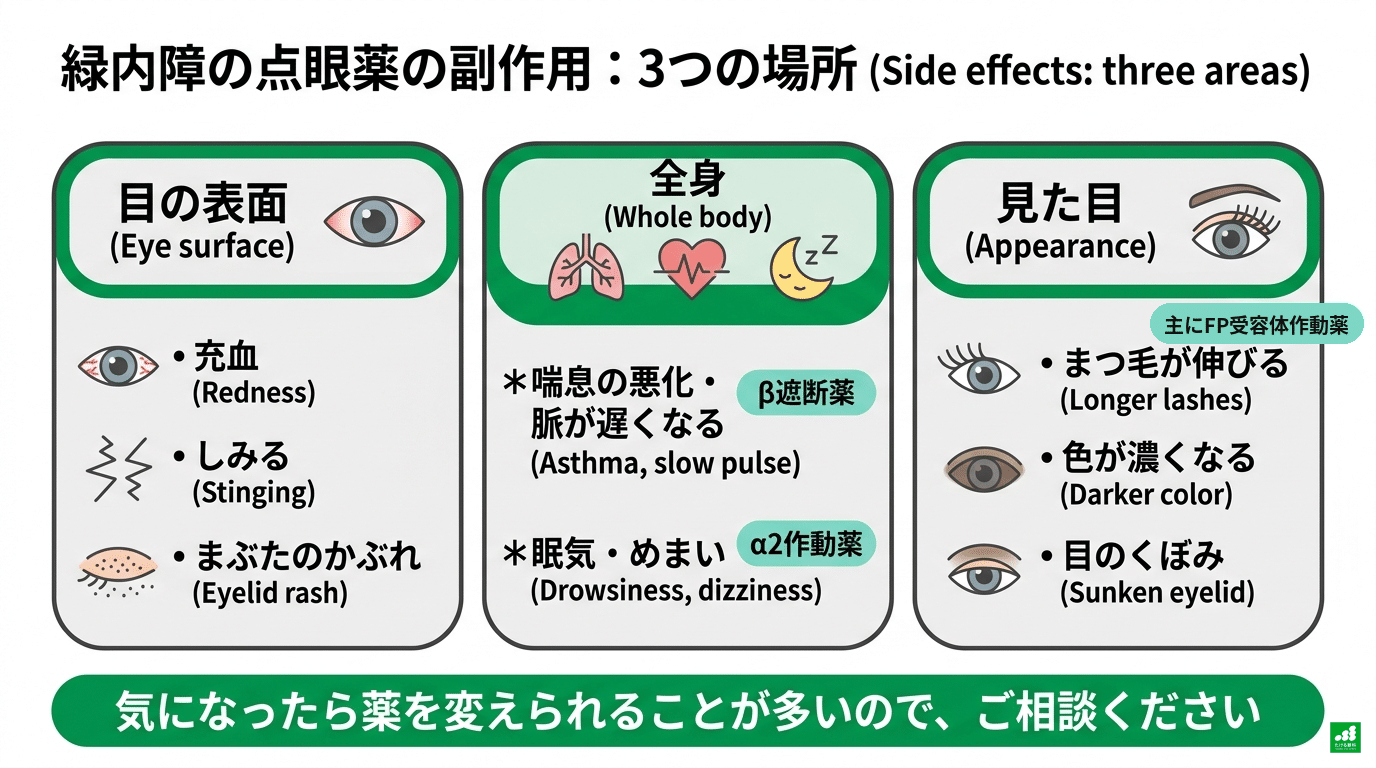
| Class | Main side effects | Points to watch |
|---|---|---|
| FP receptor agonists | Redness, longer eyelashes, darkening of the iris and eyelid skin, a sunken look around the eye | Wipe off any solution that gets on the eyelid, or wash your face |
| EP2 receptor agonists | Redness, macular edema (swelling at the center of the retina) | Cannot be used in eyes with an intraocular lens or without a lens. Cannot be used together with tafluprost |
| Beta-blockers | Slower heart rate, lower blood pressure, narrowing of the airways (worsening of asthma) | May not be usable with asthma or certain heart conditions |
| Carbonic anhydrase inhibitors | Stinging (dorzolamide); blurred vision and a change in taste right after instilling (brinzolamide) | Cannot be used with severe kidney disease |
| α2 agonists | Allergic irritation that appears after several months; drowsiness and dizziness | Be careful when driving. Cannot be used in children under 2 years |
| ROCK inhibitors | Redness (mostly temporary with ripasudil), eyelid irritation. With netarsudil: vortex keratopathy and corneal epithelial edema | See us right away for blurred or reduced vision. If irritation persists, please talk to us |
Source: Table 2, Glaucoma Practice Guidelines (5th edition)1and each drug’s package insert2. Other side effects than those listed can occur. All eye drops are said to be capable of causing redness, corneal injury and allergy, and side effects can differ by formulation even with the same active ingredient1
Side effects on the surface of the eye
Redness is most noticeable with PG-related drugs, EP2 receptor agonists and ROCK inhibitors.
For the ROCK inhibitor ripasudil (Glanatec®), the package insert lists conjunctival hyperemia in 69.0% of users2. In a one-year domestic Japanese trial, 97% of the redness was mild, and about 80% was temporary and faded on its own a while after instilling3
In the same trial, eyelid irritation (blepharitis) occurred in 20.6% and allergic conjunctivitis in 17.2%. Everyone who stopped the drops because of these recovered after stopping.3
With the α2 agonist brimonidine (Aiphagan®), irritation (allergy) can appear not right after starting but several months later. In a study of 2,850 people in Thailand, allergy occurred in 5.5%, and the median time to onset was 32 weeks.4
Among carbonic anhydrase inhibitors, dorzolamide (Trusopt®) causes irritation such as stinging and a foreign-body sensation; the package insert lists this at 24.4%. Brinzolamide (Azopt®) is a cloudy white suspension and can cause brief blurring right after instilling and a change in taste such as bitterness.2
The preservative (benzalkonium chloride) is thought to be able to cause damage and dryness on the surface of the eye, the longer and the more eye drops are used.5
Preservative-free “Mini” formulations (Tapros® Mini, Eybelis® Mini, Cosopt® Mini and others) are also available. However, under insurance coverage they are limited to people who are hypersensitive to preservatives or have corneal damage, among others. Not everyone can choose them.2
At Takeru Eye Clinic, we discuss switching to a preservative-free formulation for people with noticeable corneal damage or dry eye, or with symptoms such as stinging or irritation.
Side effects on the whole body
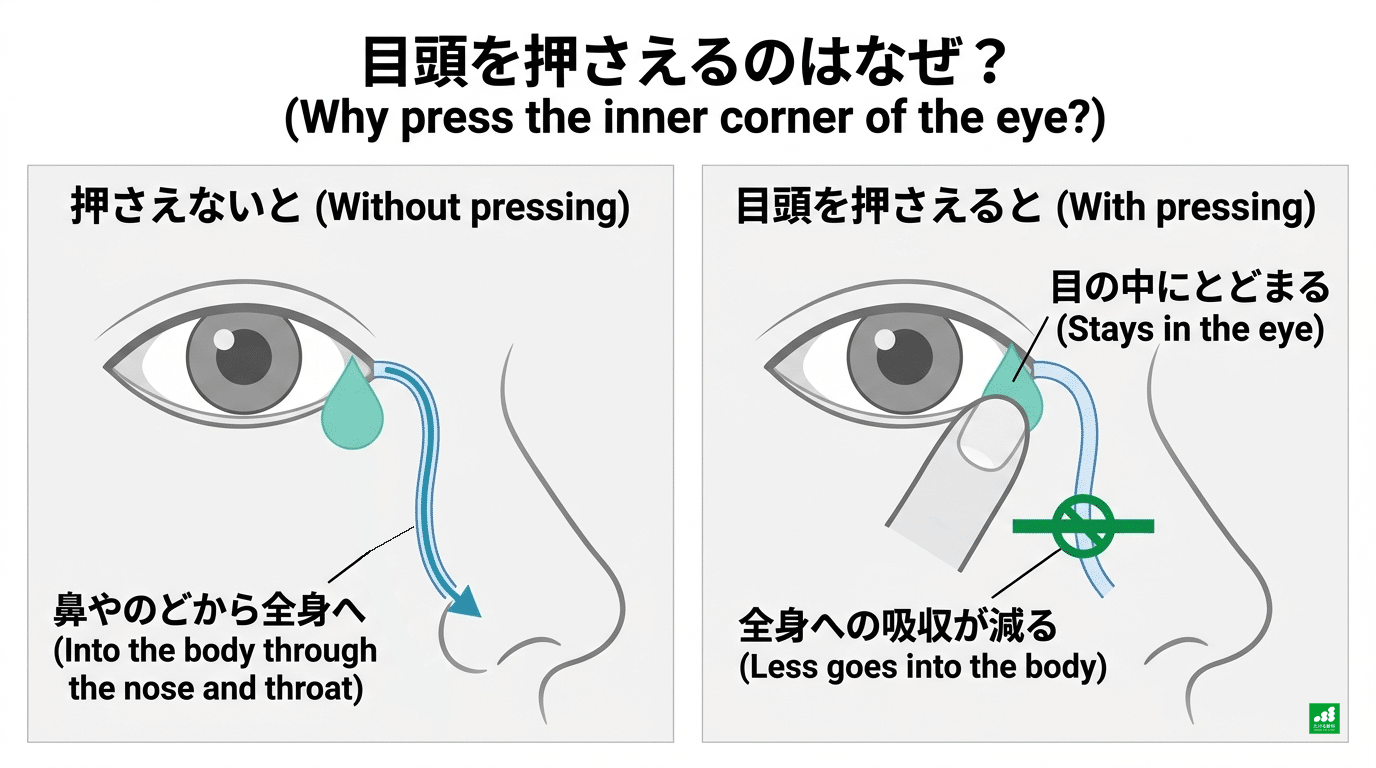
Even eye drops are partly absorbed through the mucous membrane deep in the nose and reach the whole body.
Beta-blockers (such as timolol) can narrow the airways and slow the heart rate. For this reason, the package insert says they cannot be used by people with bronchial asthma (including a past history) or severe chronic obstructive pulmonary disease (COPD). The same applies to people with uncontrolled heart failure, a slow heart rate, or atrioventricular block (second or third degree)2
The timolol package insert also warns that in people with diabetes, symptoms of low blood sugar may become harder to notice.2
If you are being treated for asthma or are seeing a doctor for a heart condition, please tell us about it before eye drops are prescribed. We can choose drugs that do not contain a beta-blocker, either single-agent or combination eye drops.
A study in healthy volunteers reported that closing the eyes and pressing the inner corner of the eye (the lacrimal sac area) after instilling reduced the systemic absorption of timolol by more than 60%6
The α2 agonist brimonidine can cause drowsiness and dizziness, and the package insert advises caution when driving and similar activities2
Strong drowsiness and similar effects have been reported with brimonidine in infants, so it cannot be used in children under 2 years2
Side effects on appearance (mainly FP receptor agonists)
The side effects of FP receptor agonists that patients most often worry about are changes in appearance.
The first is longer, thicker and more numerous eyelashes. For bimatoprost (Lumigan®), the package insert lists eyelash abnormalities in 52.8%2
The second is darkening of the iris (the brown part of the eye) and eyelid skin. The frequency listed in the latanoprost (Xalatan®) package insert is 2.37%, but a study that followed Japanese eyes with photographs for one year confirmed a change in iris color in about half7
The difference in numbers comes from differences in how it was assessed, who was studied, and the length of observation, so they cannot simply be compared. The package insert also states that the change is mild in irises that are already brown and is often not apparent at an examination2
It is not rare for the color to darken a little, but in my view the reality is closer to this: it is hard to notice in brown Japanese eyes.
The third is a deepened upper eyelid sulcus (a sunken upper eyelid). In a study that evaluated 250 Japanese people from photographs, the frequency of a sunken upper eyelid was 60.0% with bimatoprost, 50.0% with travoprost, 24.0% with latanoprost, 18.0% with tafluprost and 8.0% with unoprostone. These are the proportions seen in that study; they do not indicate the probability for any one person or a ranking of the drugs.8
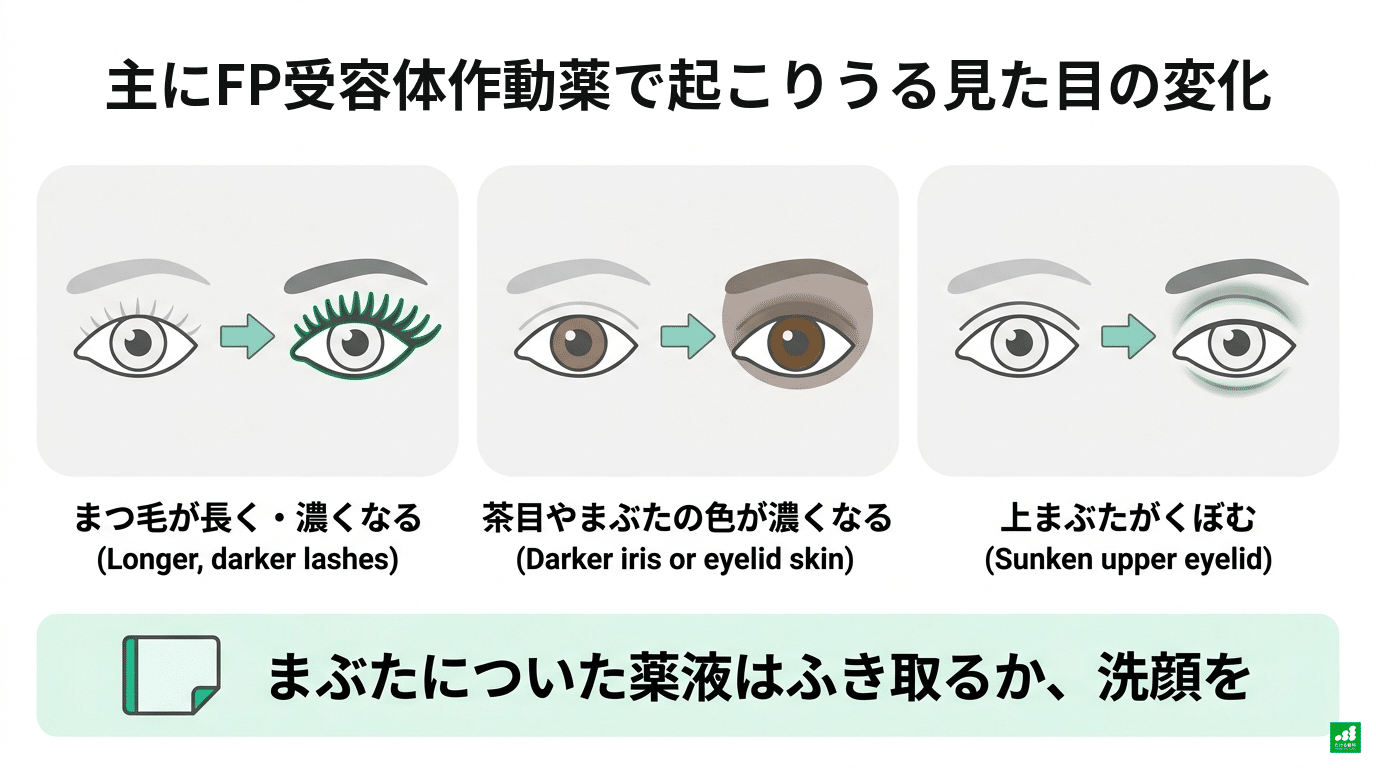
The package inserts also state to wipe off any solution that gets on the eyelid or to wash the face.2
Macular edema (EP2 receptor agonists)
The EP2 receptor agonist omidenepag (Eybelis®) is less likely to cause iris pigmentation or eyelash changes.1
On the other hand, care is needed for macular edema, swelling of the center of the retina (the macula). The package insert reports macular edema in 5.2% in domestic clinical trials, all in eyes with an intraocular lens. For this reason, it is contraindicated (a condition in which it must not be used) in eyes with an intraocular lens and in eyes without a lens.2
If you have had cataract surgery, please tell us at your visit. If your vision becomes blurred, distorted or hard to see, see us right away.
Omidenepag and tafluprost (Tapros®) also cannot be used together.2
If side effects bother you, the drug can often be changed
If side effects are hard to bear, please talk to us rather than stopping the drops on your own.
However, if you have symptoms such as difficulty breathing, severe dizziness or a feeling of fainting, or a sudden loss of vision, do not wait for your next visit; contact our clinic or a nearby medical facility right away.
There are many classes of glaucoma eye drops, so the drug can often be changed depending on how side effects appear. For example:
In a small Japanese report, people bothered by a sunken look around the eye switched from an FP receptor agonist to omidenepag, and the sunken look improved in 7 months. There were 23 patients; 76% improved on objective assessment and 95% on self-assessment, and eye pressure was maintained9. However, this was a small report without a comparison group, and it does not necessarily apply to everyone.
It has been reported that eyelid irritation that persists with ripasudil recovers once the drug is stopped3
For people with asthma, we consider drug combinations that do not contain a beta-blocker.
For people whose ocular surface is irritated by preservatives, we consider switching to a preservative-free formulation2
Which drug to switch to is decided by how well eye pressure is lowered, the condition of the eye, and other illnesses. If you notice any change that concerns you, please talk to us without waiting for your next visit.
Combination eye drops: two drugs in one bottle
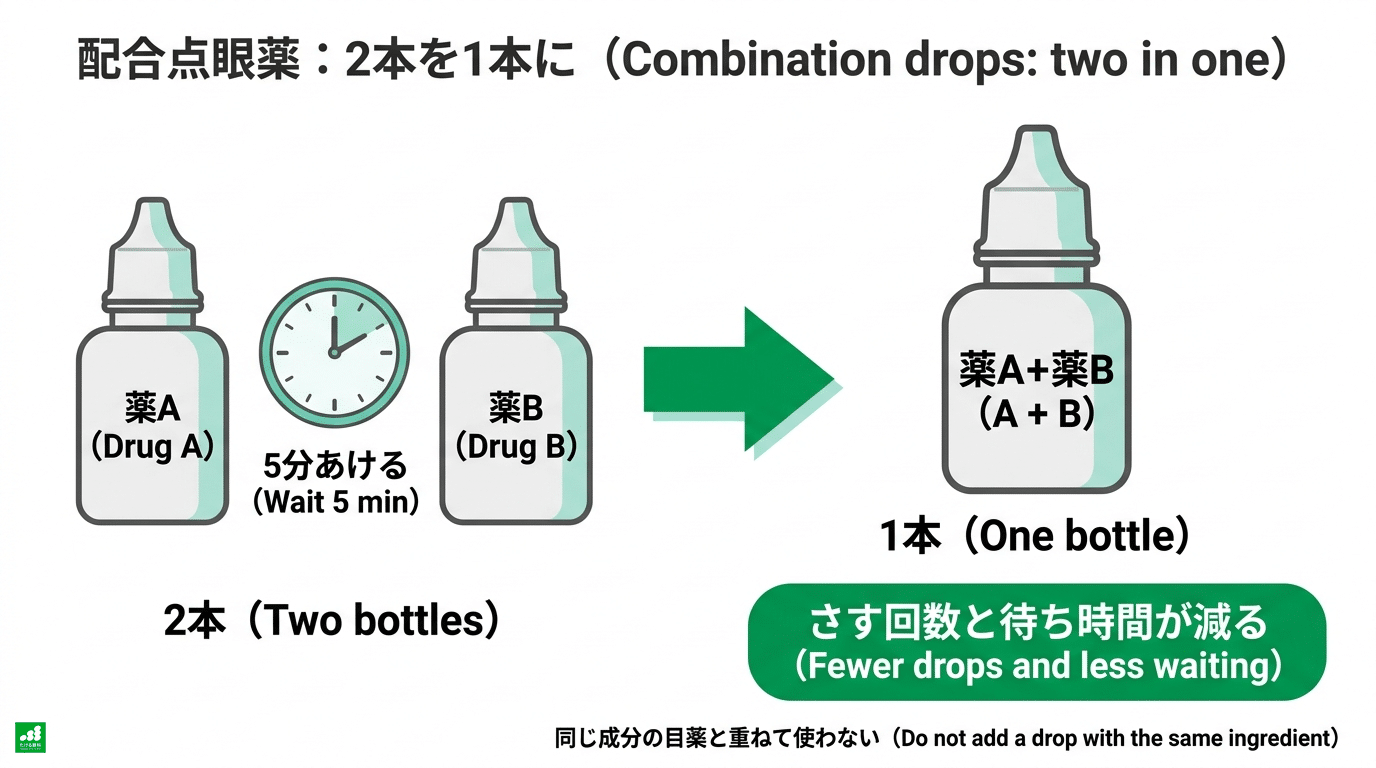
A combination eye drop puts two active ingredients in one container. All combination eye drops in Japan contain two ingredients1
Combining two bottles into one reduces the number of instillations and the effort of waiting between drops. The guidelines also say combination eye drops are useful for improving adherence (the patient understanding the treatment and continuing it) when multiple drugs are used1
| Product name | Ingredients (class) | Times per day | Contains a beta-blocker | Points to watch |
|---|---|---|---|---|
| Xalacom® | Latanoprost (FP) + timolol (β) | Once | Yes | Asthma, certain heart conditions |
| DuoTrav® | Travoprost (FP) + timolol (β) | Once | Yes | Asthma, certain heart conditions |
| Tapcom® | Tafluprost (FP) + timolol (β) | Once | Yes | Asthma, certain heart conditions; cannot be used with omidenepag |
| Mikeluna® | Carteolol (β) + latanoprost (FP) | Once | Yes | Asthma, certain heart conditions. Wait at least 10 minutes after other eye drops, then instill this one last |
| Cosopt® (Mini available) | Dorzolamide (carbonic anhydrase inhibitor) + timolol (β) | Twice | Yes | Asthma, certain heart conditions, severe kidney disease |
| Azorga® | Brinzolamide (carbonic anhydrase inhibitor) + timolol (β) | Twice | Yes | Suspension (shake well). Asthma, certain heart conditions, severe kidney disease |
| Aibeta® | Brimonidine (α2) + timolol (β) | Twice | Yes | Asthma, certain heart conditions; not for children under 2 |
| Ailamide® | Brimonidine (α2) + brinzolamide (carbonic anhydrase inhibitor) | Twice | No | Suspension (shake well). Not for children under 2; severe kidney disease |
| Glaalpha® | Ripasudil (ROCK) + brimonidine (α2) | Twice | No | Redness. Not for children under 2 |
Source: each drug’s package insert2(KEGG MEDICUS, checked September 23, 2026). “Points to watch” summarizes the main contraindications and cautions and is not exhaustive.
Reports are divided on whether combination eye drops make treatment easier to continue.
In a randomized controlled trial in the United States, the proportion of people who instilled 80% or more of the prescribed drops at 12 months was 32% with the combination eye drop and 11% with the two separate bottles10
Japanese insurance claims data also reported that people who used a combination eye drop as their second drug were more likely to still be on treatment after 12 months (47.6% vs. 24.9%)11. On the other hand, another report found no difference in the continuation rate after one year (39.0% vs. 41.7%)12
Combination eye drops are a strong way to reduce the number of bottles, but combining does not guarantee that treatment will continue.
There is also a caution: do not prescribe a combination eye drop together with a single-ingredient drug containing the same ingredient1
Also, combination eye drops that contain a beta-blocker carry the same contraindications as beta-blockers (asthma, certain heart conditions and others)2
New eye drops introduced since 2022
Three new drugs have been added since the 5th edition of the guidelines (2022). Approval dates and launch dates are listed separately.
| Drug (generic name) | Type | Approval | Times per day | Main clinical trial results |
|---|---|---|---|---|
| Glaalpha® Combination Ophthalmic Solution (ripasudil + brimonidine) | Combination eye drop containing a ROCK inhibitor | September 26, 2022 | Twice | Lowered eye pressure by 1.4 mmHg more than ripasudil alone and 1.8 mmHg more than brimonidine alone13 |
| Setaneo® Ophthalmic Solution 0.002% (sepetaprost) | Prostanoid receptor–related drug (FP and EP3 receptor agonist) | August 25, 2025 (launched October 23, 2025) | Once | Not inferior to latanoprost in eye-pressure reduction at 4 weeks (−5.77 mmHg vs. −6.10 mmHg)14 |
| Rhopressa® Ophthalmic Solution 0.02% (netarsudil) | Drug with ROCK-inhibiting action | June 19, 2026 (launched August 17, 2026) | Once | Greater reduction in daytime eye pressure at 4 weeks than ripasudil (twice daily) (4.65 mmHg vs. 2.98 mmHg)15 |
Source: each drug’s package insert2, Santen Pharmaceutical press releases16,17, and the papers on each clinical trial. Because the participants and conditions differ from trial to trial, the drugs cannot simply be compared with one another.
In domestic trials, Setaneo® caused conjunctival hyperemia more often (29.6%, vs. 8.6% for latanoprost), though most cases were mild14. The package insert lists eyelash abnormalities at 18.2% and iris pigmentation at 0.3%2
For Rhopressa®, the package insert lists conjunctival hyperemia at 55.9% and “vortex keratopathy,” a swirl-like pattern on the cornea, at 21.7%2. Corneal epithelial edema (swelling of the corneal surface) can also occur, and the insert advises seeing a doctor if blurred vision or reduced visual acuity is noticed2. According to the package insert, it is a drug for when other glaucoma drugs are not effective enough or cannot be used2
For a certain period after launch, new drugs can be prescribed for no more than 14 days at a time. According to the package inserts, this applies to Setaneo® until the end of October 2026 and to Rhopressa® until the end of August 2027.2
It is also true that there is still little data on long-term use of new drugs. If your eye pressure is stable on your current drugs, there is no need to hurry to switch.
We choose treatment for each person after checking how well eye pressure is lowered, side effects, other illnesses and so on. Whether to switch from your current drug is discussed in the same way.
How to instill eye drops correctly
The guidelines give the following six points for correct instillation1
- Wash your hands before instilling
- Keep the tip of the container from touching your eyelashes
- Normally use one drop at a time
- After instilling, close your eyes gently and press the inner corner of the eye (the lacrimal sac area)
- Wipe off any solution that overflows around the eye, and wash off any that gets on your hands
- When using two or more kinds of eye drops, wait at least 5 minutes between them
The package inserts say to keep the eyes closed and press the inner corner for 1 to 5 minutes2. This helps the drug stay in the eye and reduces absorption into the body.6
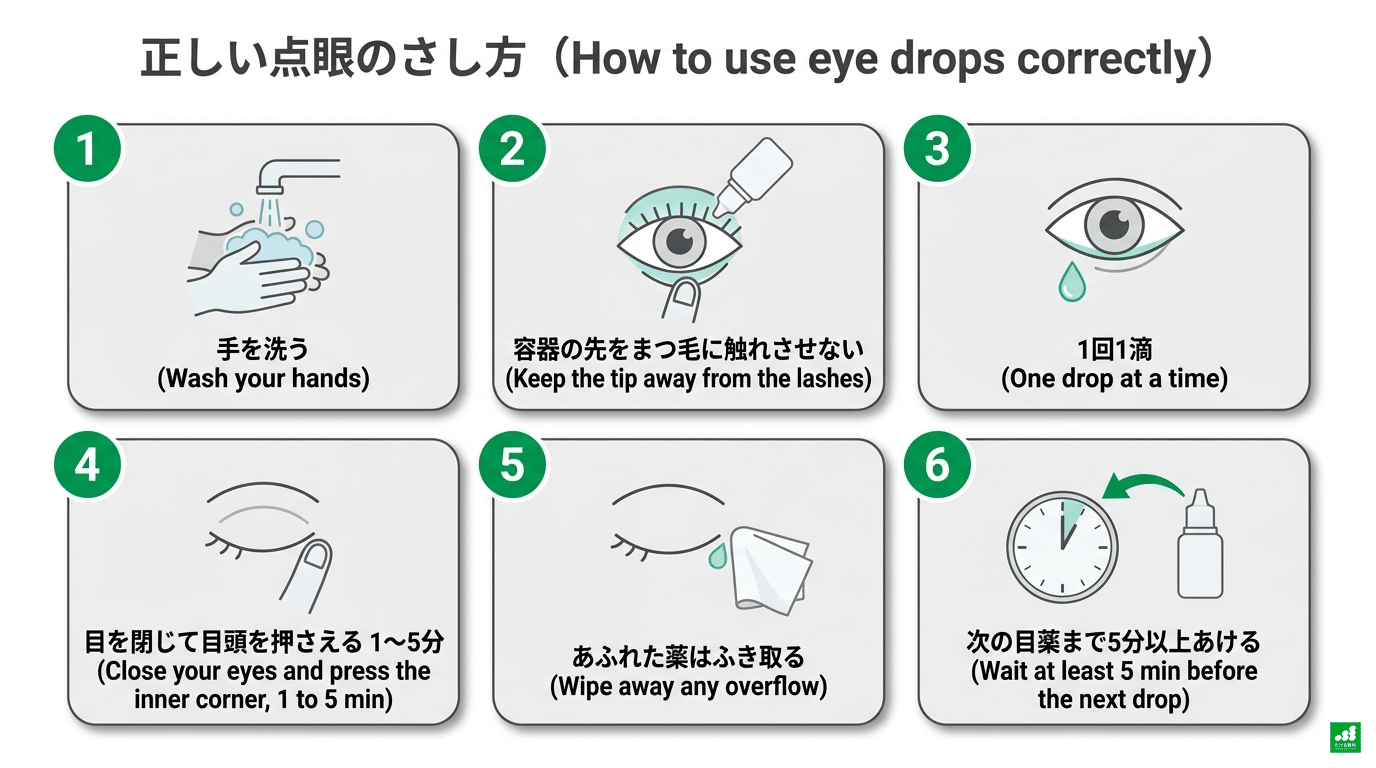
Even if you think you are doing it right, half of people miss
Eye drops are part of daily life, so it is easy to believe you are doing it well.
In a U.S. study, 92.8% of glaucoma patients experienced with eye drops answered that they instilled without problems. However, the proportion who actually got in exactly one drop without the container touching the eye was only 21.9–30.8%, depending on the type of container18
In a Japanese study that video-recorded glaucoma patients instilling their drops, 54% of the 56 people who could be assessed failed. Even among those who answered that they instilled well, 56% actually failed19. Failures tended to be more common in older people and in those with reduced sensitivity in the center of the visual field.19
If you are unsure about how to instill, please ask us at your visit.
Order and interval
When using two or more kinds of eye drops, wait at least 5 minutes between them as a rule1
However, thick (viscous) eye drops may keep drugs instilled afterward from being absorbed, so they are instilled last. The package inserts for Timoptol® XE, Mikelan® LA and Mikeluna® say to “instill last, after other eye drops, with an interval of 10 minutes or more”2
Cloudy white suspensions (Azopt®, Azorga®, Ailamide®) should be shaken well before use and instilled at least 10 minutes apart from other eye drops2
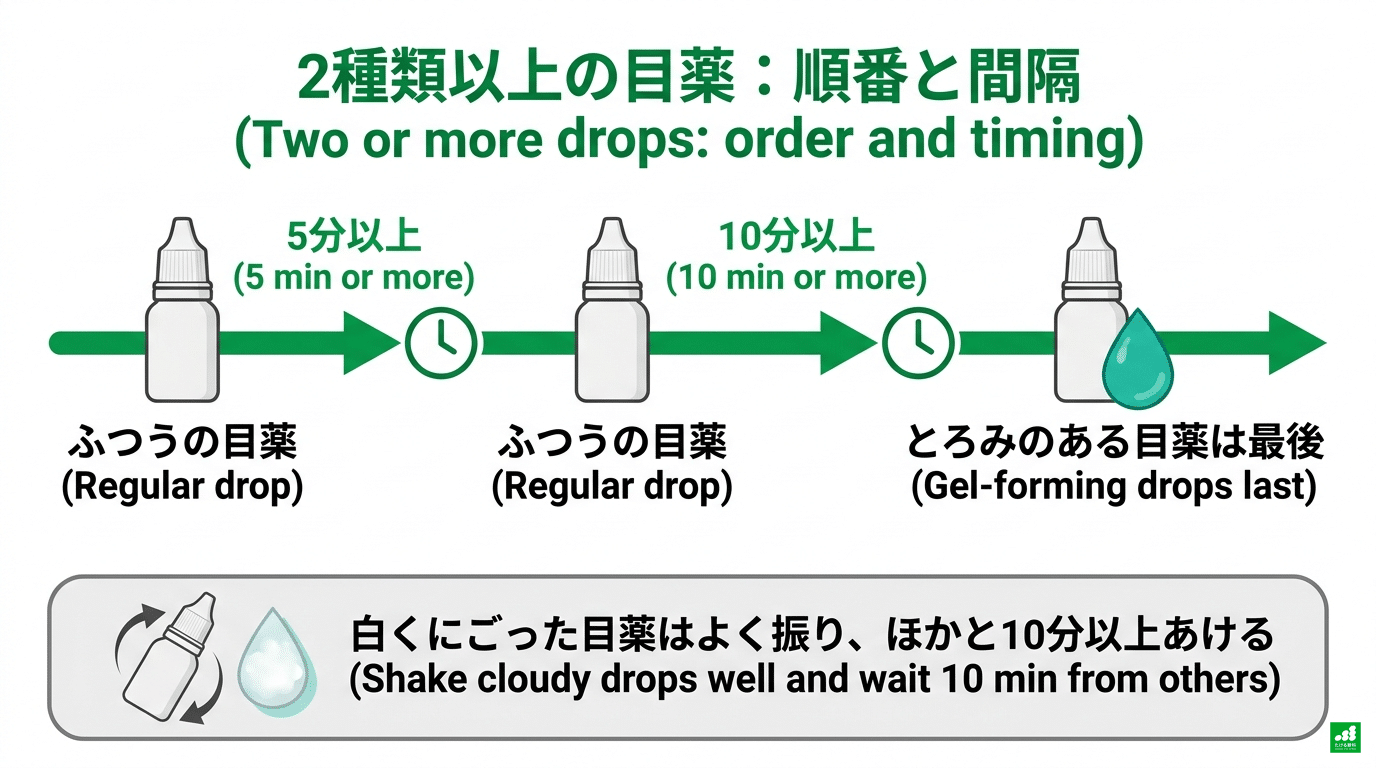
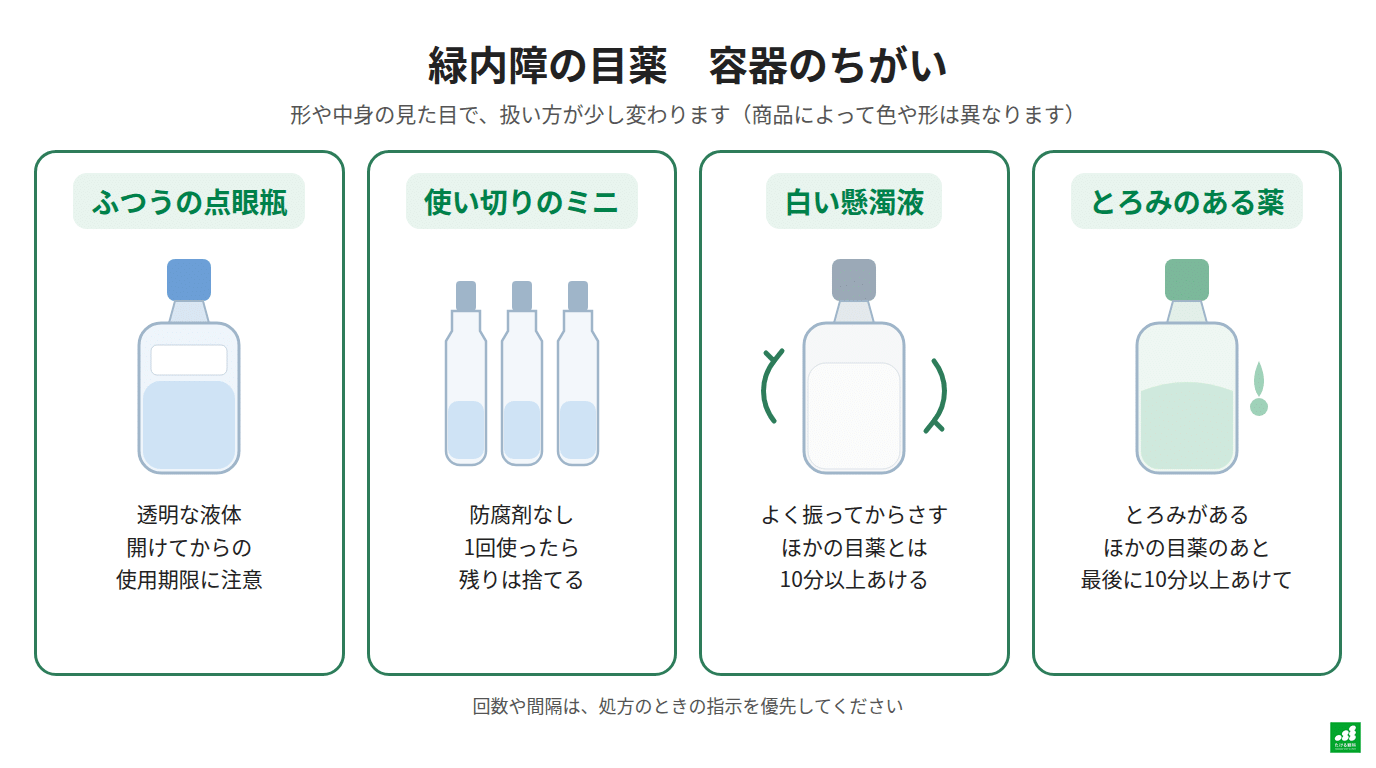
The exact order depends on the combination of drugs prescribed. Please follow the drug information sheet and your pharmacist’s explanation.
When you miss a dose
In fact, the package inserts of glaucoma eye drops contain no instructions for “if you miss a dose,” which is the counterpart of “if you forget to take it” for oral medicines. However, some patient information sheets from pharmaceutical companies (Kusuri-no-Shiori) describe what to do for each drug22
The guidelines state that using more drops or a larger amount than prescribed does not lower eye pressure further and increases side effects1
Even if you notice a missed dose, do not instill two drops or combine two doses.
Missing one dose does not make the effect disappear immediately
Once-daily PG-related drugs have a relatively long-lasting effect. A small trial (21 people) found that with travoprost, eye pressure stayed below the pre-treatment level up to 84 hours after the last dose20
On the other hand, a meta-analysis of latanoprost discontinuation found that the pressure-lowering effect had almost disappeared after 4 weeks off the drug21
A single missed dose rarely changes things much, but repeated misses let the effect fade. These figures do not show how long you may skip your drops.
How Takeru Eye Clinic approaches it
If your drug information sheet (Kusuri-no-Shiori) or your prescription gives instructions, follow those first.
When there are no specific instructions, this is what we tell patients at our clinic.
If you notice later the same day, instill one drop as soon as you notice. However, if it is almost time for your next dose, skip the missed one and go back to your usual schedule from the next dose.
If you notice the next day, skip the previous day’s dose and go back to your usual schedule from that day’s dose.
In either case, do not instill two drops or combine two doses.
For once-daily drugs, if you made up a missed dose, that counts for the day, and you return to your usual time from the next day. Do not instill twice in one day. If in doubt, check with your doctor or pharmacist.
For drops used two to three times a day, the more doses you miss, the more the effect tends to fall. Tying your drops to something you always do every day, such as brushing your teeth or eating a meal, makes them harder to forget.
Instill once-daily drops at the time you were told when they were prescribed. If you want to change the time to fit your life, please talk to us.
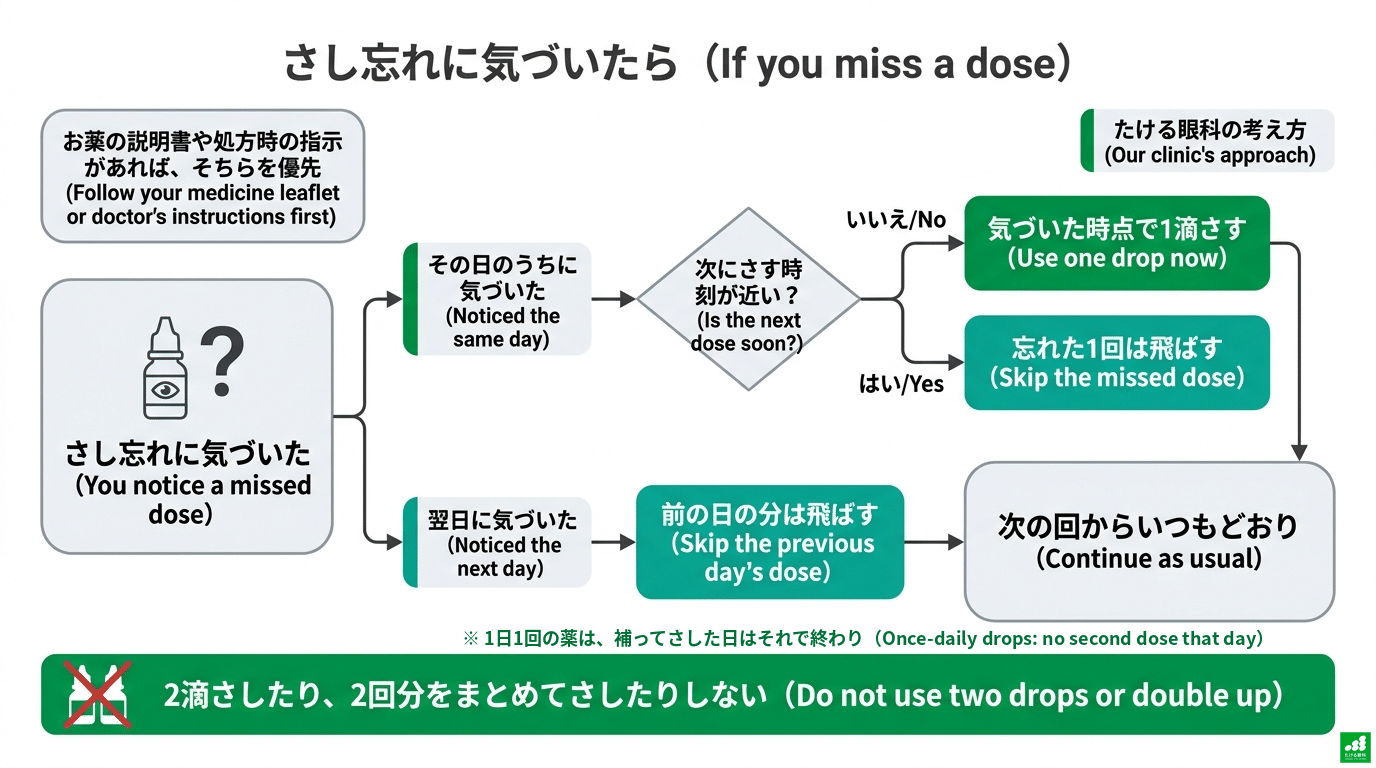
Please also tell us how many doses you missed, as it is
Continuing glaucoma eye drops is harder than you might think.
In Japanese health insurance society data (average age 47), of people who newly started glaucoma eye drops, 60.9% were still using them after one year, so about 40% had stopped23,1
In a study that recorded instillation electronically, the average proportion of drops actually instilled was 71%, whereas patients’ own reports said 95%. Instillation also tended to increase only just before a visit24
If you instill properly only before a visit, your eye pressure looks lower than usual and the drug is judged to be working, which may delay a review of treatment. Telling us how many doses you missed lets us judge more accurately.
In a large U.S. study, people with a higher proportion of adherence to their drops tended to have slower worsening of the visual field25. Because this was an observational study, it cannot be said that adhering itself slowed progression, but I consider it one result that shows the importance of continuing.
What we do at Takeru Eye Clinic (Takatori Shopping Street, Sawara-ku, Fukuoka City)
If side effects occur, please talk to us rather than putting up with them or stopping on your own. Depending on symptoms such as redness, eyelid irritation or a sunken look around the eye, we consider changing the drug or switching to a preservative-free formulation.
If you have symptoms such as difficulty breathing, severe dizziness or a feeling of fainting, or a sudden loss of vision, do not wait for your next visit; contact our clinic or a nearby medical facility right away.
For people for whom the number of bottles or instillations is a burden, we suggest switching to a combination eye drop.
For people who find it hard to keep up with drops, or whose side effects limit which drugs suit them, SLT (selective laser trabeculoplasty), which we perform at our clinic, is also an option. If surgery is considered necessary, we refer you to a facility that performs it.
If you have any concerns, please feel free to ask us anything at your visit.
Frequently asked questions
Q. Can I instill eye drops while wearing contact lenses?
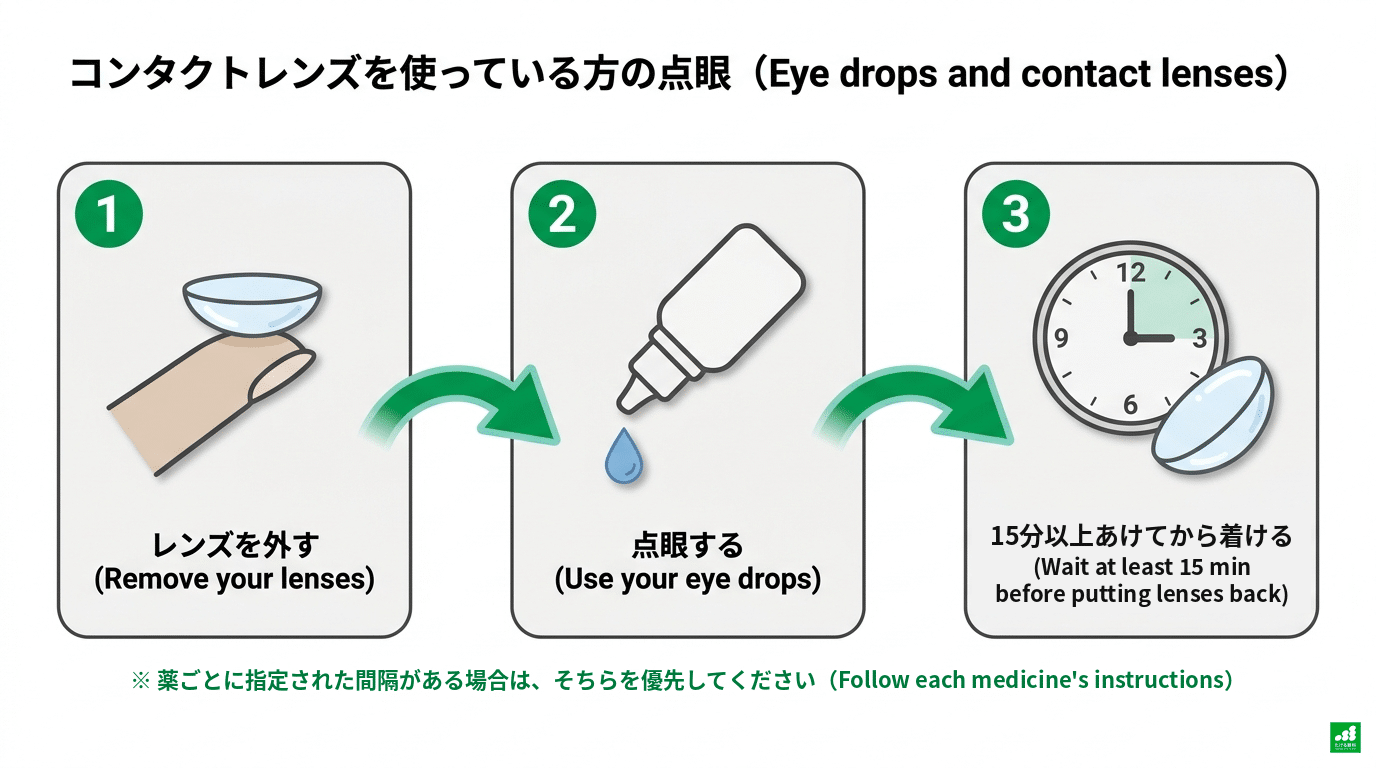
Many glaucoma eye drops contain a preservative (benzalkonium chloride), which can be absorbed by soft contact lenses and can discolor the lenses2. Please remove your lenses before instilling.
The time before putting lenses back in differs by formulation in the package inserts, such as “5 to 10 minutes” or “15 minutes or more”2. At our clinic, we usually tell patients to wait at least 15 minutes before putting lenses back in. However, if a specific interval is given for a drug, follow that first. For example, for Timoptol® XE the manufacturer advises waiting at least 30 minutes, preferably 1 hour26
Q. Can I use over-the-counter eye drops together with them?
When using glaucoma eye drops together with other eye drops, the basic rule is also to wait at least 5 minutes1,2
Depending on the ingredients, some over-the-counter eye drops are not suited to the condition of your eyes. If there is an eye drop you want to use, please show us the container at your visit.
Q. In what order should I instill them?
Basically any order is fine, but wait at least 5 minutes between them. Instill thick eye drops (Timoptol® XE, Mikelan® LA, Mikeluna®) last, with an interval of 10 minutes or more2
For details, see “Order and interval.”
Q. How should I store my eye drops?
Storage differs from drug to drug.
For example, Xalatan® is to be stored at 2–8°C (refrigerated); once the outer box is opened it should be kept away from light, and any remaining solution should not be used 4 weeks after the container cap was first opened2. Preservative-free Tapros® Mini, once the pouch is opened, is stored in the light-shielding bag in the refrigerator (2–8°C), and any remainder is discarded after a single use2
Follow the storage instructions on your drug information sheet.
Q. Can I instill them lying on my back?
Yes. The package inserts for Xalatan® and others state that, in principle, drops should be instilled lying on your back2
If sitting up makes it hard to instill, lying down may work better.
Q. Can I continue during pregnancy or breastfeeding?
The guidelines say that during pregnancy, drugs are used when the expected benefit of treatment outweighs the risk1. During breastfeeding, the package inserts of many drugs say to decide drug by drug, weighing both the need for treatment and the benefits of breastfeeding2
Please do not stop on your own; talk to us as soon as you learn you are pregnant or when you are thinking of becoming pregnant.
References
- Guidelines Revision Committee of the Japan Glaucoma Society. Glaucoma Practice Guidelines (5th edition). Journal of the Japanese Ophthalmological Society. 2022;126(2):85-177. https://www.nichigan.or.jp/Portals/0/resources/member/guideline/glaucoma5th.pdf
- Package inserts of each drug. KEGG MEDICUS, Prescription Drug Information. Accessed September 23, 2026. For the formulations and package insert codes consulted, see “List of package inserts” below (URL: https://www.kegg.jp/medicus-bin/japic_med?japic_code= + code).
- Tanihara H, Inoue T, Yamamoto T, et al. One-year clinical evaluation of 0.4% ripasudil (K-115) in patients with open-angle glaucoma and ocular hypertension. Acta Ophthalmol. 2016;94(1):e26-e34. doi:10.1111/aos.12829. https://pubmed.ncbi.nlm.nih.gov/26338317/
- Chansangpetch S, Pongpisitkul P, Tipparut K, et al. Incidence of and factors associated with brimonidine allergy. PLoS One. 2025;20(6):e0325319. doi:10.1371/journal.pone.0325319. https://pubmed.ncbi.nlm.nih.gov/40455725/
- Baudouin C, Labbé A, Liang H, Pauly A, Brignole-Baudouin F. Preservatives in eyedrops: the good, the bad and the ugly. Prog Retin Eye Res. 2010;29(4):312-334. doi:10.1016/j.preteyeres.2010.03.001. https://pubmed.ncbi.nlm.nih.gov/20302969/
- Zimmerman TJ, Kooner KS, Kandarakis AS, Ziegler LP. Improving the therapeutic index of topically applied ocular drugs. Arch Ophthalmol. 1984;102(4):551-553. doi:10.1001/archopht.1984.01040030429017. https://pubmed.ncbi.nlm.nih.gov/6704011/
- Latanoprost-Induced Iris Pigmentation Study Group. Incidence of a latanoprost-induced increase in iris pigmentation in Japanese eyes. Jpn J Ophthalmol. 2006;50(2):96-99. doi:10.1007/s10384-005-0288-7. https://pubmed.ncbi.nlm.nih.gov/16604382/
- Inoue K, Shiokawa M, Wakakura M, Tomita G. Deepening of the upper eyelid sulcus caused by 5 types of prostaglandin analogs. J Glaucoma. 2013;22(8):626-631. doi:10.1097/IJG.0b013e31824d8d7c. https://pubmed.ncbi.nlm.nih.gov/22936280/
- Sakata R, Fujishiro T, Saito H, et al. Prostaglandin-associated periorbitopathy symptom alleviation after switching prostaglandin F receptor agonist to EP2 receptor agonist in patients with glaucoma. J Ocul Pharmacol Ther. 2023;39(1):63-69. doi:10.1089/jop.2022.0096. https://pubmed.ncbi.nlm.nih.gov/36318495/
- Barnebey HS, Robin AL. Adherence to fixed-combination versus unfixed travoprost 0.004%/timolol 0.5% for glaucoma or ocular hypertension: a randomized trial. Am J Ophthalmol. 2017;176:61-69. doi:10.1016/j.ajo.2016.12.002. https://pubmed.ncbi.nlm.nih.gov/27993589/
- Shirai C, Matsuoka N, Nakazawa T. Comparison of adherence between fixed and unfixed topical combination glaucoma therapies using Japanese healthcare/pharmacy claims database: a retrospective non-interventional cohort study. BMC Ophthalmol. 2021;21(1):52. doi:10.1186/s12886-021-01813-w. https://pubmed.ncbi.nlm.nih.gov/33478408/
- Kashiwagi K, Chono E, Koesters S, Yap PS. Persistence and treatment patterns of fixed combination drugs for glaucoma: a retrospective claims database study in Japan. BMC Ophthalmol. 2020;20(1):223. doi:10.1186/s12886-020-01508-8. https://pubmed.ncbi.nlm.nih.gov/32522181/
- Tanihara H, Yamamoto T, Aihara M, et al. Ripasudil-brimonidine fixed-dose combination vs ripasudil or brimonidine: two phase 3 randomized clinical trials. Am J Ophthalmol. 2023;248:35-44. doi:10.1016/j.ajo.2022.11.017. https://pubmed.ncbi.nlm.nih.gov/36410471/
- Inatani M, Kanamori A, Inai M, Ikeda T, Angeles R. Efficacy and safety of sepetaprost in patients with primary open-angle glaucoma or ocular hypertension: results from the randomised, phase 3 ANGEL-J1 study. Jpn J Ophthalmol. 2026;70(4):957-965. doi:10.1007/s10384-026-01350-3. https://pubmed.ncbi.nlm.nih.gov/42298273/
- Araie M, Sugiyama K, Aso K, et al. Phase 3 clinical trial comparing the safety and efficacy of netarsudil to ripasudil in patients with primary open-angle glaucoma or ocular hypertension: Japan Rho Kinase Elevated Intraocular Pressure Treatment Trial (J-ROCKET). Adv Ther. 2023;40(10):4639-4656. doi:10.1007/s12325-023-02550-w. https://pubmed.ncbi.nlm.nih.gov/37603205/
- Santen Pharmaceutical. Santen obtains domestic manufacturing and marketing approval for Setaneo® Ophthalmic Solution 0.002%, a treatment for glaucoma and ocular hypertension. August 25, 2025 / Setaneo® Ophthalmic Solution 0.002% launched in Japan. October 23, 2025. https://www.santen.com/ja/news/2025/2025_1/20250825 / https://www.santen.com/ja/news/2025/2025_1/20251023
- Santen Pharmaceutical. Santen obtains domestic approval for Rhopressa® Ophthalmic Solution 0.02%. June 19, 2026 / Notice of the launch of Rhopressa® Ophthalmic Solution 0.02%, a treatment for glaucoma and ocular hypertension. August 17, 2026. https://www.santen.com/ja/news/2026/2026_1/20260619 / https://www.santen.com/ja/news/2026/2026_1/20260817
- Stone JL, Robin AL, Novack GD, Covert DW, Cagle GD. An objective evaluation of eyedrop instillation in patients with glaucoma. Arch Ophthalmol. 2009;127(6):732-736. doi:10.1001/archophthalmol.2009.96. https://pubmed.ncbi.nlm.nih.gov/19506189/
- Tanito M, Mochiji M, Tsutsui A, et al. Factors associated with topical medication instillation failure in glaucoma: VRAMS-QPiG study. Adv Ther. 2023;40(11):4907-4918. doi:10.1007/s12325-023-02646-3. https://pubmed.ncbi.nlm.nih.gov/37707675/
- Dubiner HB, Sircy MD, Landry T, et al. Comparison of the diurnal ocular hypotensive efficacy of travoprost and latanoprost over a 44-hour period in patients with elevated intraocular pressure. Clin Ther. 2004;26(1):84-91. doi:10.1016/s0149-2918(04)90008-2. https://pubmed.ncbi.nlm.nih.gov/14996520/
- Diaconita V, Quinn M, Jamal D, Dishan B, Malvankar-Mehta MS, Hutnik C. Washout duration of prostaglandin analogues: a systematic review and meta-analysis. J Ophthalmol. 2018;2018:3190684. doi:10.1155/2018/3190684. https://pubmed.ncbi.nlm.nih.gov/30363694/
- Rad-AR Council, Japan. Kusuri-no-Shiori (patient drug information): Xalatan Ophthalmic Solution 0.005%. https://www.rad-ar.or.jp/siori/search/result?n=49566 (accessed September 30, 2026)
- Kashiwagi K, Furuya T. Persistence with topical glaucoma therapy among newly diagnosed Japanese patients. Jpn J Ophthalmol. 2014;58(1):68-74. doi:10.1007/s10384-013-0284-2. https://pubmed.ncbi.nlm.nih.gov/24408788/
- Okeke CO, Quigley HA, Jampel HD, et al. Adherence with topical glaucoma medication monitored electronically: the Travatan Dosing Aid study. Ophthalmology. 2009;116(2):191-199. doi:10.1016/j.ophtha.2008.09.004. https://pubmed.ncbi.nlm.nih.gov/19084273/
- Shu YH, Wu J, Luong T, et al. Topical medication adherence and visual field progression in open-angle glaucoma: analysis of a large US health care system. J Glaucoma. 2021;30(12):1047-1055. doi:10.1097/IJG.0000000000001943. https://pubmed.ncbi.nlm.nih.gov/34669680/
- Santen Pharmaceutical. Santen Medical Channel FAQ: “Timoptol / Timoptol XE” (time before wearing contact lenses). https://www.santen.co.jp/medical-channel/di/faq/DK022_faq.html (accessed September 30, 2026)
List of package inserts (reference 2)
URL: https://www.kegg.jp/medicus-bin/japic_med?japic_code= + code (accessed September 23, 2026).
| Product name | Code |
|---|---|
| Xalatan Ophthalmic Solution 0.005% | 00057445 |
| Travatans Ophthalmic Solution 0.004% | 00053617 |
| Tapros Ophthalmic Solution / Tapros Mini Ophthalmic Solution 0.0015% | 00061944 |
| Lumigan Ophthalmic Solution 0.03% | 00057364 |
| Eybelis Ophthalmic Solution / Eybelis Mini Ophthalmic Solution 0.002% | 00070255 |
| Setaneo Ophthalmic Solution 0.002% | 00071814 |
| Timoptol Ophthalmic Solution 0.25% / 0.5% | 00051544 |
| Timoptol XE Ophthalmic Solution 0.25% / 0.5% | 00051545 |
| Mikelan LA Ophthalmic Solution 1% / 2% | 00053111 |
| Hypadil Kowa Ophthalmic Solution 0.25% | 00051455 |
| Trusopt Ophthalmic Solution 0.5% / 1% | 00045289 |
| Azopt Ophthalmic Suspension 1% | 00052976 |
| Aiphagan Ophthalmic Solution 0.1% | 00060270 |
| Glanatec Ophthalmic Solution 0.4% | 00063293 |
| Rhopressa Ophthalmic Solution 0.02% | 00072125 |
| Detantol 0.01% Ophthalmic Solution | 00047991 |
| Rescula Ophthalmic Solution 0.12% | 00053071 |
| Sanpilo Ophthalmic Solution | 00057469 |
| Xalacom Combination Ophthalmic Solution | 00058461 |
| DuoTrav Combination Ophthalmic Solution | 00058714 |
| Tapcom Combination Ophthalmic Solution | 00063640 |
| Mikeluna Combination Ophthalmic Solution | 00066523 |
| Cosopt Combination Ophthalmic Solution / Cosopt Mini Combination Ophthalmic Solution | 00065423 |
| Azorga Combination Ophthalmic Suspension | 00062031 |
| Aibeta Combination Ophthalmic Solution | 00068279 |
| Ailamide Combination Ophthalmic Suspension | 00068693 |
| Glaalpha Combination Ophthalmic Solution | 00070636 |