![Takeru Eye Clinic | Takatori Shopping Street, Sawara-ku, Fukuoka City [Nishijin Station / Fujisaki Station]](https://takeru-eye.com/wp-content/uploads/2022/10/takeru_logo_for-WP-header.png)
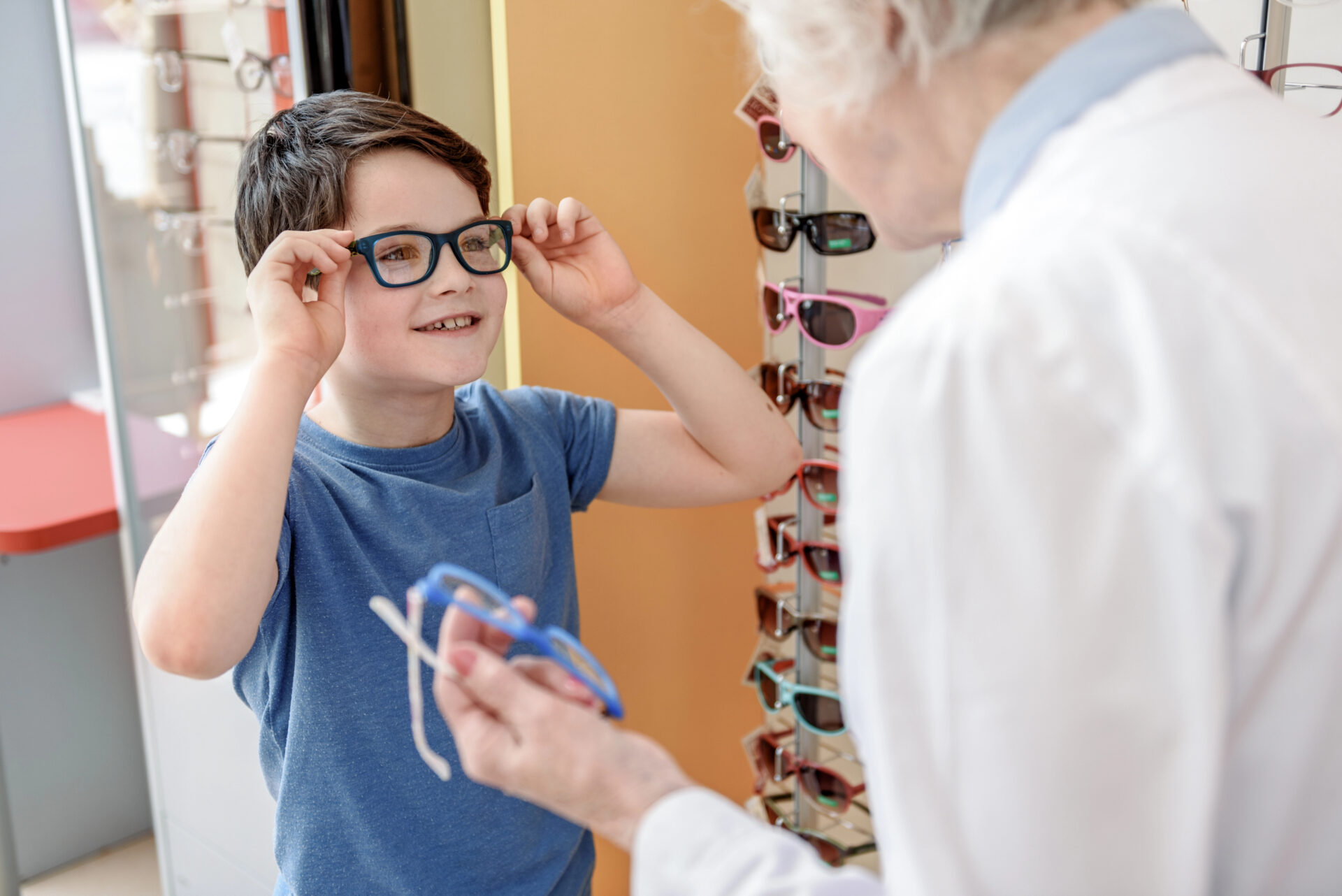
“Do glasses make your eyes worse?”
For many years, various misunderstandings have existed about the effect of wearing glasses on vision.
Based on the latest scientific knowledge, I explain the relationship between wearing glasses and eyesight.
This is a discussion about myopia in children.
Do Glasses Make Your Eyesight Worse? A Look at the Scientific Evidence

Glasses and Vision: The Basics
Glasses are optical devices that correct vision.
They play an important role in improving vision problems caused by refractive errors.
Recent research has made it clear that the traditional concern that wearing glasses itself worsens eyesight lacks scientific basis.1。
Understanding the Nature of Refractive Errors
Refractive errors are vision problems that arise from structural features of the eyeball.
The main types are as follows:
- Myopia: the axial length (the front-to-back length of the eyeball) is longer than normal.
- Hyperopia: the axial length is shorter than normal.
- Astigmatism: the surface of the cornea is distorted (shaped like a rugby ball rather than a perfectly round soccer ball).
These conditions are caused by anatomical factors such as the shape of the eyeball and the curvature of the cornea.2。
In particular, the latest research has shown that both genetic and environmental factors are involved in the onset and progression of myopia.
How Glasses Work and Their Effect on Vision
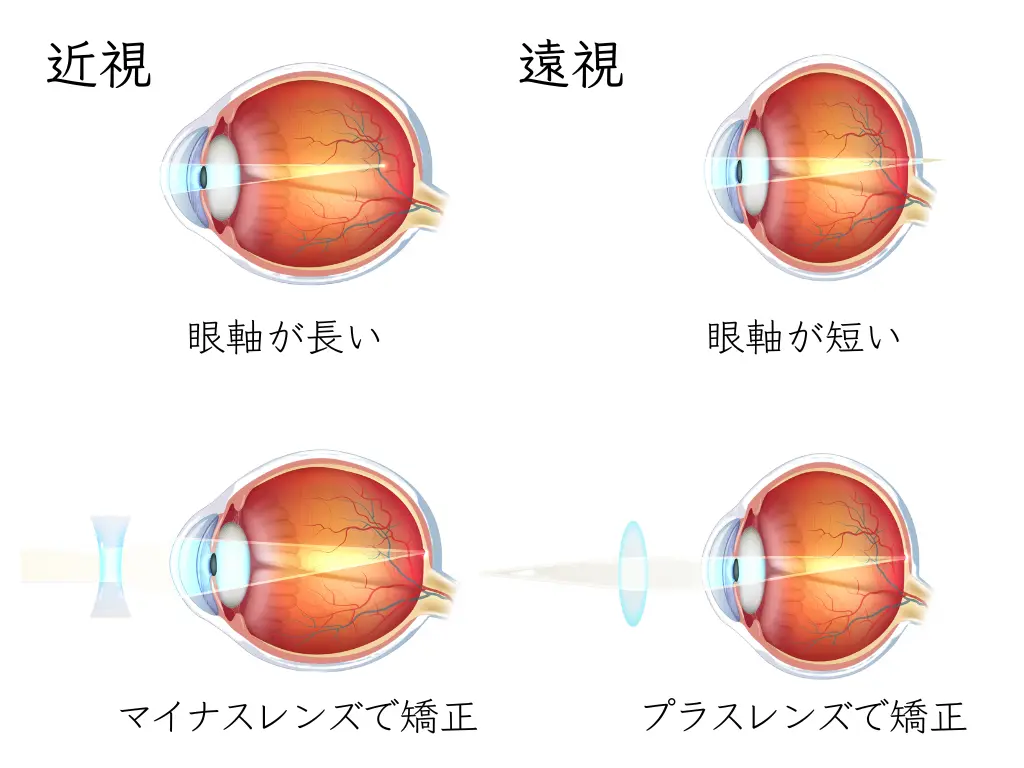
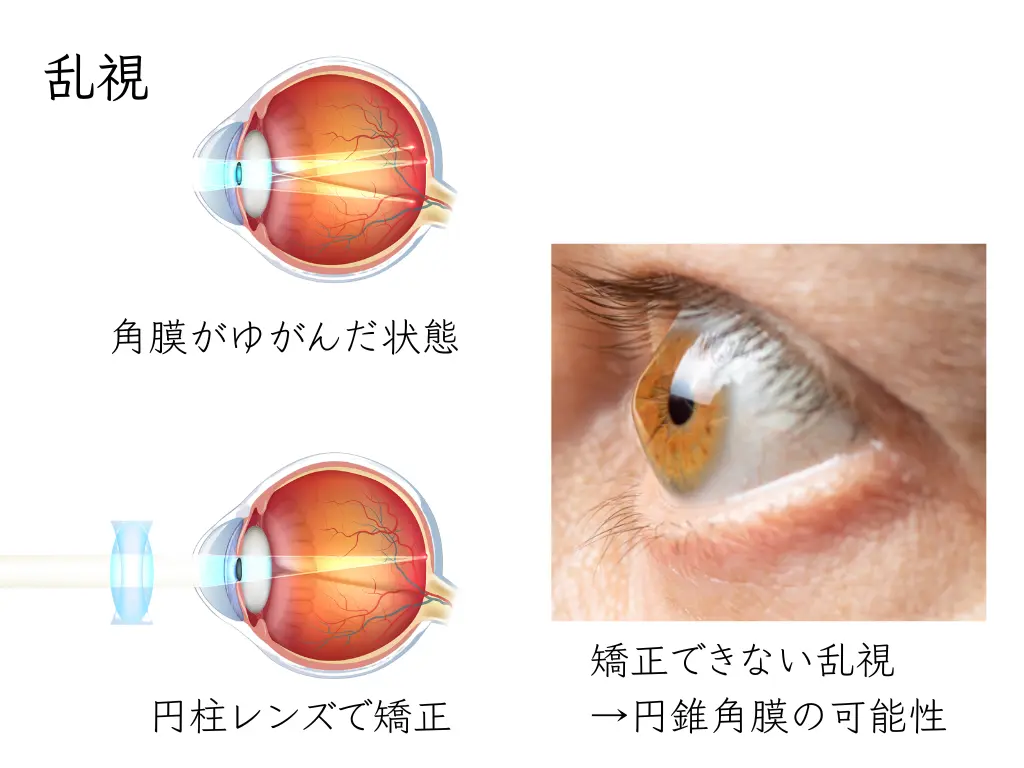
Glasses lenses are designed to form a clear image on the retina by adjusting the refraction of light.
In this process, the following important effects occur:
- A clearer image through appropriate refraction of light rays
- Assistance with focus adjustment on the retina
- More efficient processing of visual information
It has been confirmed that wearing appropriately prescribed glasses corrects vision without adversely affecting the visual system.3。
Myopia Progression and Glasses
A point worth special attention is the misunderstanding about wearing glasses and the progression of myopia.
According to long-term follow-up studies,
wearing glasses of the appropriate power does not promote the progression of myopia.This has been shown.4。
Rather, it has become clear that the following factors are involved in the progression of myopia:
- Genetic predisposition
- Increase in near work
- Lack of outdoor activity
- Excessive use of digital devices
A Scientific Approach to Vision Management
In modern vision management, the following elements are considered important:
1. Regular vision tests
They are essential for detecting changes in vision early and responding appropriately.
It has been shown that regular vision tests and appropriate correction significantly improve vision-related quality of life (QOL).5。
“My glasses don’t fit anymore” and “I can’t see well with my glasses”
are things that children seem to rarely notice on their own.
It would be good to check their vision occasionally (about once every 2 to 3 months) and to consider changing the lens power if myopia has progressed.
2. Managing environmental factors
The following elements are important for protecting vision:
- Maintaining appropriate lighting
- Taking regular breaks
- Keeping an appropriate working distance
- Managing screen time
3. A preventive approach
Especially in managing vision in childhood, the following preventive measures are recommended:
- Regular outdoor activity
- Maintaining a good reading posture
- Balanced nutrition
During the COVID-19 era, considerable progression of myopia was seen.
This is thought to be because children’s time spent outdoors decreased.
Latest Research Findings
Recent studies have reported the following important findings:
The relationship between early use of glasses and visual development
- Wearing glasses at the appropriate time promotes visual development
- Uncorrected visual impairment may affect learning ability
The effect of digital devices
- The relationship between blue light and eye strain
- The importance of taking appropriate breaks when using screens
Signs of eye strain arise from the way digital devices are used,
not from blue light emitted by the devices.
The effect of environmental factors
- The importance of exposure to natural light → The importance of playing outdoors
- Balanced management of near work
Conclusion: Do Glasses Make Your Eyesight Worse?
Based on scientific evidence,
wearing appropriately prescribed glasses does not make your eyesight worse.
The idea that “wearing glasses makes your eyes worse” seems to have been an old way of thinking.
Rather, glasses contribute to maintaining visual function and improving quality of life.
What matters is regular examinations and following the proper way of use.
References
- Zadnik, K., Sinnott, L.T., Cotter, S.A., Jones-Jordan, L.A., Kleinstein, R.N., Manny, R.E., Twelker, J.D. & Mutti, D.O., 2015, ‘Prediction of Juvenile-Onset Myopia’, JAMA Ophthalmology, vol. 133, no. 6, pp. 683-689.
- Morgan, I.G., Wu, P.C., Ostrin, L.A. & Tideman, J.W.L., 2021, ‘IMI Risk Factors for Myopia’, Investigative Ophthalmology & Visual Science, vol. 62, no. 5, p. 3.
- Cheng, D., Woo, G.C., Drobe, B. & Schmid, K.L., 2014, ‘Effect of bifocal and prismatic bifocal spectacles on myopia progression in children: three-year results of a randomized clinical trial’, JAMA Ophthalmology, vol. 132, no. 3, pp. 258-264.
- Chung, K., Mohidin, N. & O’Leary, D.J., 2002, ‘Undercorrection of myopia enhances rather than inhibits myopia progression’, Vision Research, vol. 42, no. 22, pp. 2555-2559.
- McClure, T.M., Choi, D., Wooten, K., Nield, C., Becker, T.M. & Mansberger, S.L., 2011, ‘The impact of eyeglasses on vision-related quality of life in American Indian/Alaska Natives’, American Journal of Ophthalmology, vol. 151, no. 1, pp. 175-182.