![Takeru Eye Clinic | Takatori Shopping Street, Sawara-ku, Fukuoka City [Nishijin Station / Fujisaki Station]](https://takeru-eye.com/wp-content/uploads/2022/10/takeru_logo_for-WP-header.png)
Is there anything I should be careful about with glaucoma?
It’s something everyone wonders about, and a great deal of research has been done on it, past and present, all over the world.
Coffee? Trumpet? Smoking?
Because everyone’s circumstances differ, it is difficult to draw a firm conclusion about “what to watch out for with glaucoma.”
There is a clinical study reporting that “exercise slows the progression of visual field loss.”
Glaucoma is known as one of the leading causes of irreversible blindness worldwide¹.
It usually progresses as elevated intraocular pressure gradually damages the optic nerve.
In managing glaucoma, controlling intraocular pressure is the main treatment.
A recent study suggested that physical activity may slow the progression of visual field loss in patients with glaucoma².
Glaucoma: Physical Activity May Slow the Progression of Visual Field Loss
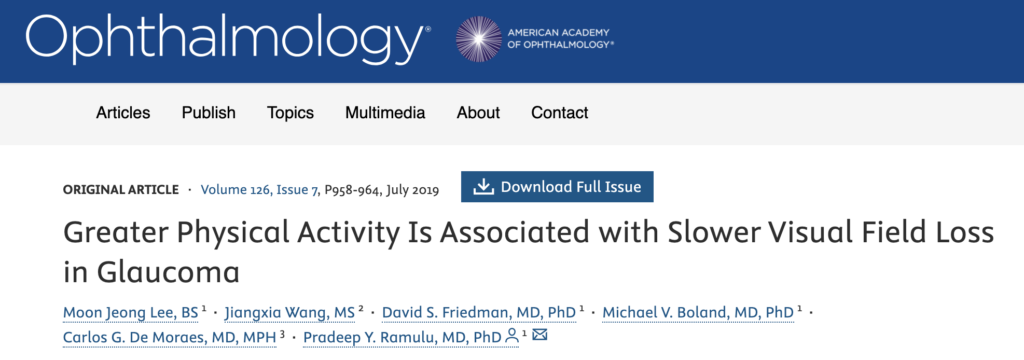
Lee, M.J., Wang, J., Friedman, D.S., Boland, M.V., De Moraes, C.G. and Ramulu, P.Y., 2019. Greater physical activity is associated with slower visual field loss in glaucoma. Ophthalmology, 126(7), pp. 958–964. doi:10.1016/j.ophtha.2018.10.012.
The following explanation is based mainly on a 2019 article in Ophthalmology.
Study Background
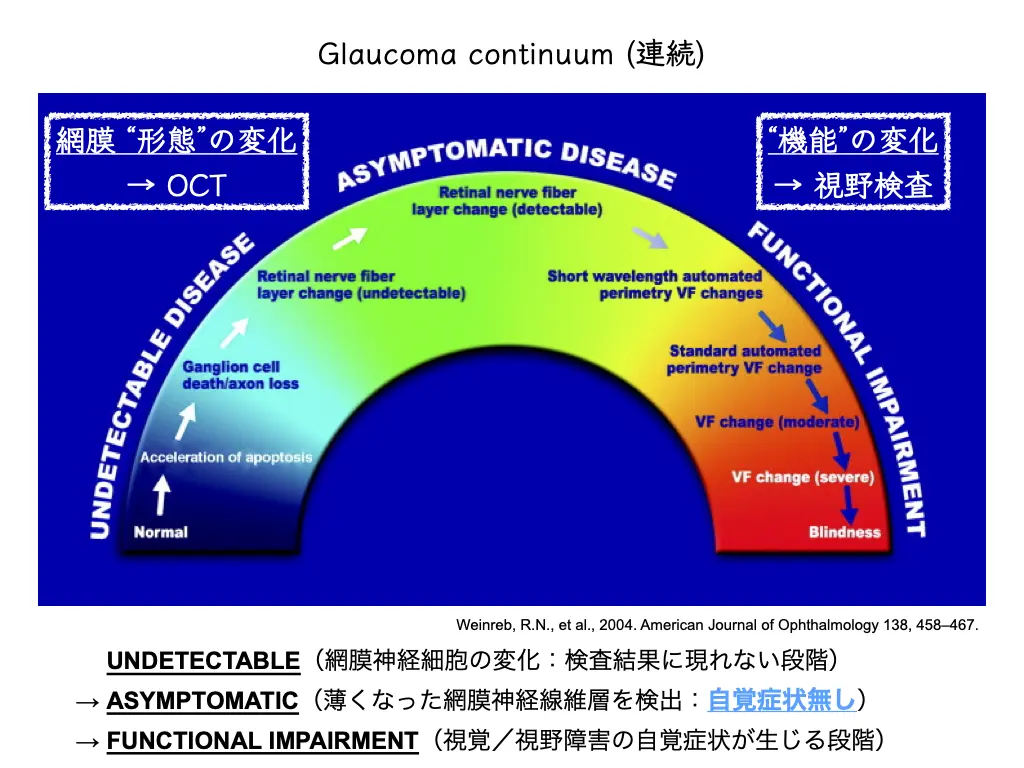
Glaucoma is characterized by progressive damage to the optic nerve.
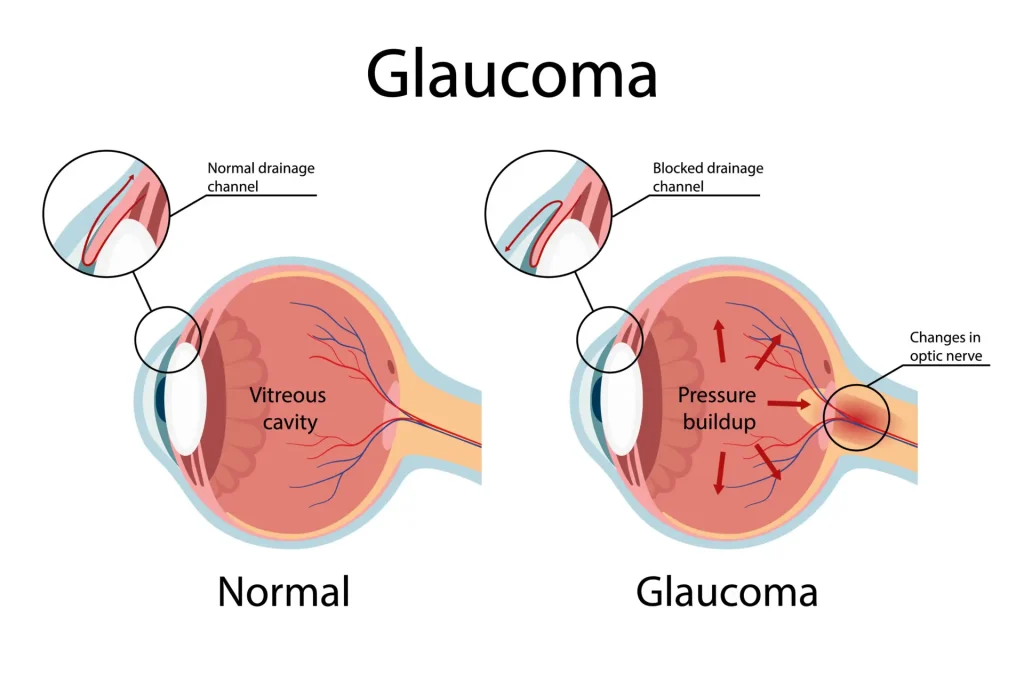


Optic nerve damage is usually caused by elevated intraocular pressure.
Glaucoma can also be diagnosed when intraocular pressure is normal (normal-tension glaucoma)³.
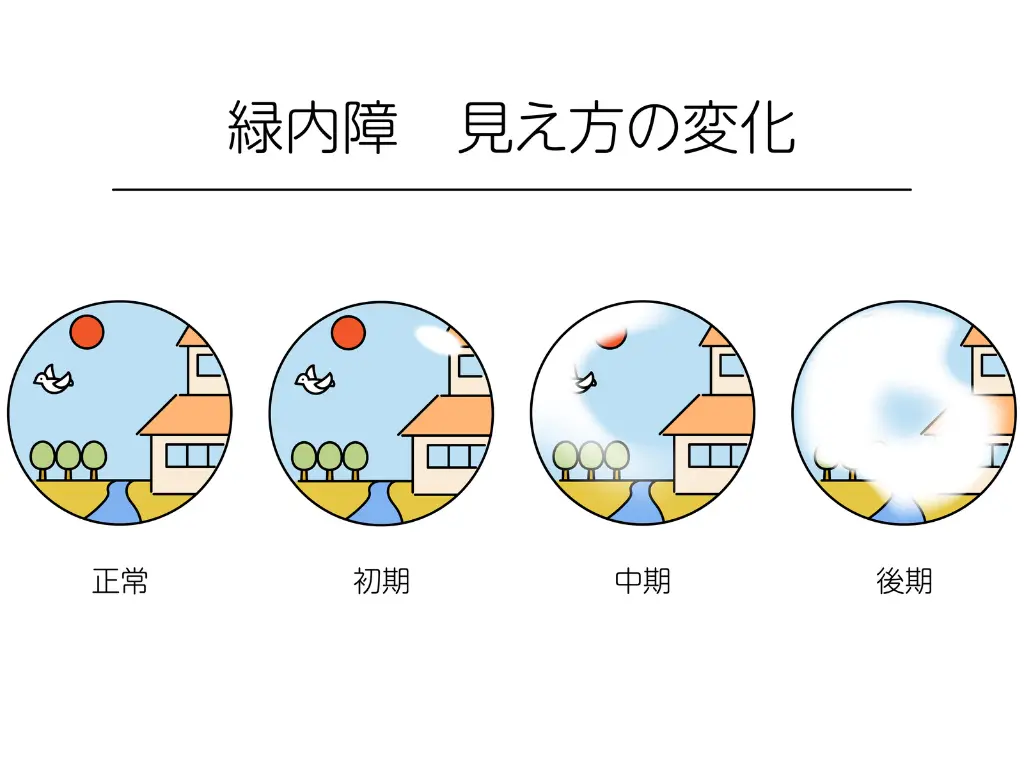
The main symptom of glaucoma is visual field loss.
It is hard to notice in the early stages, but as the disease advances, the visual field gradually narrows, starting from the periphery⁴.
Glaucoma treatment focuses mainly on lowering intraocular pressure.
This includes eye drops, laser treatment, and surgery⁵.

In recent years, however, it has been pointed out that general health and lifestyle may influence the progression of glaucoma, and the role of physical activity in particular has attracted attention⁶.
The Latest Findings: Physical Activity and Visual Field Loss
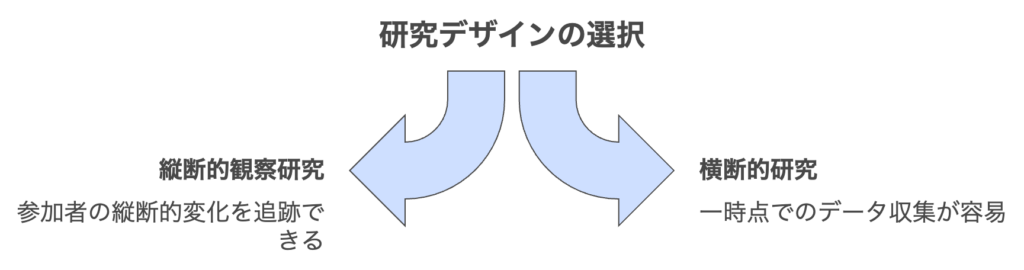
A recent large longitudinal observational study found that a higher level of physical activity may slow the progression of visual field loss in patients with glaucoma².
The study included 141 older patients with glaucoma or suspected glaucoma.
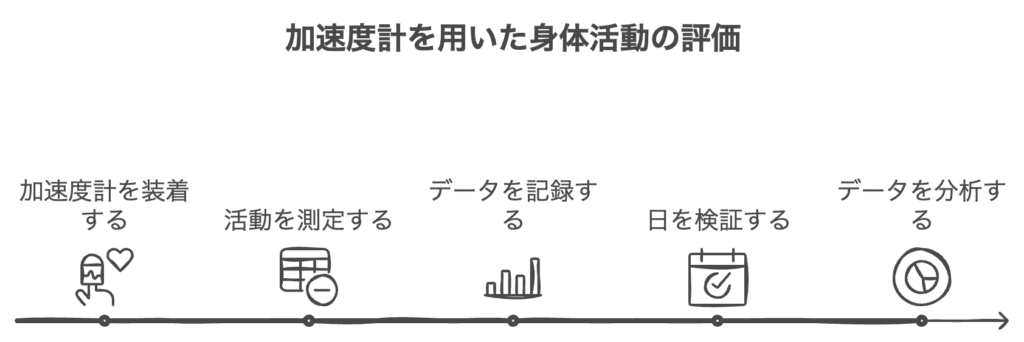
Physical activity was measured for one week using accelerometers and compared with long-term visual field test data.
Main findings:
- For every additional 1,000 steps per day, the decline in visual field sensitivity was 0.007 dB per year smaller.
- For every additional 30 minutes of non-sedentary activity, the decline in visual field sensitivity was 0.007 dB per year slower.
- For every additional 10 minutes of moderate to vigorous physical activity, the decline in visual field sensitivity was 0.003 dB per year slower.
These numbers may look small at first glance.
But over the long term, they could make a big difference.
For example, walking an additional 5,000 steps per day, or doing 2.6 hours more of non-sedentary activity per day, may slow the rate of visual field loss by about 10%.
(That’s quite a lot, isn’t it? 🙂↕️)
The study also had the following findings:
- Older age,
non-White race, and
moderate baseline glaucoma severity
were associated with faster visual field loss. - Patients with a history of glaucoma surgery or cataract surgery showed more rapid visual field loss.
- A greater number of comorbidities tended to be associated with slightly slower annual visual field loss.
Why would having more comorbidities tend to slow the progression of glaucoma? The following are possible explanations.
- Health awareness:
Patients with comorbidities often become more conscious of managing their health.
Regular medical checkups and treatment may help to slow the progression of visual field loss. - Lifestyle improvements:
Patients with comorbidities often improve their lifestyle by following their doctors’ guidance, which may contribute to visual field health.
For example, more exercise and a better diet may help preserve the visual field. - Effects of treatment:
Treatment for the comorbidities may also have an indirect effect on the progression of visual field loss.
For example, managing high blood pressure or diabetes may have a positive effect on eye health. - Biological factors:
The effects of comorbidities on the optic nerve and blood flow may also play some protective role against the progression of visual field loss.
The Importance of Physical Activity in Glaucoma

The main cause of glaucoma is elevated intraocular pressure.
How might physical activity slow the progression of visual field loss?
The researchers of the study proposed several hypotheses, including the following:
- Regulation of intraocular pressure:
Moderate exercise may temporarily lower intraocular pressure⁷.
Several studies have observed a temporary drop in intraocular pressure after aerobic exercise. - Improved blood flow:
Physical activity may improve blood flow throughout the body and promote the blood supply to the optic nerve⁸.
Some patients with glaucoma have inadequate blood flow to the optic nerve, so this effect may be especially important. - Neuroprotective effects:
Exercise may promote the production of neuroprotective substances such as brain-derived neurotrophic factor (BDNF)⁹. These substances may help maintain the health of the optic nerve. - Reduced oxidative stress: Moderate exercise may increase the body’s antioxidant capacity and reduce oxidative stress, which may be involved in the progression of glaucoma¹⁰.
- Improved overall health: Exercise lowers the risk of systemic diseases such as diabetes and high blood pressure¹¹. Because these diseases are also known risk factors for glaucoma, exercise may indirectly slow the progression of glaucoma.
These hypotheses need to be tested in further research, but it seems quite likely that physical activity offers potential benefits for patients with glaucoma.
What to Watch Out for with Glaucoma: Regarding Physical Activity
People with glaucoma should keep the following points in mind when increasing their physical activity:
- Consult your doctor:
Be sure to consult your eye doctor before starting a new exercise program.
Especially in advanced glaucoma, some forms of exercise may not be suitable. - Start gradually:
It is best to avoid a sudden increase in exercise and raise your activity level gradually.
This reduces the risk of injury and helps you build a sustainable habit. - Ensure safety:
If you have visual field loss, please exercise in a safe environment.
Exercising indoors or with an acquaintance may be helpful. - Appropriate intensity:
Avoid excessive exercise and aim for activities of moderate intensity.
For example, brisk walking, light jogging, and swimming may be suitable. - Continued monitoring:
Have regular eye examinations to check for changes in your visual field.
Also, if you notice anything unusual during or after exercise, consult your doctor right away. - Stay hydrated:
Make sure to drink enough fluids during exercise. Dehydration may temporarily raise intraocular pressure¹². - Mind your head position:
Be careful with exercises that keep the head lowered for a long time, such as headstands and some yoga poses, because they may temporarily raise intraocular pressure¹³.
Future Research Questions
These findings are very interesting, but there are some limitations.
Most of the participants were older adults, so it is unclear whether the same effect applies to younger patients with glaucoma.
Physical activity was measured for only one week, so changes in long-term activity patterns were not taken into account.
Future research may need to address the following points:
- Verification in a wider range of ages, including younger people
- Investigation of the relationship between long-term physical activity patterns and visual field loss
- Comparison of the effects of specific types of exercise (for example, aerobic exercise vs. strength training)
- Clarification of the mechanisms by which physical activity affects glaucoma
- Studies of the interaction between physical activity and other glaucoma treatments (such as medication and surgery)
Through such research, we hope to clarify the optimal type and intensity of exercise for patients with glaucoma.
Summary
In glaucoma treatment, controlling intraocular pressure remains the most important factor.
These new findings strongly suggest that physical activity may play a supportive role in glaucoma management.
Moderate exercise may not only slow the progression of glaucoma but also benefit overall health.
We recommend incorporating safe and appropriate physical activity into your daily life in consultation with your doctor.
Finding an exercise program suited to each person’s situation may help protect vision and improve overall health.
We hope that future research will clarify the optimal type and intensity of exercise for patients with glaucoma,
and that more personalized recommendations will become available.
Glaucoma is a serious eye disease, but its progression can be slowed with appropriate treatment and lifestyle improvements.
Maintaining a healthy lifestyle that includes physical activity, while continuing to have regular eye examinations, is thought to lead to long-term protection of vision.
References
- Tham YC, Li X, Wong TY, Quigley HA, Aung T, Cheng CY. Global prevalence of glaucoma and projections of glaucoma burden through 2040: a systematic review and meta-analysis. Ophthalmology. 2014 Nov;121(11):2081-90. doi: 10.1016/j.ophtha.2014.05.013. Epub 2014 Jun 26. PMID: 24974815.
- Lee MJ, Wang J, Friedman DS, Boland MV, De Moraes CG, Ramulu PY. Greater Physical Activity Is Associated with Slower Visual Field Loss in Glaucoma. Ophthalmology. 2019 Jul;126(7):958-964. doi: 10.1016/j.ophtha.2018.10.012. Epub 2018 Oct 10. PMID: 30315900; PMCID: PMC6458101.
- Weinreb RN, Aung T, Medeiros FA. The pathophysiology and treatment of glaucoma: a review. JAMA. 2014 May 14;311(18):1901-11. doi: 10.1001/jama.2014.3192. PMID: 24825645; PMCID: PMC4523637.
- Quigley HA. Glaucoma. Lancet. 2011 Apr 16;377(9774):1367-77. doi: 10.1016/S0140-6736(10)61423-7. Epub 2011 Mar 30. PMID: 21453963.
- Garway-Heath DF, Crabb DP, Bunce C, Lascaratos G, Amalfitano F, Anand N, Azuara-Blanco A, Bourne RR, Broadway DC, Cunliffe IA, Diamond JP, Fraser SG, Ho TA, Martin KR, McNaught AI, Negi A, Patel K, Russell RA, Shah A, Spry PG, Suzuki K, White ET, Wormald RP, Xing W, Zeyen TG. Latanoprost for open-angle glaucoma (UKGTS): a randomised, multicentre, placebo-controlled trial. Lancet. 2015 Apr 4;385(9975):1295-304. doi: 10.1016/S0140-6736(14)62111-5. Epub 2014 Dec 19.
- Kumar A, Ou Y. From bench to behaviour: The role of lifestyle factors on intraocular pressure, neuroprotection, and disease progression in glaucoma. Clin Exp Ophthalmol. 2023 May-Jun;51(4):380-394. doi: 10.1111/ceo.14218. Epub 2023 Mar 19. PMID: 36859798; PMCID: PMC11144012.
- Risner D, Ehrlich R, Kheradiya NS, Siesky B, McCranor L, Harris A. Effects of exercise on intraocular pressure and ocular blood flow: a review. J Glaucoma. 2009 Aug;18(6):429-36. doi: 10.1097/IJG.0b013e31818fa5f3. PMID: 19680049.
- Schmidl D, Garhofer G, Schmetterer L. The complex interaction between ocular perfusion pressure and ocular blood flow – relevance for glaucoma. Exp Eye Res. 2011 Aug;93(2):141-55. doi: 10.1016/j.exer.2010.09.002. Epub 2010 Sep 22. PMID: 20868686.
- Gupta V, You Y, Li J, Gupta V, Golzan M, Klistorner A, van den Buuse M, Graham S. BDNF impairment is associated with age-related changes in the inner retina and exacerbates experimental glaucoma. Biochim Biophys Acta. 2014 Sep;1842(9):1567-78. doi: 10.1016/j.bbadis.2014.05.026. Epub 2014 Jun 2. PMID: 24942931.
- Engin KN. Alpha-tocopherol: looking beyond an antioxidant. Mol Vis. 2009;15:855-60. Epub 2009 Apr 23. PMID: 19390643; PMCID: PMC2672149.
- Warburton DE, Nicol CW, Bredin SS. Health benefits of physical activity: the evidence. CMAJ. 2006 Mar 14;174(6):801-9. doi: 10.1503/cmaj.051351. PMID: 16534088; PMCID: PMC1402378.
- Sollanek, K.J., Kenefick, R.W., Walsh, N.P., Fortes, M.B., Esmaeelpour, M., Cheuvront, S.N., 2012. Assessment of thermal dehydration using the human eye: What is the potential? Journal of Thermal Biology 37, 111–117. https://doi.org/10.1016/j.jtherbio.2011.12.006
- Malihi M, Sit AJ. Effect of head and body position on intraocular pressure. Ophthalmology. 2012 May;119(5):987-91. doi: 10.1016/j.ophtha.2011.11.024. Epub 2012 Feb 17. PMID: 22341914.