![Takeru Eye Clinic | Takatori Shopping Street, Sawara-ku, Fukuoka City [Nishijin Station / Fujisaki Station]](https://takeru-eye.com/wp-content/uploads/2022/10/takeru_logo_for-WP-header.png)

“My eyesight is poor. Can I become a pilot?”
Recently, a male high school student asked me this at an evening outpatient visit.
I sometimes examine the eyes of students at the Japan Civil Aviation College, and I also see people who work in the sky.
For young students aiming to become pilots and for active pilots, the health of the eyes is a major issue that shapes their future.
The importance of visual information in flying an aircraft goes without saying, but did you know that its medical evaluation is actually not only about “whether you can see 1.0 on a visual acuity test”?
Including information on the latest revision of the aeromedical examination manual, taking effect in April and June of 2025 (Reiwa 7), I describe the “eye facts” that everyone aiming to become a pilot should know.
- Glasses are fine: civil pilots are fit if corrected visual acuity is achieved (though there are limits on lens power).¹
- 2025 revision: the rules on refractive surgery (LASIK and others) were integrated into the general manual, making it a more familiar option.¹
- The Self-Defense Forces are a special case: for Self-Defense Forces pilots, both LASIK and orthokeratology are in principle not permitted.²
- Color vision deficiency: even if you are unfit in Japan, there is a route to pass the practical test of the US FAA.³
- Do not decide on your own: because the choice of eye drops or surgery can shape your future, consulting an ophthalmologist early is important.
1. Why “good eyesight” is not enough
The “ability to see” in aviation medicine is completely different from the visual acuity measured in school screenings.
This is because pilots are required to read instruments instantly under extreme conditions such as hypoxia and high G (gravitational acceleration).
Hypoxia and “dark adaptation disorder”
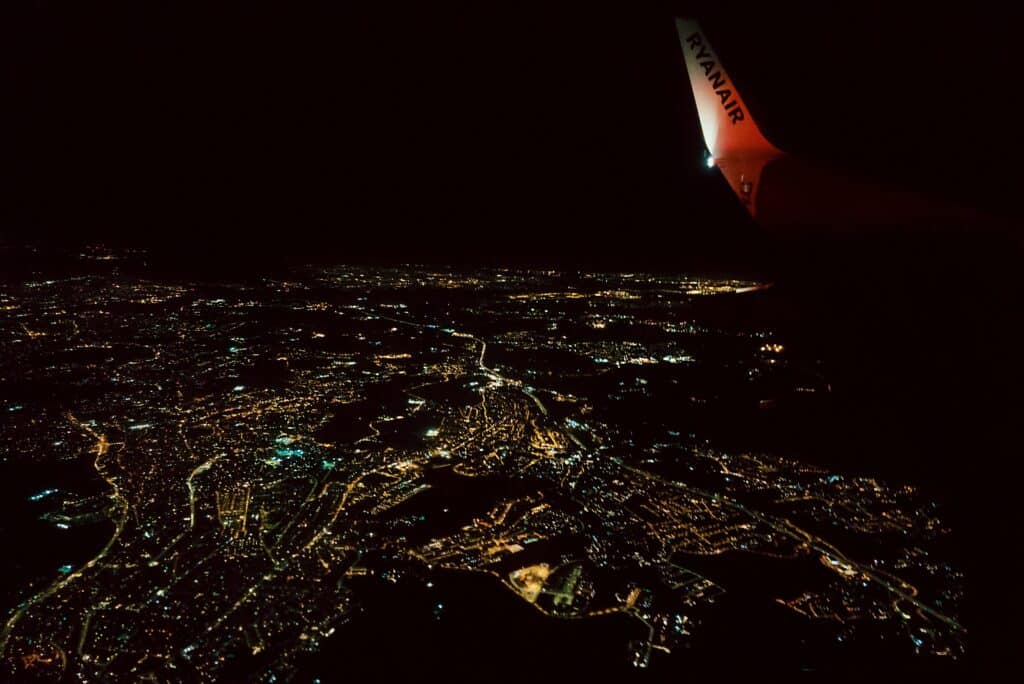
When air pressure drops at altitude, the body falls into a hypoxic state. Because the retina (the part of the eye equivalent to film) is a tissue that consumes a large amount of oxygen, when oxygen is short, “dark adaptation disorder,” which makes it hard to see at night, may appear before a drop in visual acuity.
“Empty field myopia” in featureless space
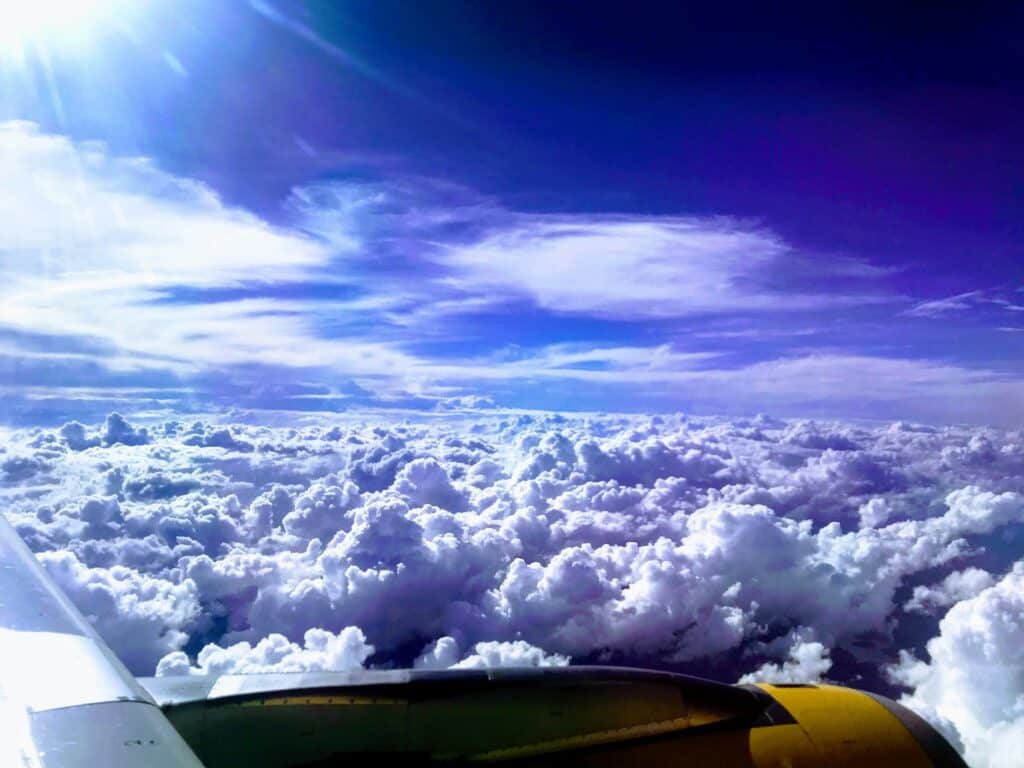
Also, in a space with no object to look at, such as above the clouds or in a pitch-dark night sky, the human eye rests its focusing and focuses at a point 1–2 meters at hand, causing a phenomenon called “empty field myopia.”³ This creates a risk of delayed detection of distant aircraft.
The aeromedical examination asks for the “quality of visual function” that can withstand such harsh environments.
2. Can you become a pilot with glasses or contact lenses?
Yes, you can.
In the “Class 1 aeromedical examination” taken by civil aviation (airline) pilots, the requirement for uncorrected visual acuity has already been abolished.
If you can see 0.7 or better in each eye with glasses or contact lenses (corrected visual acuity), you are within the passing range.¹
However, there is a “limit on power”
Under the Japanese standard (JCAB), there is a limit that the lens power of the glasses used must be “within ±8.0 diopters (D).”¹
| Test item | Class 1 standard (airlines and others) | Clinical notes |
|---|---|---|
| Distance visual acuity | 0.7 or better in each eye / 1.0 or better in both eyes | Uncorrected visual acuity does not matter. |
| Corrective power | Within ±8.0 D | Glasses for high myopia (beyond −8.0 D) tend to distort the periphery, so there is a limit. |
| Intermediate distance visual acuity | 0.2 or better at 80 cm | This is the distance to the instrument panel. It is especially emphasized from age 50.³ |
If your myopia is very strong and your glasses power exceeds −8.0 D, correction with contact lenses becomes the first choice.
During flight duties, carrying “regular glasses (including a spare)” is mandatory, so careful judgment is needed if the backup glasses do not meet the standard.
3. Is LASIK all right? [Latest trends in 2025]
It used to be said that “LASIK is contraindicated for pilots,” but it is now permitted with conditions.
In particular, in the 2025 revision, the rules on refractive surgery, which had been managed under a separate notice, were integrated into the main text of the aeromedical examination manual.¹
For those aiming to become pilots, this means refractive surgery (LASIK, ICL and others) has become established as a more common option.
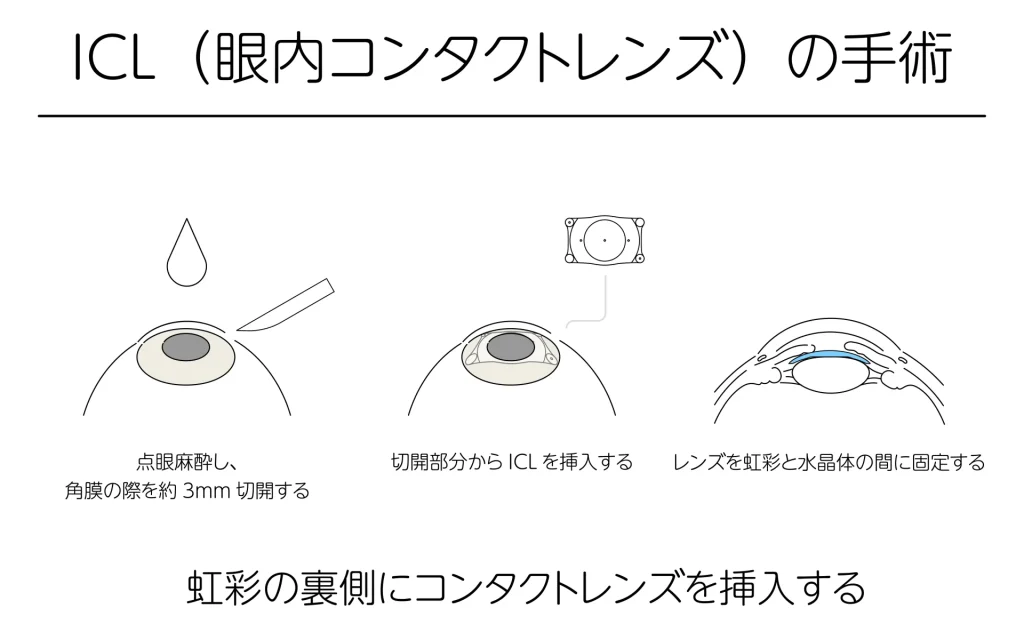
However, it is not enough for vision simply to recover. After surgery, you must clear the following strict checks.¹
- Diurnal variation of visual acuity: does visual acuity differ between morning and evening (measured three or more times a day)?
- Contrast sensitivity: can you identify objects in dim light?
- Glare test: do night lights look glaring (halos and glare)?
The currently mainstream ICL (EVO/EVO+ models) has a tiny hole in the center of the lens. Because of this structure, when looking at street lights or runway lights at night, you may see rings of light (halos).
In particular, because blurred runway lights at night can interfere with landing operations,
ophthalmologists may recommend choosing a technique that suppresses higher-order aberrations (light distortion).

Advice from an ophthalmologist: when should you have it?
Students aiming to become airline pilots and active pilots considering ICL should keep to the following three points.
- Allow plenty of time: Right after surgery, vision may fluctuate and halos may be felt strongly. Ideally, finish surgery at least 6 months before your aeromedical examination and take it when your vision is stable (there may be rules that do not allow examination for a certain period after surgery, or a recommended waiting period).
- Confirm suitability with preoperative tests: People with large pupils tend to have stronger halos and glare. Tell your doctor that you aim to become a pilot and have the indication judged carefully.
- Keep the medical certificate and surgical record: When applying for the aeromedical examination, you may be asked to submit detailed surgical records (lens model, power, preoperative data and so on). Be sure to get the documents from the clinic where you had surgery and keep them.
4. [Caution] The Self-Defense Forces: in principle neither “surgery” nor “orthokeratology” is permitted
This is the most important fork. If you aim to become a Self-Defense Forces pilot (aviation cadet and others), it is a completely different story.
Regarding the application requirements for Self-Defense Forces pilots (aviation cadets and others),a history of refractive surgery (LASIK, ICL and others) or orthokeratology treatment is, in principle, unfit (application not possible).2。
Official standards of the Ministry of Defense and the Self-Defense Forces
On the recruitment site and in the aviation cadet recruitment guidelines, “not having undergone myopia correction surgery (LASIK, PRK, ICL and others)” is stated explicitly as an application requirement.2。
In many cases it is also stated explicitly that “cases with a history of treatment with orthokeratology lenses are not eligible,” and even if visual acuity after treatment meets the standard, the history itself is a reason for exclusion from the application requirements.3。
This standard is maintained in the latest fiscal 2025 aeromedical examination standards as well.4。
Why is it not permitted?
Fighter pilots are exposed to extremely high physical stress on the eyeball from sudden G forces (up to about 9G) and the impact of ejection, so a “cornea deformed by surgery or a shape change from treatment” is judged to be a risk factor.5。
For this reason, the Self-Defense Forces treat people with a history of surgery or orthokeratology as “basically unfit for safety reasons.”6。
To teens and those still considering their path
It is strongly recommended to think carefully about whether your path is civil aviation or the Self-Defense Forces, and to consult an ophthalmology/aeromedical specialist before deciding on a vision correction option.
If you casually undergo surgery or treatment thinking you want to “improve your eyesight,” the path to the Self-Defense Forces may be closed at that point.
5. The little-known “eye position (phoria)” and depth perception
Besides visual acuity and surgical history, what matters for pilots is “binocular function.”
Many people have a “phoria (latent strabismus),” in which the lines of sight of the two eyes deviate slightly when relaxed.
In daily life the brain compensates and fuses the images into one, so it is not a problem, but in the aeromedical examination, if the amount of this deviation (prism amount) exceeds the standard value, you may be judged unfit.⁴
To judge accurately the distance to the runway at the moment of landing, it is essential that both eyes function correctly.
Intermittent exotropia (the line of sight deviates when tired) in particular needs attention, but there are cases where, through the use of prism glasses, appropriate training, and in some cases confirmation of function after surgery, a path to being fit opens.
Early ophthalmology consultation and evaluation are recommended.⁴
Our orthoptists perform detailed eye examinations.
6. For those worried about color vision (how colors look)
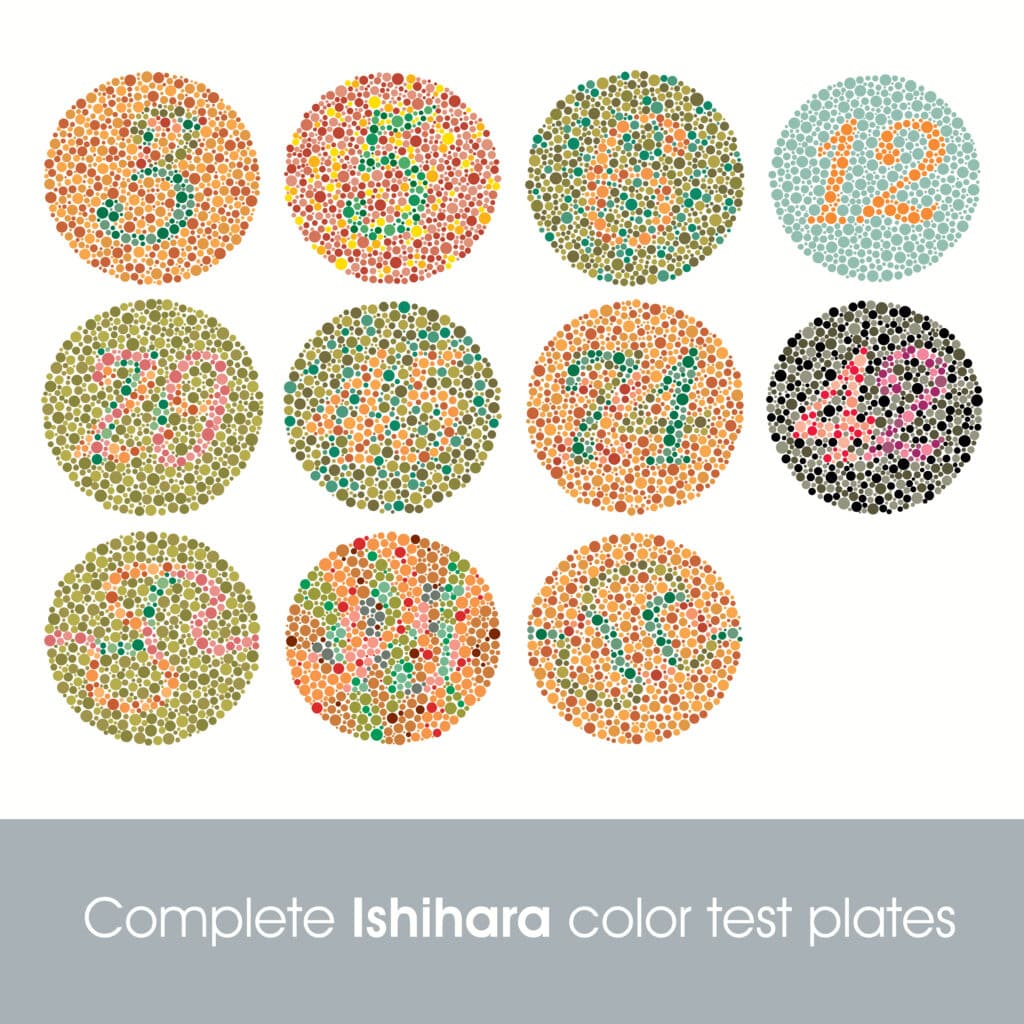
It seems you need not give up thinking, “I was told I have a color vision deficiency in a school test, so I can’t be a pilot.”
Under Japanese standards, even if you do not pass the first Ishihara test (reading numbers in dots), you may be judged fit if you are rated “moderate or milder” on the detailed Panel D-15 test.⁵
Looking further out to the world,
the US Federal Aviation Administration (FAA) also has a system called “SODA (Statement of Demonstrated Ability),” under which an unrestricted license is issued if you pass a practical test (a test of identifying the colors of lights from the control tower at an airport).³
Even if not in Japan, a path to fly in the world may remain.
7. Medical illness and the eyes (2025 revision)
In the 2025 revision, the range in which one can continue as a pilot while taking medicine for diabetes or hypertension widened if the condition is well controlled.¹
However, this does not mean “you are safe if you take medicine.” In particular, when using diabetes drugs (such as SGLT2 inhibitors), the following risk management is essential from the ophthalmic standpoint.
- Visual fluctuation due to rapid changes in blood glucose
- Presence of arteriosclerosis or hemorrhage in the fundus (retina)
General health is directly linked to “eye health.” It is important to have regular fundus examinations and check the state of the blood vessels.
In closing
The aeromedical examination is not a mere health checkup but an aptitude evaluation to maintain safety in a harsh environment.
The standards are complex, but the door is widening with medical progress. Understanding your own eye condition correctly and objectively knowing what risks there are and what measures are possible leads to protecting your future career.
References
- Civil Aviation Bureau, Ministry of Land, Infrastructure, Transport and Tourism. Partial revision of the “Aeromedical Examination Manual” and related documents. 2025.
https://www.mlit.go.jp/koku/15_bf_000743.html - Ministry of Defense / Self-Defense Forces. Standards for physical examinations.
https://www.mod.go.jp/gsdf/jieikanbosyu/about/physical-examination/ - Federal Aviation Administration (FAA). Guide for Aviation Medical Examiners.
https://www.faa.gov/ame_guide - Japan Aeronautical Pilots Association. On intermittent exotropia.
https://www.japa.or.jp/9468 - Aeromedical Research Center. Frequently asked questions Q&A.
https://www.aeromedical.or.jp/check/qanda.htm
Q&A: Ophthalmology consultation for aspiring pilots

Q. I am applying to a pilot training course. If I fail the Ishihara color vision test, can I not enter a university where training in the US (FAA) is required? The university pamphlet says “only the Ishihara test is accepted,” and I am worried.
A. Medically, “there is no need to give up.”
The statement in the university pamphlet or application guidelines is highly likely a “safety measure” for entrance examination operations (to avoid the risk of training being stopped after going abroad).
Under the actual legal standard of the US Federal Aviation Administration (FAA), even if you fail the Ishihara test, a route to obtain a medical certificate by another method is established.
Below, I explain the difference between the university entrance criteria and the actual FAA standard, and specific measures.
1. “Failing the Ishihara test does not mean you cannot become a pilot”
The Japanese aeromedical examination (JCAB) and the US standard (FAA) differ in how color vision is evaluated.
- In Japan (JCAB): if an abnormality is suspected on the Ishihara test, a detailed test such as Panel D-15 is performed, and if you pass this (or fail only mildly), there are cases where you are judged fit as having no problem for flight duties.
- In the US (FAA): the FAA also starts with the Ishihara test (Plate Test), but even if you fail it, taking “Alternative Tests” is officially permitted.
2. What are the “alternative tests” the FAA accepts?
If you pass a test using the following instruments under an FAA-designated Aviation Medical Examiner (AME), you are treated as “having no color vision deficiency” regardless of the Ishihara result.
- Lantern test (Farnsworth Lantern and others): a test that identifies lights imitating aviation lights, traditionally in wide use.
- Optec 9000 / Keystone Orthoscope: visual function testing devices installed in many clinics, which include charts of a method different from the Ishihara test.
- Rabin Cone Contrast Test (RCCT): a quantitative test using contrast sensitivity, increasingly being introduced in recent years.
The statement in the university’s explanation that “anything other than the Ishihara test is unfit” may be the university’s own operating rule: “because our entrance examination venues and partners only conduct the simple Ishihara test, anything else cannot be judged and is treated as a fail.” The FAA’s law itself does not prohibit anything other than the Ishihara test.
3. The last resort: the powerful “SODA” license
Even if you cannot pass with the alternative test instruments above, the FAA has a system called SODA (Statement of Demonstrated Ability).
This is a system in which, if you can identify in practice the colors (red, green, white) of the “light gun (signal light)” emitted from the control tower at an actual airport, an unrestricted license is issued as “practical ability demonstrated,” regardless of the numbers on the medical tests. Once you obtain SODA, its validity is basically lifelong.
4. Specific measures you can take now
To avoid being disadvantaged in entrance exams that set “Ishihara only” as the condition, the following methods are recommended.
- Take the “FAA aeromedical examination” on your own first: Before entering the university (before the exam), find an FAA-designated physician (AME) in Japan yourself and take the examination.
- Ask whether “alternative tests” are possible: When booking, be sure to ask, “I am not good at the Ishihara test, but do you have alternative test equipment (Alternative Tests) such as a lantern test?”
- Obtain the “Medical Certificate”: If you pass in a personal examination, that certificate (Medical Certificate) is proof of “meeting the FAA standard.” Consult the university with it, or take the exam with the confidence that your record gives you.
Message from an ophthalmology specialist
Even if you are unfit under Japanese standards, or fail the university screening, the path to becoming a pilot is not necessarily closed when seen by the world standard (FAA and others).
What matters is not to decide on your own from the wording of a pamphlet, but to consult an expert (an FAA-designated physician or an ophthalmologist familiar with aviation medicine) and find a “test method that applies to you.”
References and related links
- Acceptable Test Instruments for Color Vision Screening – Pilots – FAA Guide
- Colour vision deficiency | Civil Aviation Safety Authority – CASA
- Partial revision of the “Aeromedical Examination Manual” and related documents (latest Japanese standard)
We integrated the multiple improvement proposals you presented and created a Q&A with greater expertise and readability.
As text to be posted on a specialist’s website, we have unified notation (full-width characters, hiragana and so on) and revised wording to more appropriate terms (visual testing device, fail and so on).
Q2. I passed Panel D-15 in Japan, but I failed the Ishihara test and the Waggoner test in the FAA (US) examination. Is there a chance with the Optec 9000 or the lantern test?
A. Look for the “Optec 900 (Lantern),” not the “Optec 9000.” There is still plenty of chance to pass.
If you passed Panel D-15 under the Japanese standard (JCAB), you very likely have the color discrimination ability needed for flight duties. However, the FAA (US) does not officially accept Panel D-15 as a qualifying test, so a different approach is needed.
Here I explain the difference between the instruments you asked about and the strategy after failing the Waggoner test.
1. The “mechanism” of the FAA color vision test
The FAA review consists of the following three stages.
- Initial screening (Standard Screening): At many facilities the “Ishihara” test is used. If you pass here there is no problem, but if you fail, you proceed to the next step.
- Alternative testing (Alternative Testing): Retesting with “another instrument” approved by the FAA. This stage is the key point. The Waggoner (CCVT) is one of them, but it is very sensitive, so even mild color vision deficiency may lead to failure.⁴⁴ However, the FAA rule is that “passing with any one instrument is enough.”
- Practical test (OCVT): If you fail with all instruments, as a last resort there is a test in which you view real signal lights at an airport (described later).
2. The decisive difference between “Optec 9000” and “Optec 900”
The “Optec” you asked about has two models of completely different nature, which are easy to confuse, so be careful. 55。
- × Optec 9000 (not recommended): a multifunction visual testing device often used in general ophthalmology and health checkups. The color vision test slides inside are basically based on the same principle as the “Ishihara” test. Therefore, people who are not good at the Ishihara or Waggoner tests will likely fail this too.
- ◎ Optec 900 (recommended = lantern test): this is what is called the “Farnsworth Lantern (lantern test).” It is a practical test that identifies “red, green and white” lights imitating aviation lights.
Unlike the Ishihara test, which looks at the “type” of color vision, it examines actual “discrimination ability,” so if you can pass Japan’s D-15, the chance of passing this lantern test is very high.
3. Strategy if you failed the Waggoner test
Even if you fail the Waggoner, there is no need to give up. I recommend acting in the following order.
- Find a facility with the “Optec 900 (Lantern)”: When looking for a US AME (aviation medical examiner) or a Japanese facility that can handle it, simply asking “Do you have an Optec?” may bring out the Optec 9000. Be sure to ask by name: “Do you have a Lantern Test (Optec 900)?”
- Consider the RCCT (Rabin Cone Contrast Test): If you cannot find a lantern, or you fail it, the quantitative PC-screen test “RCCT” is also an effective option.
- The last resort: SODA (practical test): If you cannot pass with any instrument, there remains the path of applying to the FAA for the OCVT (signal light test). If you pass, you obtain a lifelong certificate of fitness (SODA). However, because it is a one-time test, the standard approach is to aim first to pass the instrument tests in 1 and 2 above.
Conclusion
Take the record of “passing D-15” as a great source of confidence. Do not be pessimistic over the Waggoner result alone; creating an environment where you can take the “lantern test” suited to your own color vision characteristics is the shortest route to a solution.
References and related links
[1] Acceptable Test Instruments for Color Vision Screening – Pilots – FAA Guide
https://www.faa.gov/ame_guide/app_process/exam_tech/item52/et
[2] Guide for Aviation Medical Examiners – Federal Aviation Administration
[3] Colour vision deficiency | Civil Aviation Safety Authority – CASA