![Takeru Eye Clinic | Takatori Shopping Street, Sawara-ku, Fukuoka City [Nishijin Station / Fujisaki Station]](https://takeru-eye.com/wp-content/uploads/2022/10/takeru_logo_for-WP-header.png)
2023.4月〜 新しい機械を使えるようになりました。
From April 21, 2025: myopia-control eye drops approved in Japan can now be used.
February 2026: a note on how we explain myopia
Common knowledge in ophthalmology has been changing, and the content of this page has become somewhat cluttered.
The key points are as follows.
Over the past 10 to 15 years, the way we think about myopia in children has changed greatly.
○ Much of the lifestyle guidance given until now — “it is better to do it this way” — was not based on strong scientific evidence.
○ Research results from the past dozen or so years have come together, and we are now in an era when “treatment to slow myopia progression” can actually be chosen.
○ The very idea of “myopia control” is itself a relatively new concept.
○ However, we are not at the stage where “this is the one answer for everyone”; the choice needs to fit the child’s condition and your values.
○ Nor is it a matter of “science has advanced, so you should do it this way.”
○ We are preparing to offer a choice of several evidence-based methods of myopia control.
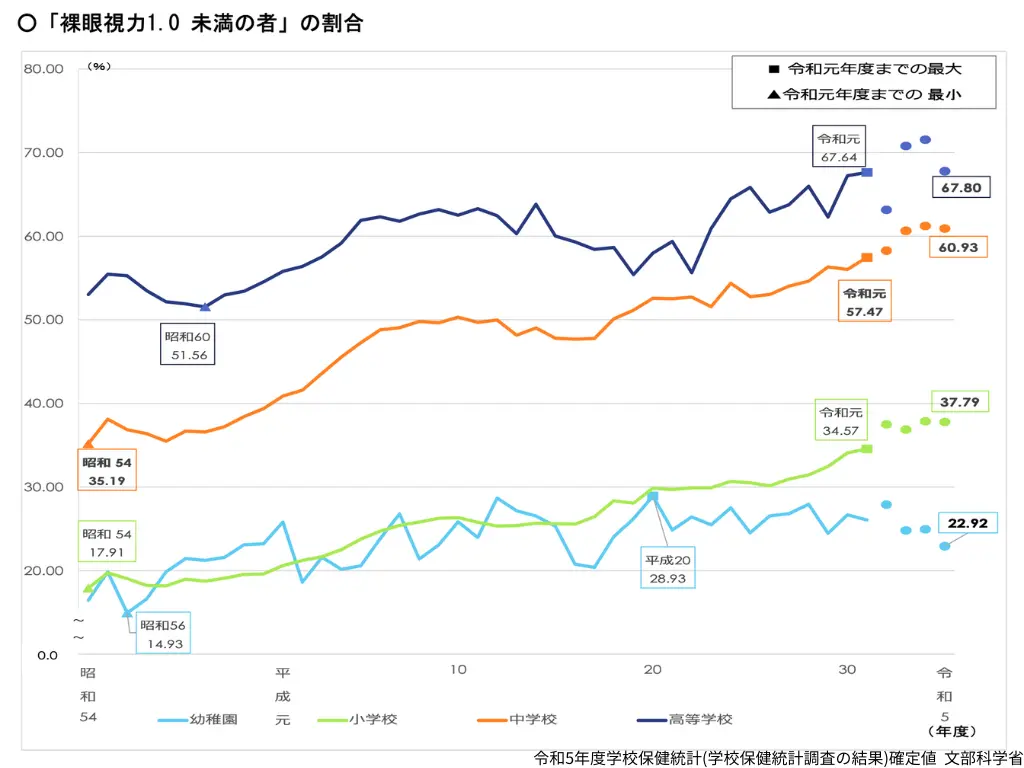
Research on myopia in children is advancing around the world, and it is an important topic at ophthalmology conferences.
In the field of “visual optics”:
Much is still unknown. We share the latest knowledge available at present.
(This is a summary of what I have written about myopia since the clinic opened in 2018.)
Eye tests are performed bycertified orthoptists.
Myopia control (prevention):
「What we can safely do for a child while they are still young” is what we talk about.
At the visit, please ask us everything you would like to know.
年々進む「子どもの視力低下」寝ている間に防げる!?【シリタカ!】
2024.5.20放送 KBC NEWS in JAPAN 出演:
https://youtu.be/JbLoxDcXwR4?si=Hi9HQVjA7HpNg8zJ&t=269

Myopia in Children: Our Approach to Explanation

So that myopia progresses as little as possible: what we can do for children during elementary school
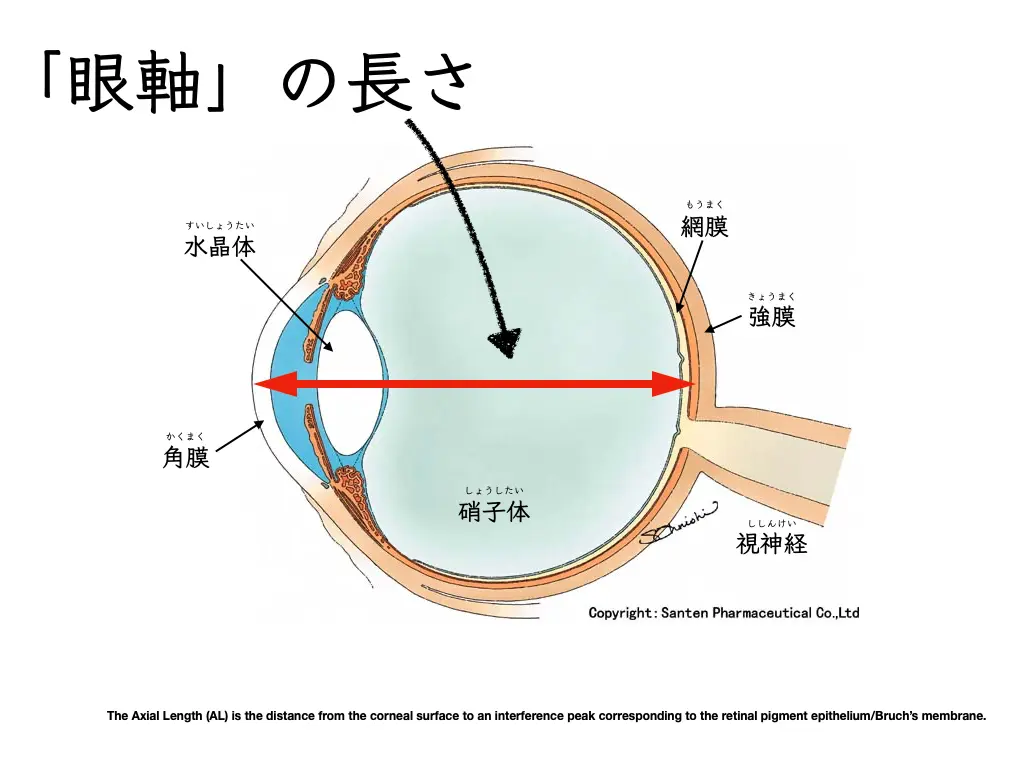
What is myopia control?
It means keeping the “axial length of the eye”, which keeps growing until growth stops, from lengthening as much as possible.
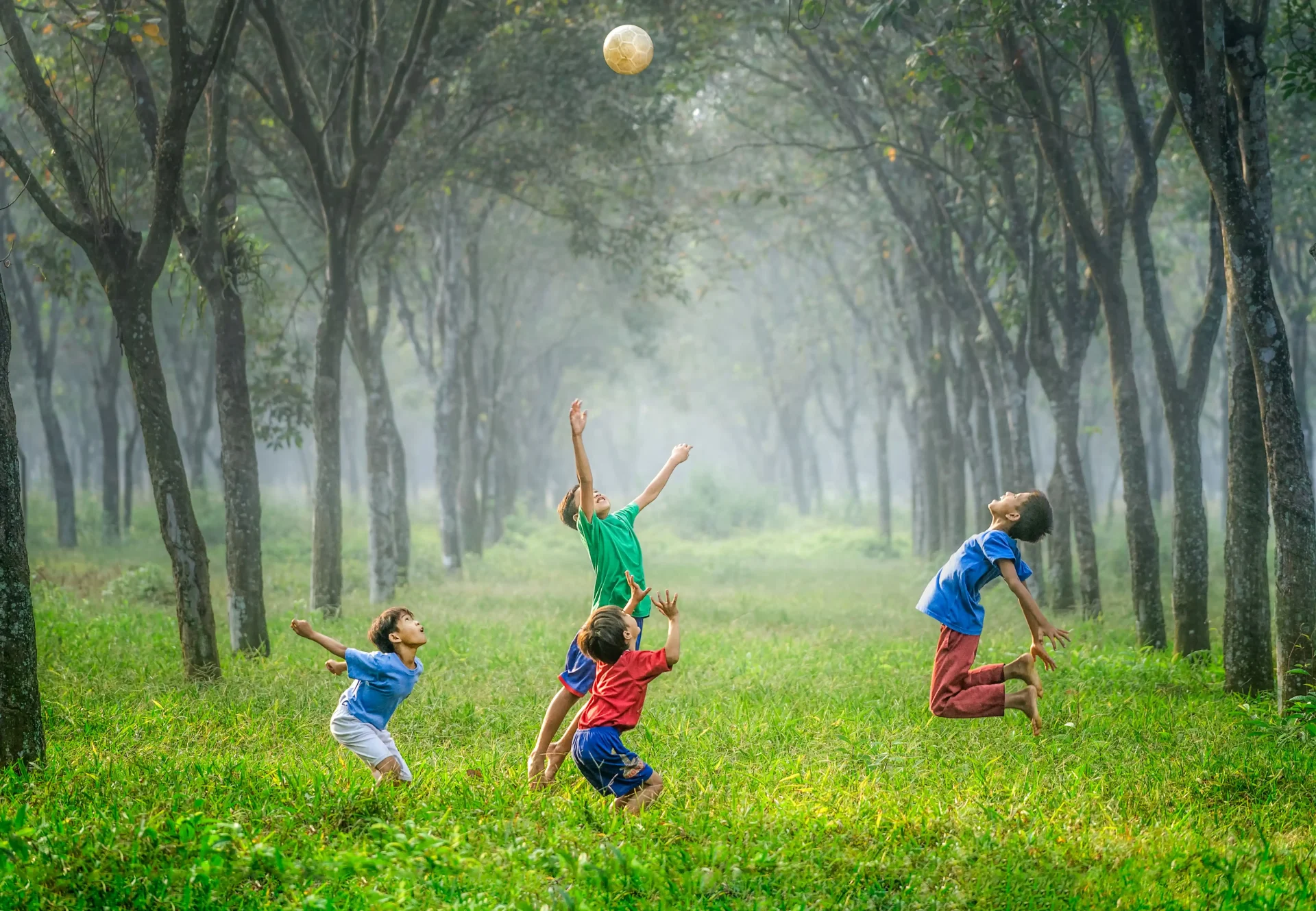
- Playing outdoors for 2 hours or more
- Low-concentration atropine eye drops
- Orthokeratology
We explain the scientific evidence from research in the field of myopia.
低濃度アトロピンによる
近視進行抑制治療
科学的根拠に基づいた、こどもの目のための有効な選択肢を理解する
増え続けるこどもの近視
近視は単に視力が悪いというだけでなく、
将来の深刻な眼疾患のリスクを高める、世界的な健康問題です。
近視の進行を早期に抑制することは、
こどもの生涯にわたる目の健康を守るために非常に重要です。
約33%
近視進行を抑制
(0.025%アトロピン使用時)

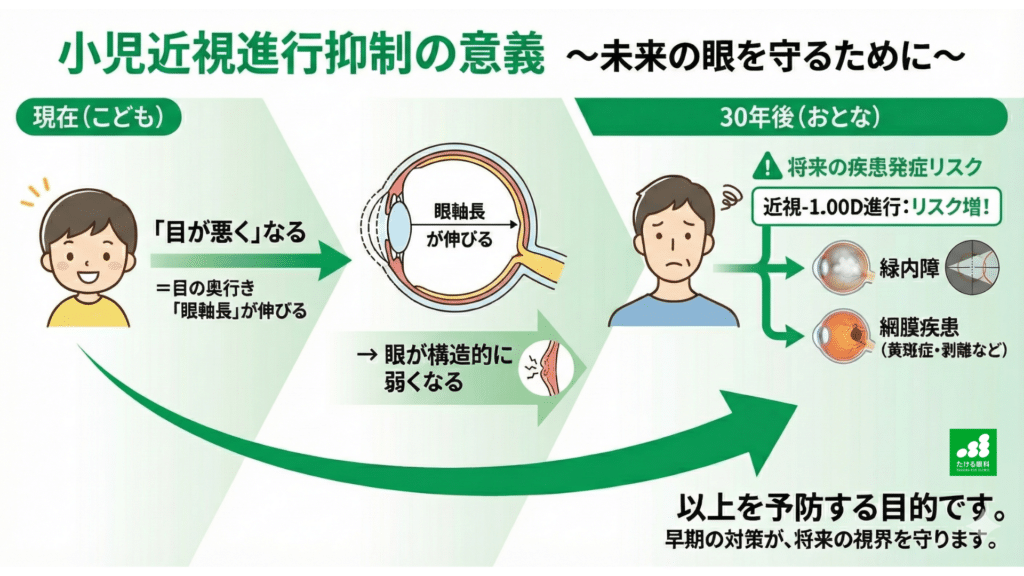
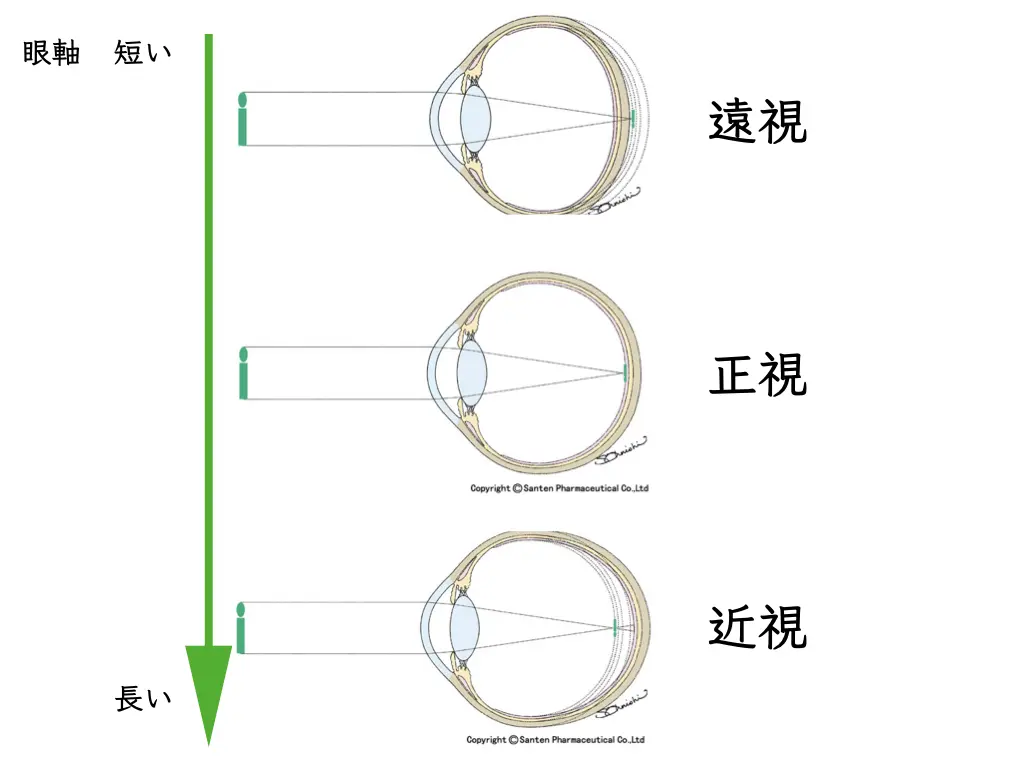
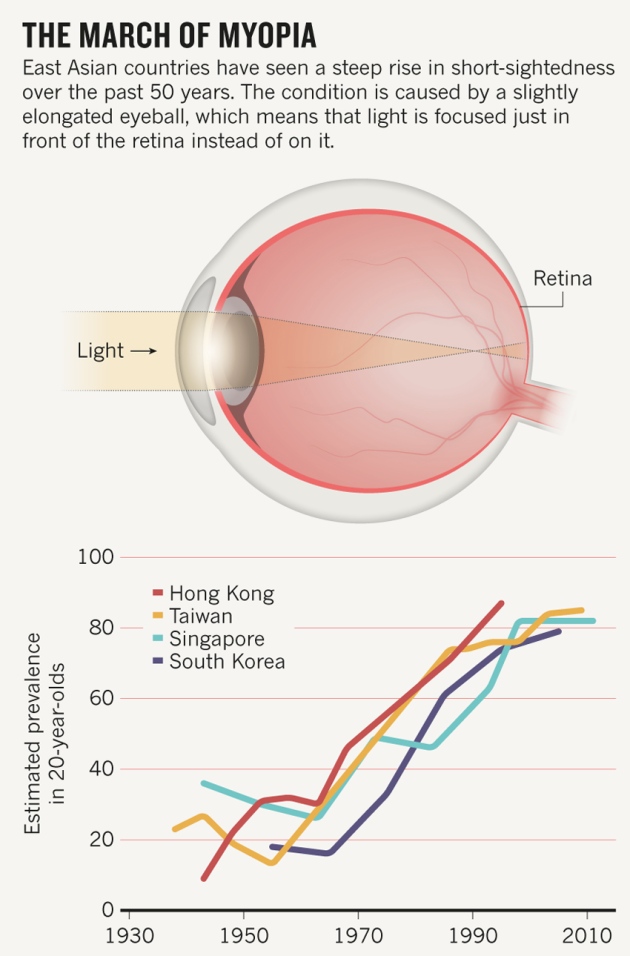
“Eyes getting worse” = myopia progressing = “the depth of the eye (axial length) lengthening”
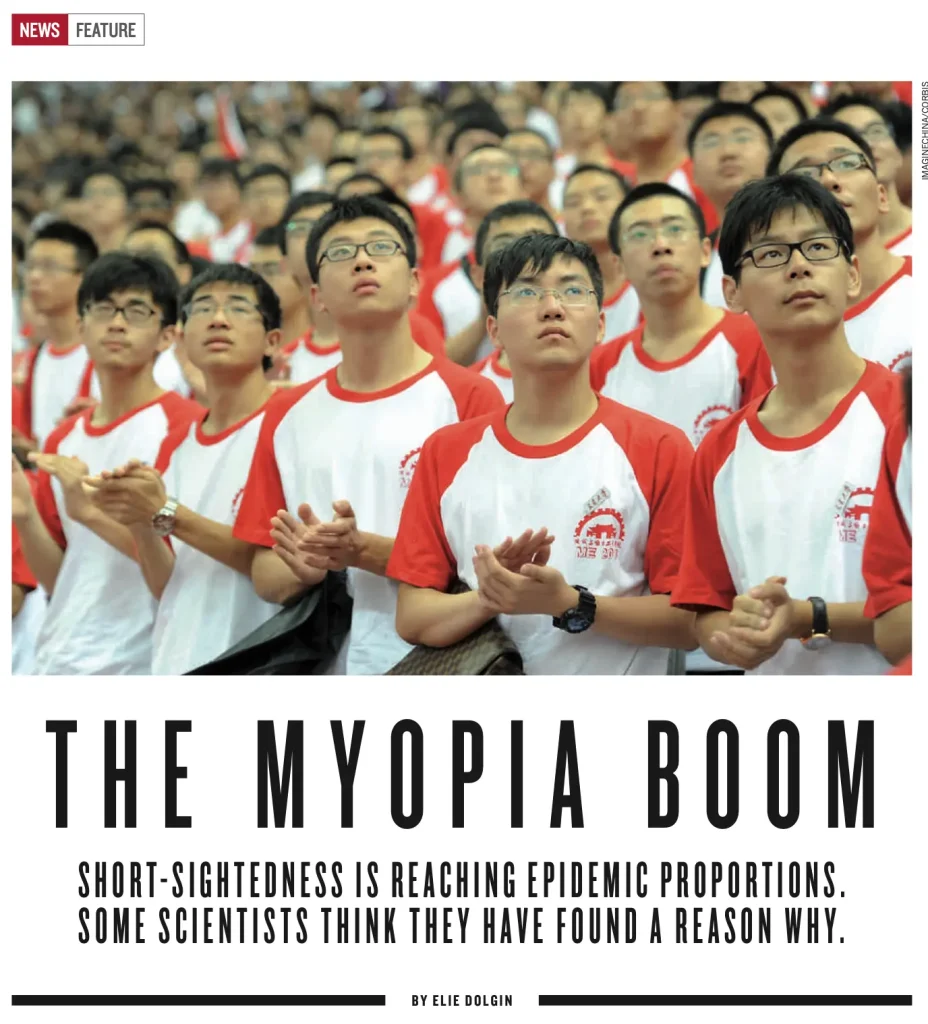
The “myopia boom”
In 2015, from the journal Nature

Rejusea®®Mini Ophthalmic Solution 0.025% (self-pay)
Once the eye drops are started, glasses and contact lens prescriptions are also self-pay.
Points of caution when providing myopia control treatment with low-concentration atropine eye drops (from materials of the Japan Ophthalmologists Association, Social Insurance, General Planning, April 11, 2025)
Glasses with a weak prescription: myopia progresses (toward “eyes getting worse”)
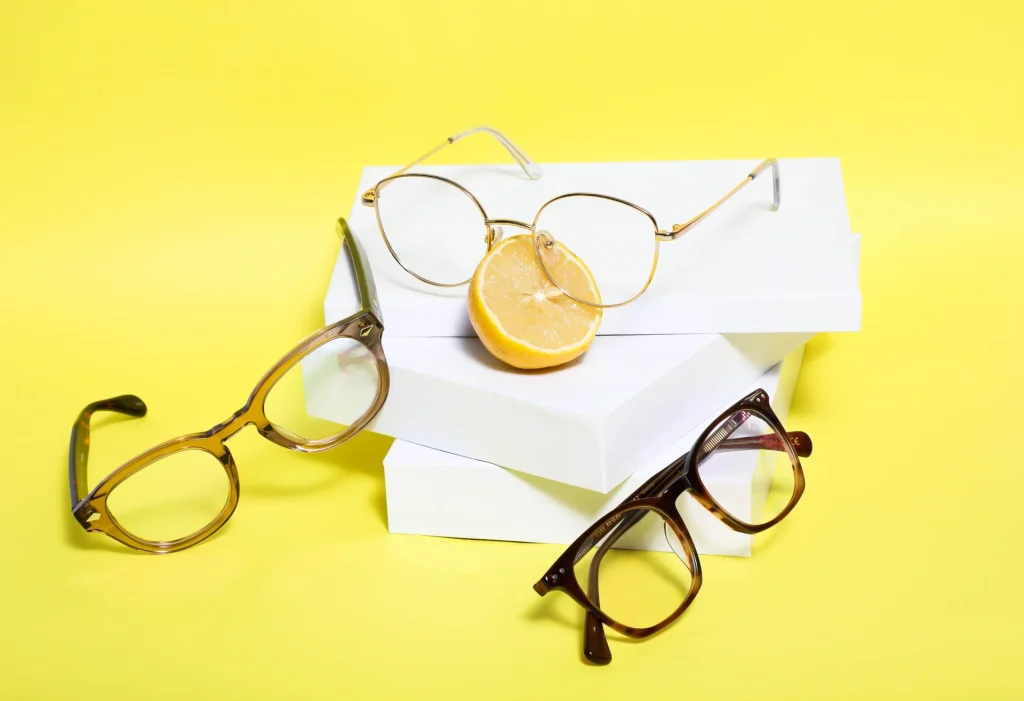
“I think my eyes will get worse if I wear glasses.”
→ Common knowledge has changed.
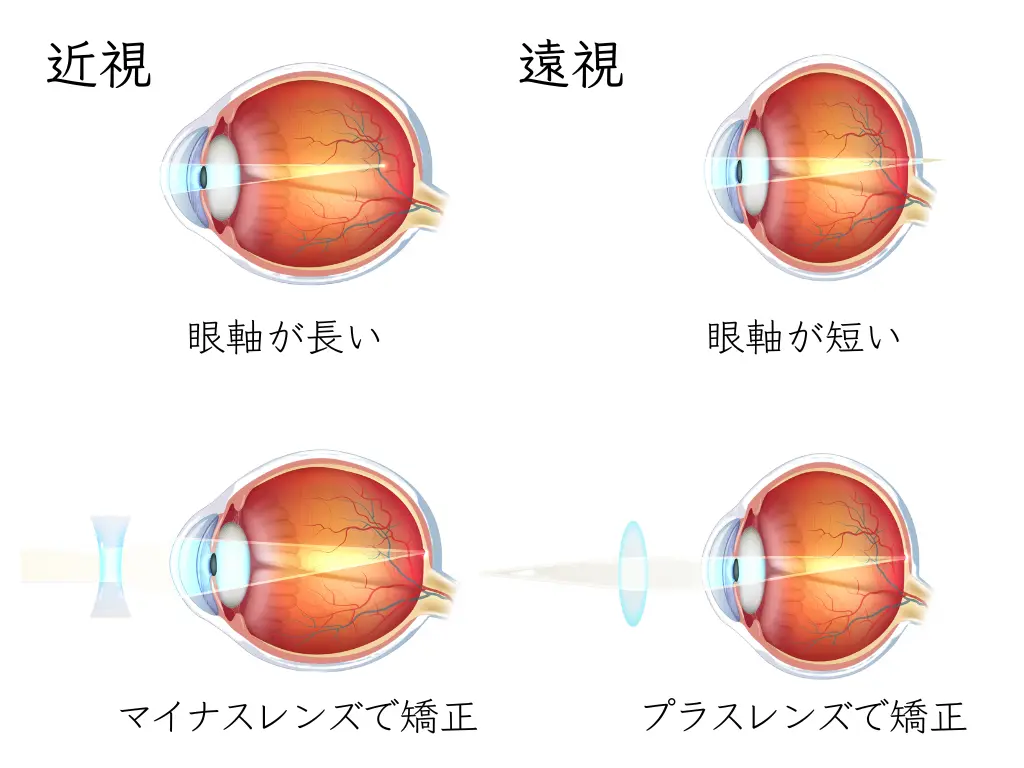
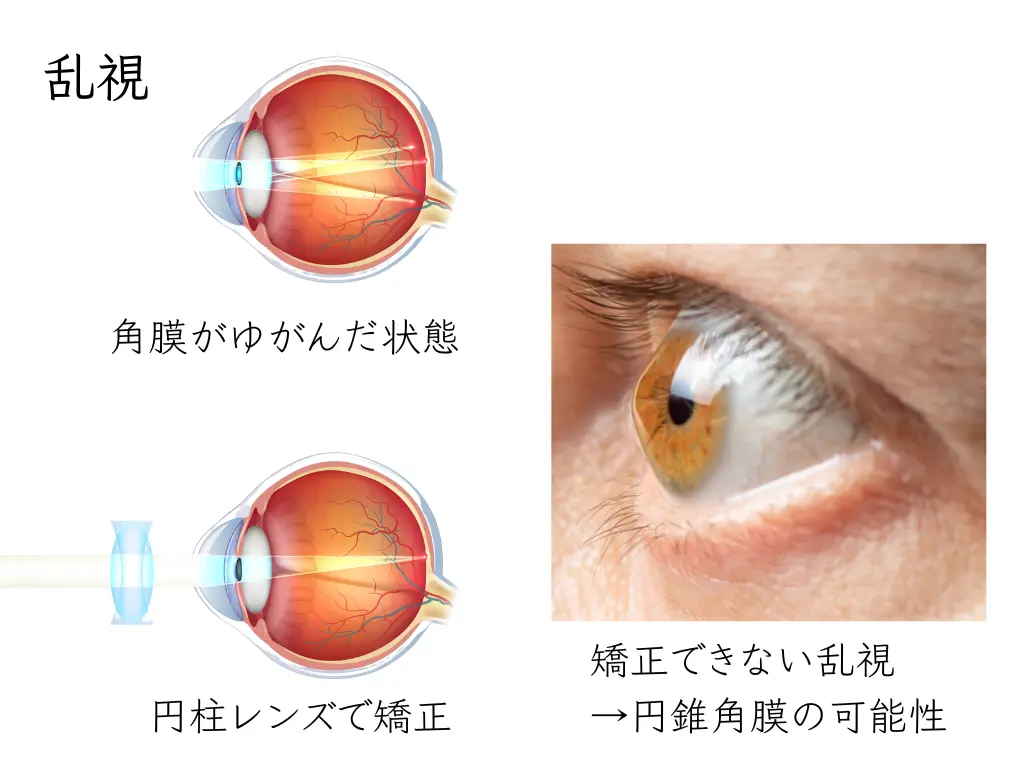

Based on the research results above, we try to prescribe “fully corrected” glasses as much as possible.
While also discussing the gap between theory and reality (such as the child’s wishes),
we check whether the glasses feel too strong when worn, and so on.certified orthoptistsperform the tests.
How often should vision be tested?
“If a child keeps wearing glasses with a weak prescription, or glasses that no longer fit, myopia progresses.”
Children
seem not to say, “It’s become hard to see with my glasses👦.”
If you ask, “Can you see with your glasses?”, they seem to answer, “I can see👧.”
In the meantime, myopia may have progressed and the glasses may no longer fit.
It is known that wearing glasses with a weak prescription makes myopia progress (that is, theaxial lengthlengthens).
- Axial lengthHow much is it lengthening?
- Are the glasses still right for the eyes?
During growth, it seems good to have vision tested about every 2 to 3 months.
If myopia has progressed, we make the glasses fully corrected as much as possible.
“Keeping the eyes fully corrected” is also important for myopia control.
Glasses only during class? What about when playing sports?
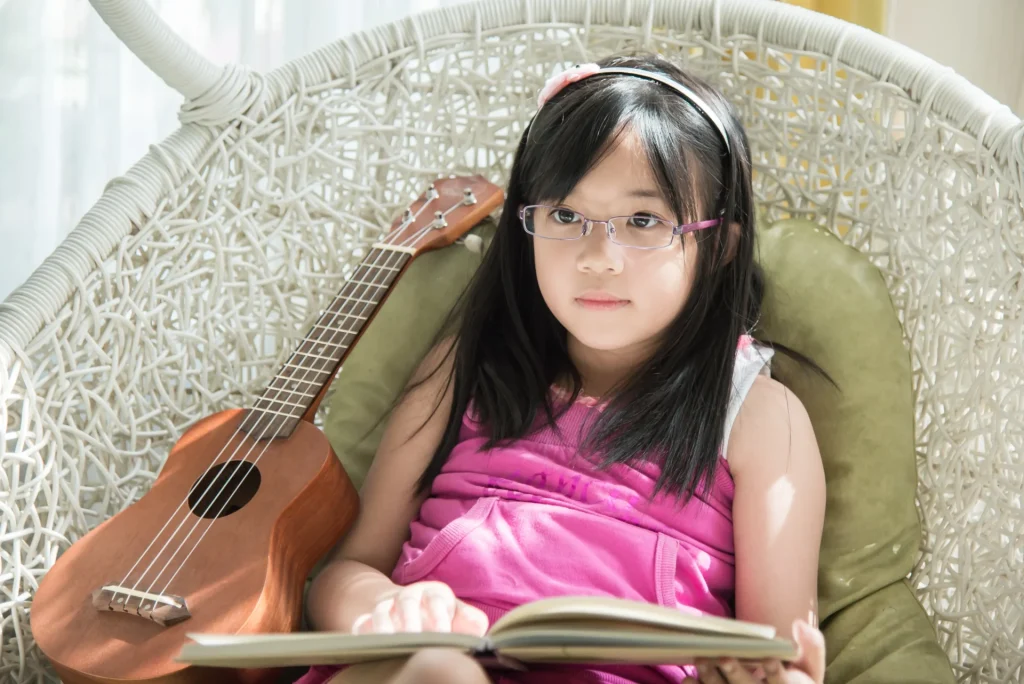
As eyesight gets worse,
from when should a child start wearing glasses…?
Is it enough to wear them only during class…?
If you buy glasses with the right prescription, the child will probably be happy and say, “I can see😀!”
It seems best for the child to decide for themselves whether to wear glasses.
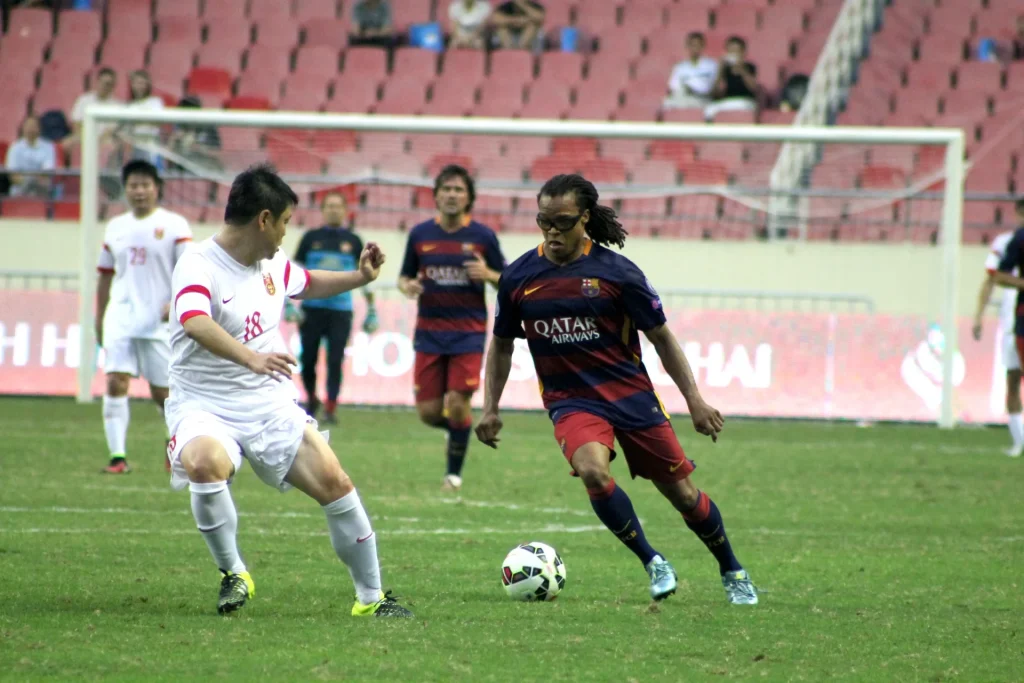
It has become clear that the safety of sports glasses is officially guaranteed.
This does not seem to justify “banning sports glasses because they are dangerous.”
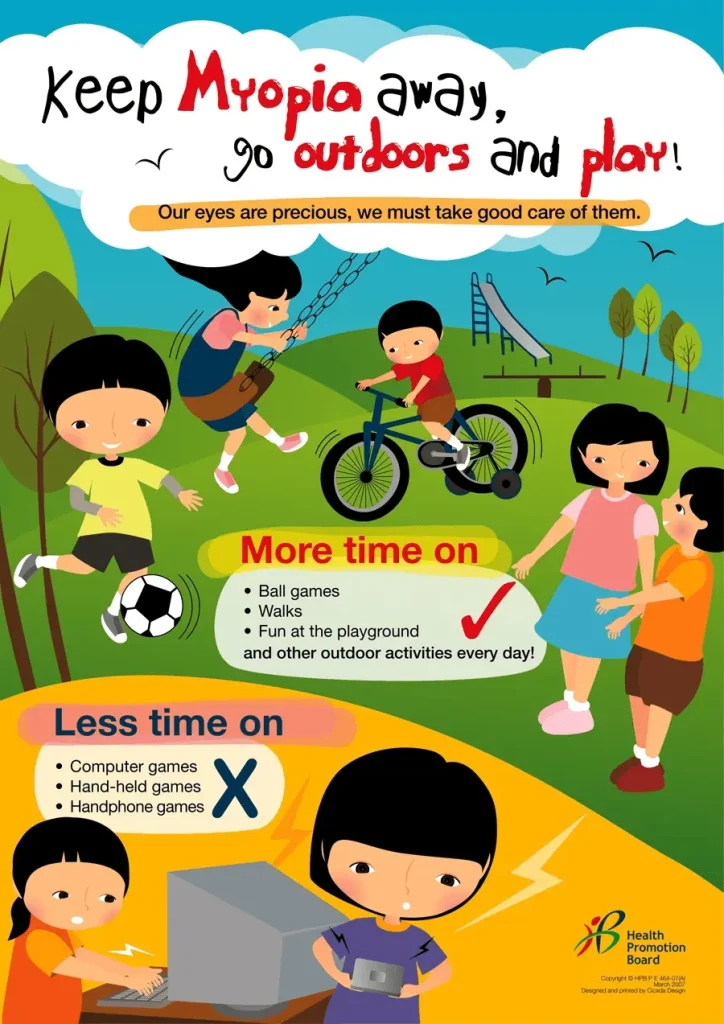
Time limits for smartphones, tablets, and games? → It helps to look into the distance now and then
“Conversations without masks😧”
“Social distancing…?”
“Are the swings disinfected…?”
→ From 2020, the times changed, and now we are in the post-COVID era.
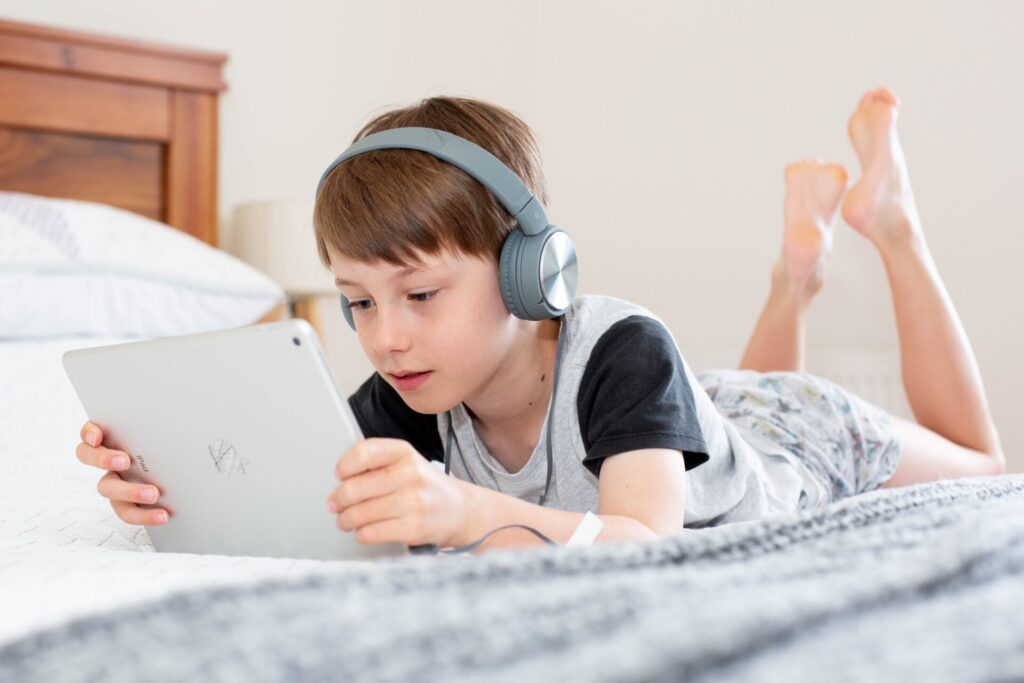
Lots of time spent on smartphones, tablets, and TV
Long study time
Why “long periods of near viewing” make the eyes worse / cause myopia to progress:
Here is a graph of the state of the “ciliary muscle,” which focuses the eye.

Continued near viewing increases tension in the ciliary muscle
→ the eye moves toward a longer axial length
→ myopia progresses (the eyes “get worse”)
I talk about the “20-20-20 rule”: looking into the distance now and then.

Let the child do as much as they like, but break up the time and rest a little:
I suggest looking into the distance from time to time.
Taking the child for a walk, or finding other enjoyable things such as sports or musical instruments, may also be good.
A growing difference in vision between the two eyes: “anisometropia”
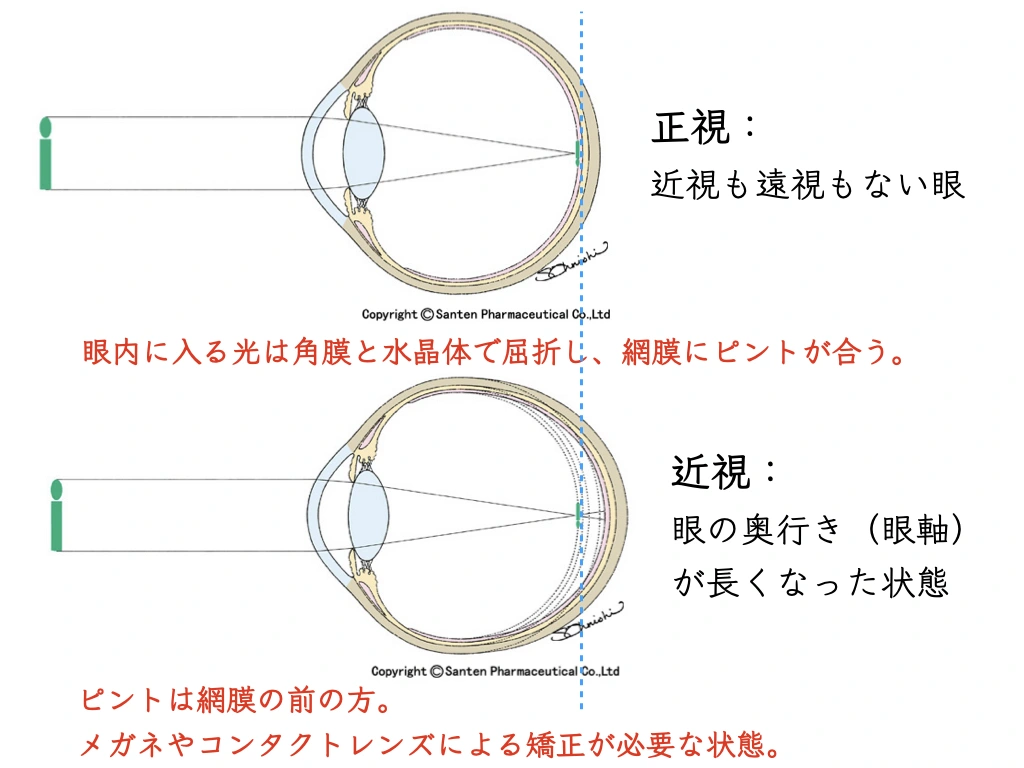
Once a difference in myopia between the eyes appears, the difference widens over the following years.
- One eye stays out of focus
→ this becomes a factor in lengthening of the axial length (= myopia progresses / the eye “gets worse” in that eye only) - It is difficult to correct only the eye that is “worse”
Reason: the other eye (not myopic / not “worse”) can see without correction - The state of being uncorrected continues, and the axial length lengthens (= myopia progresses)
As 1.–3. continue, myopia ends up progressing in one eye only.
During elementary school, when correction with glasses or contact lenses is difficult:
Orthokeratology in one eye onlymay be a good option, I think.
(Because it is self-pay, we limit ourselves to referral.)
Effects of Midrin® M (tropicamide) eye drops and vision recovery training
Midrin® M (tropicamide) has a pharmacological action that relaxes tension in the ciliary muscle.
So-called vision recovery training, such as “WAC” and “Gabor Eye,” has also been used.
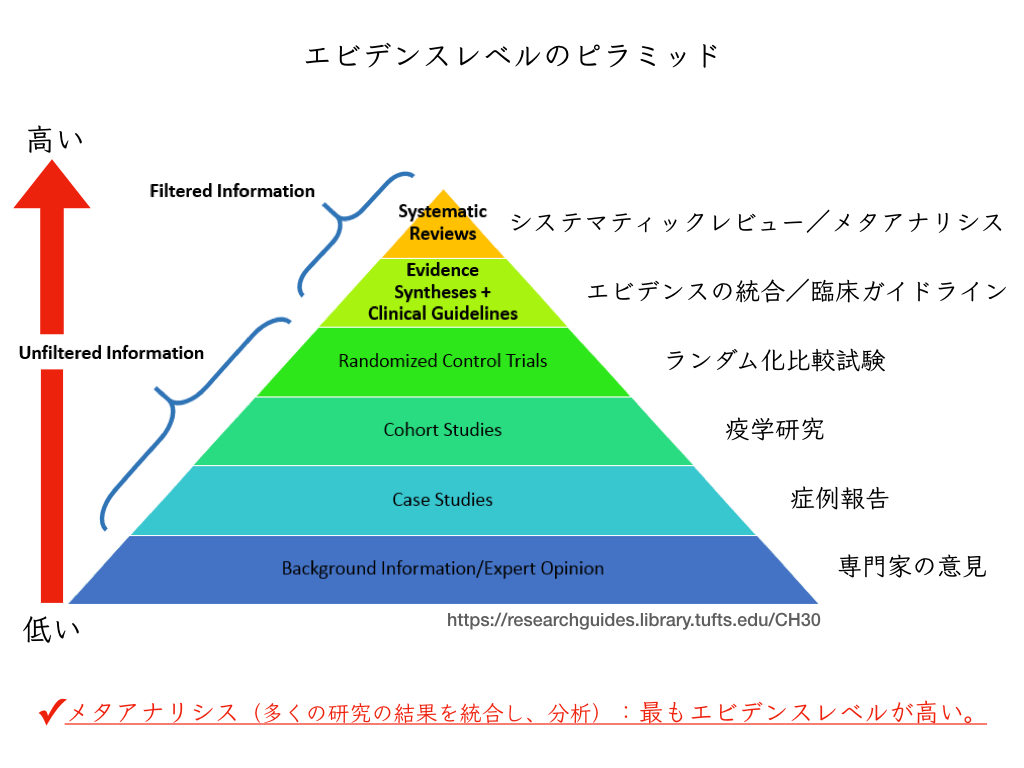
For axial myopia and myopia control, neither has scientific evidence from large randomized controlled trials or long-term follow-up studies.
For that reason, our clinic does not offer them.
Since the clinic opened, in current ophthalmology we have explainedonly what has scientific evidence.
“Looking at mountains improves eyesight” and “Looking at greenery is good for the eyes”: both are correct
Both probably mean “looking into the distance.”
A tea-field landscape🍵 (Yame, Fukuoka) ↓
Looking into the distance:
naturally relaxes the tension of the ciliary muscle.
This is consistent with the “20-20-20 rule.”
Elementary schools in mountain areas seem to have fewer children whose myopia progresses.
Blue light filtering: not necessary
We do not recommend computer glasses (blue light filtering)
Article and position of the American Academy of Ophthalmology (November 2019)
There is no evidence to recommend that children wear blue light filtering glasses,
and wearing them may actually have a negative effect on development.
Japanese Ophthalmological Society, Japan Ophthalmologists Association, Japanese Society of Myopia, Japanese Association of Strabismus and Amblyopia, Japanese Society of Pediatric Ophthalmology, and Japanese Association of Certified Orthoptists
— joint statement (April 2021)
We introduce the above.
The myopia-control effect of orthokeratology
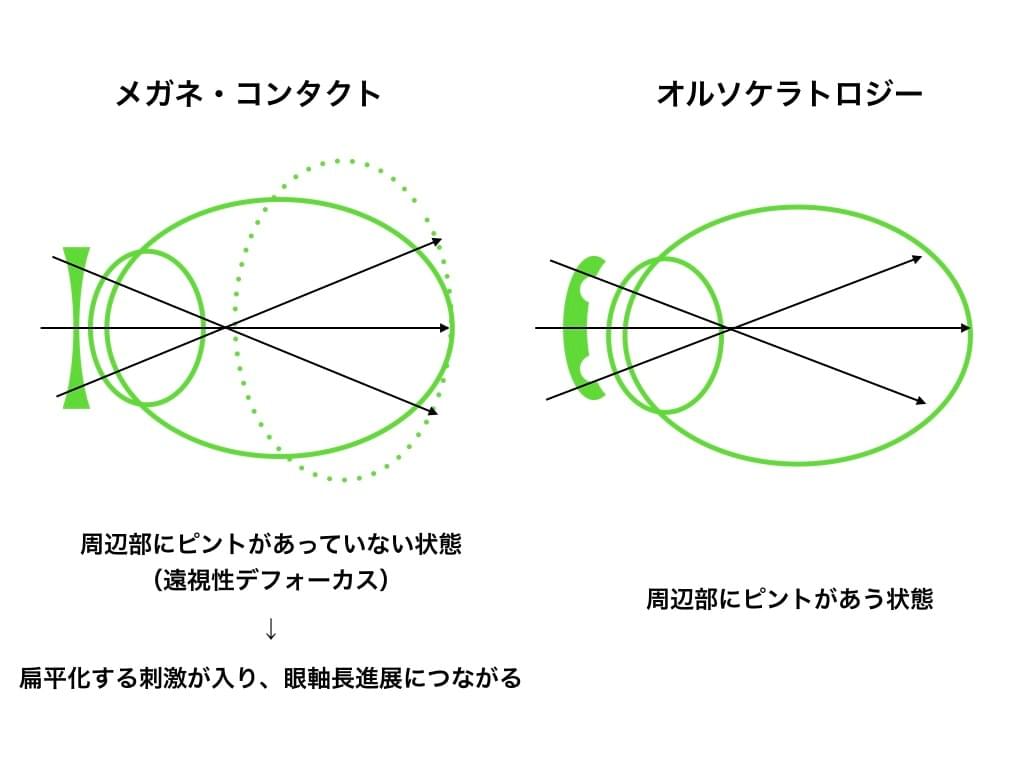
With glasses and contact lenses, the center is in focus
With orthokeratology, both the center and the surrounding area are in focus
As a result, research findings continue to suggest that orthokeratology works better for myopia control.
Orthokeratology, started in 2019.
We, too, feel its myopia-control effect.
: an “impression” based on the fact that hardly any children need a change of lens power.
Contact lenses worn at night, and their effect of suppressing future myopia progression:
For a child, whether they can see right now may matter more than the future:
We confirm how strongly the child feels “I want to see without glasses, with my naked eyes.”
To gauge the degree of myopia, measuring the “axial length” is essential.
Since we began collecting axial length data, we have been able to show the state of axial elongation in graphs.
(Slower axial elongation = a state in which myopia progression has slowed)
If myopia progresses, surgery?
When a child’s growth ends, the state of myopia becomes fixed.
The length of the eye (“axial length”) at which progression stops in adulthood cannot be changed.
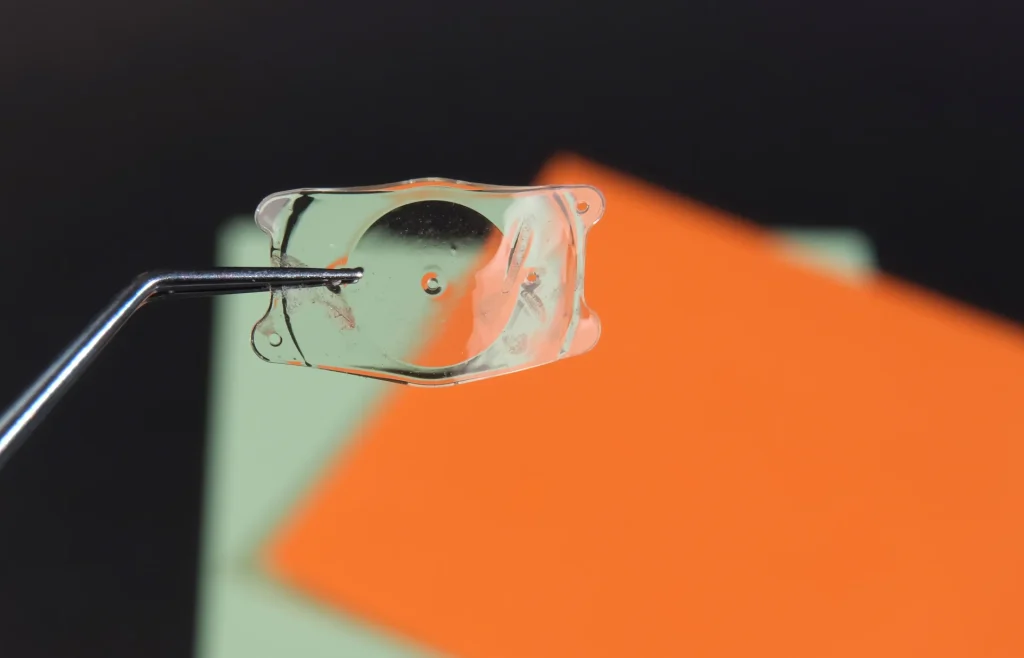
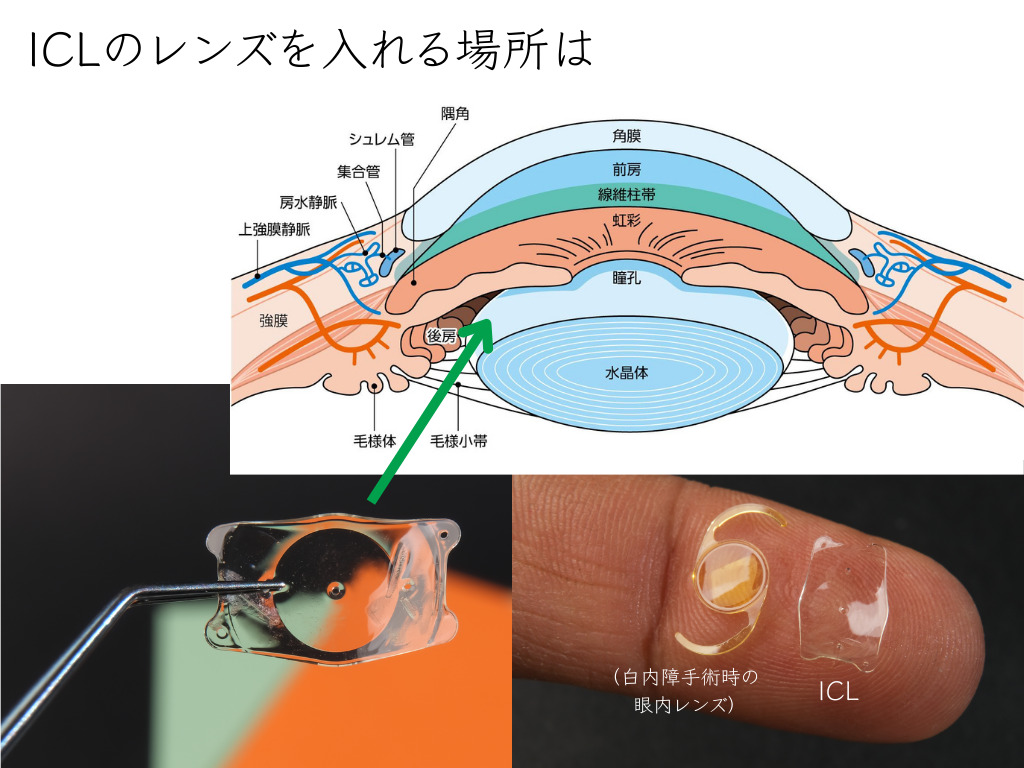
“LASIK,” which reshapes the cornea with a laser
“ICL,” which inserts an intraocular lens
: as an adult, you may have occasion to consider surgery to correct myopia.
Careful judgment is required.

Differences from immunology, and safety
During the period when I was absorbed in research on immunologyand molecular biology (while at the Medical Institute of Bioregulation, Kyushu University), I thought that results would come out in the order of cells → animals → humans.
In the field of visual optics, many results from humans (clinical studies) come first.
Why myopia control works:
The leading theory is that low-concentration atropine eye drops increase the thickness of the “choroid,” the layer behind the retina, steering the eye toward not lengthening in axial length.
When I read, word for word, why each method or theory is effective for myopia control, I arrive at statements such as
「precise mechanism is unknown(the detailed molecular mechanism has not been clarified)”
and so on.
Much is still unknown, but research on myopia in children has accelerated rapidly.
Since April 21, 2025, eye drops with established efficacy and safety have become available.
Frequently Asked Questions (FAQ)
- Why does myopia progress in children? Does progressing myopia cause any problems?
-
The main cause of progressing myopia is that the “axial length” — the depth of the eye — lengthens too much as the child grows. It is not just that vision gets worse; the risk of serious eye diseases such as glaucoma and retinal detachment rises in the future. To protect a child’s eye health throughout life, it is very important to slow the progression of myopia as early as possible.
- What methods are there to slow myopia progression in children?
-
There are several effective methods.
- Low-concentration atropine eye drops: we use the “Rejusea® Mini Ophthalmic Solution 0.025%” approved in Japan. Used once a day before bed, it has been reported to slow myopia progression by about 30%. Side effects are few, and it is considered highly safe.
- Orthokeratology: a treatment in which special contact lenses are worn during sleep to temporarily reshape the cornea, aiming to improve daytime vision and slow myopia progression.
- Myopia-control contact lenses:MiSight®, a treatment already established overseas, has now become available in Japan as well. It starts in February 2026.
- Spend more time playing outdoors: outdoor activity of 2 hours or more a day is said to help slow myopia progression.
From April 2025, eye drops to slow myopia progression in children were not approved for insurance coverage (Ministry of Health, Labour and Welfare).
- Please tell me a little more about “low-concentration atropine eye drops.” Are they safe?
-
For low-concentration atropine eye drops, a concentration of 0.025% is particularly recommended, because it offers an excellent balance of myopia-control effect and safety. The “rebound” that parents worry about (a rapid progression of myopia after stopping treatment) is a phenomenon seen with high-concentration atropine, and research has shown that there is almost no such risk at low concentrations (0.01% and 0.025%). It is a safe drug approved in Japan, so please be reassured.
- How is treatment with low-concentration atropine eye drops carried out?
-
It proceeds in a planned way in consultation with an ophthalmologist. The general flow is as follows.
- First consultation and eligibility tests: we examine the child’s eyes and the degree of myopia progression in detail and judge whether treatment is appropriate.
- Starting treatment and instruction on instilling the drops: after you agree to the treatment plan, the eye drops are prescribed. We teach the correct way to instill them at home (once a day, before bed).
- Regular tests and follow-up: after treatment starts, you visit regularly so that we can confirm that myopia progression is being slowed and that there are no side effects. Tests every 3 months are usually recommended, and changes in axial length can be checked in a graph.
- Deciding whether to continue or stop treatment: watching the child’s growth and the progress of myopia, we decide with the doctor whether to continue or stop treatment. Continuing for 2 years or more is usually recommended.
- Is there anything that can be done in daily life to slow myopia progression?
-
Yes, there are several things.
- Limit time on smartphones, tablets, and games: set limits on usage time so that near viewing does not go on too long.
- Look into the distance now and then: when working at close range, encourage the child to look at distant scenery during breaks.
- Spend more time playing outdoors: make sure the child has plenty of time to be active outside during the day.
- Use appropriate glasses: to avoid myopia progressing, glasses with a weak prescription should be avoided. Discuss the right prescription with an ophthalmologist when choosing glasses.
- Regular vision tests: it is important to check your child’s vision regularly.
When children are small, “just playing outside all the time” is fine, and “starting to study when they feel like it eventually” seems good.
There may be many limits, such as few places to play in the city or heat that keeps children indoors.
How about saying, “Let’s go for a walk”? - Is it true that “looking at mountains improves eyesight” and “looking at greenery is good for the eyes”?
-
Yes, it is true. Looking at distant scenery and spending time in nature is said to relax the eye’saccommodationand have a positive effect on slowing myopia progression.
- Is blue light filtering effective for preventing myopia?
-
At present, there is noscientific evidence that blue light filtering is necessaryfor myopia control.。