![Takeru Eye Clinic | Takatori Shopping Street, Sawara-ku, Fukuoka City [Nishijin Station / Fujisaki Station]](https://takeru-eye.com/wp-content/uploads/2022/10/takeru_logo_for-WP-header.png)

(未成年のかたは、定期検査も含め 必ず保護者と一緒の来院をお願いしています)
オルソケラトロジーは、必ず定期検査を受けていただくことを前提とした治療プログラムの提供となっています。
We began orthokeratology treatment in the spring of 2019.
Having prescribed orthokeratology many times, we ourselves continue to learn a great deal.
The tests are carried out bycertified orthoptists.
Orthokeratology treatment requires a considerable knowledge of ocular optics.
Even more important is proceeding while taking each patient’s background into account.
There is no age limit for orthokeratology, but most of the time it is prescribed to children.
Here I describe what we are careful about in orthokeratology for children.
(Web seminar for healthcare professionals)
Orthokeratology for Children: What We Are Careful About

Orthokeratology: We Value Explanation and Understanding
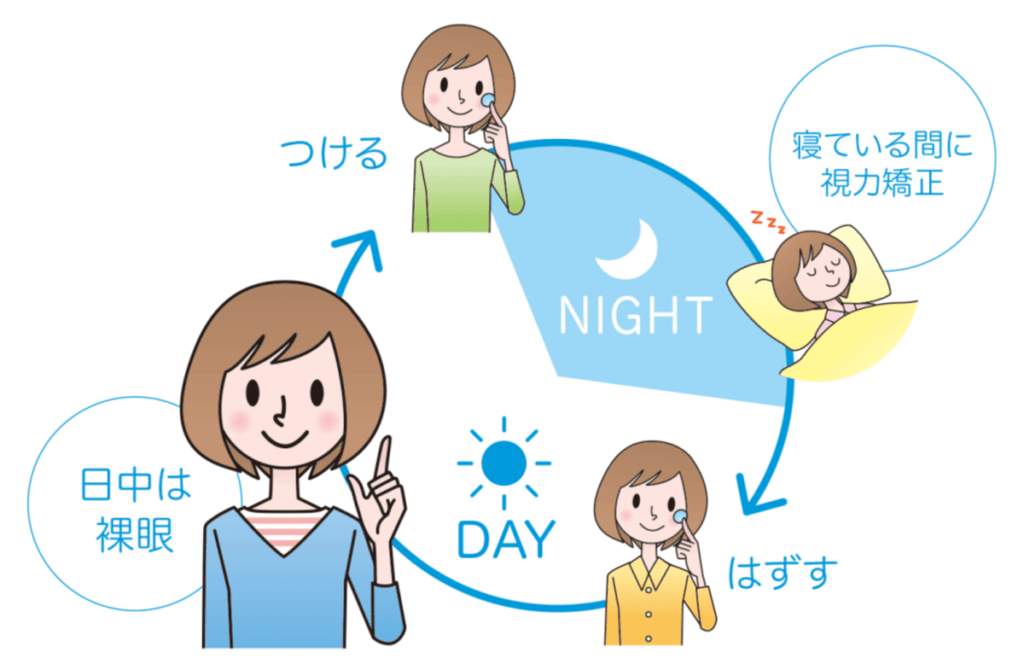
If you are interested in orthokeratology, we ask you to first have an insurance-covered examination.
(You do not need to make an appointment.)
Common knowledge in ophthalmology has changed over the past few years.
This is because research on myopia has advanced around the world.
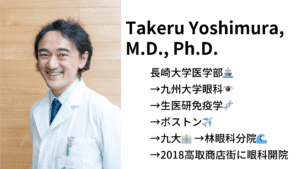
While I was in the Kyushu University department, I thought only about immunology,
but about “ocular optics” and “myopia in children,”
I studied knowledge from around the world even before opening the clinic.
(This means I searched the literature in English.)
The conventional wisdom has changed, and it became a field I find very interesting.
What I tell patients during the exam is summarized below.
I explain general information about myopia and, if you wish, an overview of orthokeratology.
Orthokeratology for Children: From What Age?
Many children start at age 8.
A few children have started at age 6.
It seems to go well when the child strongly wants to, for example, “play sports without glasses.”
We follow them carefully.
Corneal Topography: How to Read the Images
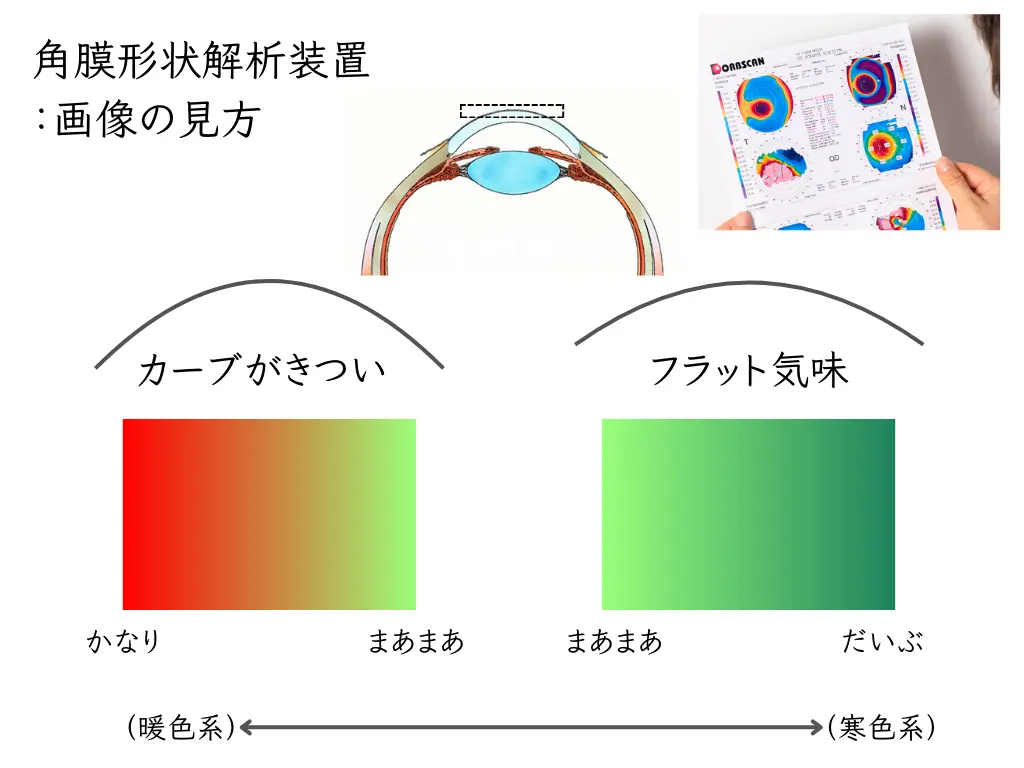
Orthokeratology is a treatment that changes the thickness of the corneal epithelium only.
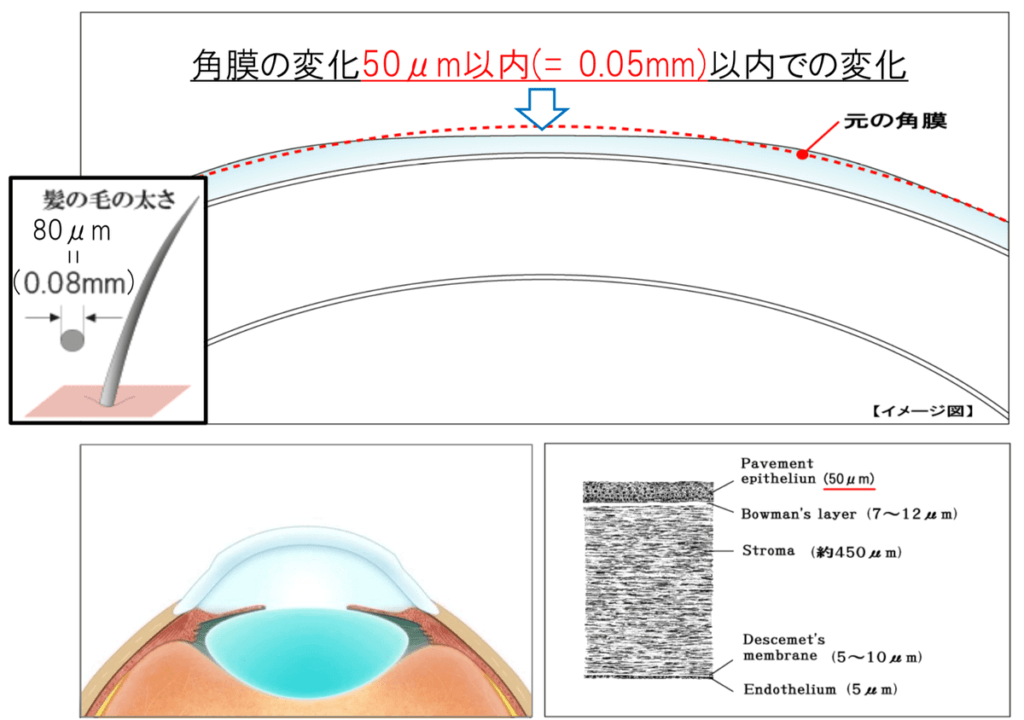
We evaluate the shape of the corneal epithelium with a corneal topographer (corneal topography).
We use the NIDEK OPD-Scan III.
The shape of the cornea is shown as a gradient from red → yellow → yellow-green → green → dark green.
Bright colors → steeper curve
Dark colors → flatter curve
・Color map before treatment
・Changes in the corneal epithelium after treatment: explained at every visit
Understanding the eyes is very difficult,
so please ask us anything you would like to know.
The explanations on this website are also used by patients to help them understand.
The Orthokeratology Lens: Why We Chose Breath-O Correct® by Seed
In a clinic run by a single doctor, I placed the highest priority on safety.
A domestically made, hard-to-break material
In addition,
the fact that corneal specialist colleagues across Japan whom I know have chosen this lens was a major reason.
I consider it an advantage that there is no need to worry about the lens breaking while it is on the eye.
Orthokeratology for Children: Whether to Go On to the Fitting Exam
I think putting in a contact lens is very worrying and scary for a child.
When the wish to “see without glasses” becomes stronger, the child becomes able to put in a contact lens.
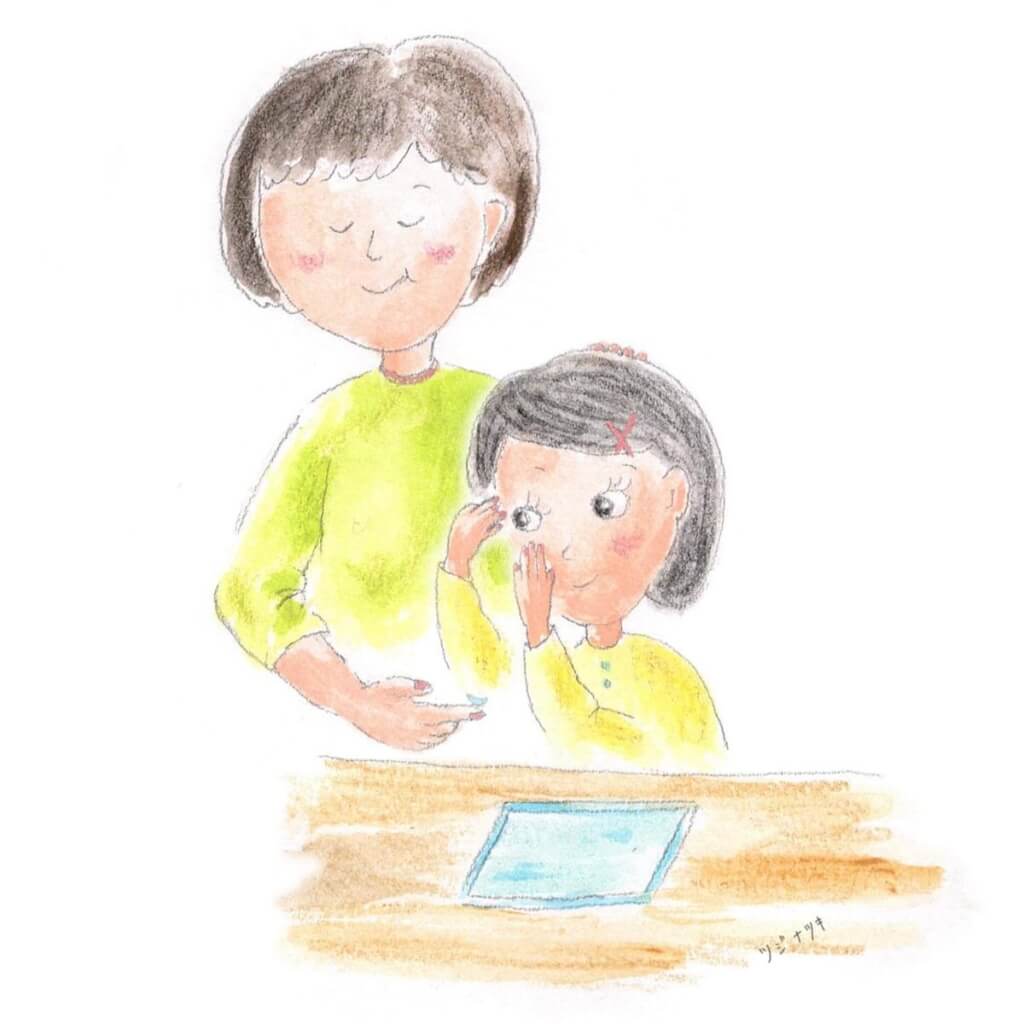
「We make sure at the visit that the child’s wish to do orthokeratology is strong enough:“I want to do orthokeratology.”
「When the parents’ wish is strong:“We want our child to do orthokeratology,” it often does not go well.
Adult side: for the child’s future, out of concern for the child, we want them to do it (myopia control effect).
Child side: I’ll think about the future later.What matters is whether I can see tomorrow.
“We want the child to do it” often does not work out that way,
so it seems best to focus on whether the child strongly wants to see better tomorrow.
One thing we try is corneal epithelial staining with a fluorescein strip.
It is a routine procedure in ophthalmology for dry eye, corneal erosion, and so on.
It does not hurt, but a thin strip of paper comes close to the eye, so some children are frightened.
If the corneal staining is difficult, I tell them it is better not to go on to the orthokeratology fitting exam.
If a child dislikes putting in contact lenses, they simply cannot push through.
The child does not want to wear glasses (or does not want to keep wearing them), so wants to do orthokeratology

If the glasses prescription has been on the weak side, the child may have gotten used to not seeing very well.
I think it is important first to make glasses that fit exactly,
and to have the experience of “Wow, I can see! 😀”
Will your eyes get worse if you wear glasses with exactly the right power?
→ That seems to have been the old conventional wisdom.
We aim for full correction.
But are the glasses uncomfortable to wear?
We choose the glasses power that the child feels is best.
Please first have the exam to make accurate glasses, and buy them for your child.
Is “buying glasses for the child” something only adults can do?
I think it is good to leave the decision whether to wear glasses to the child.
When they think “Wow, I can see! 😀,” they want to wear glasses.
“There is a way to see without glasses” → “I want to do that!”
I hope you will talk slowly with your child about whether they really want to do orthokeratology.
Only those who can come on the designated days and for regular checkups are eligible for treatment
(minors must always come with a parent or guardian).
We are extremely careful about the occurrence of corneal infection.
We specify and use only a cleaning solution that contains povidone-iodine.
It is Clear Dew® by Ophtecs (for orthokeratology only).
There is a study that used a new method to objectively evaluate the amount of dirt and deposits on worn orthokeratology lenses and examined how well cleaning removes them.
It showed that dirt and deposits accumulate on the lens and that dedicated cleaning can reduce them.
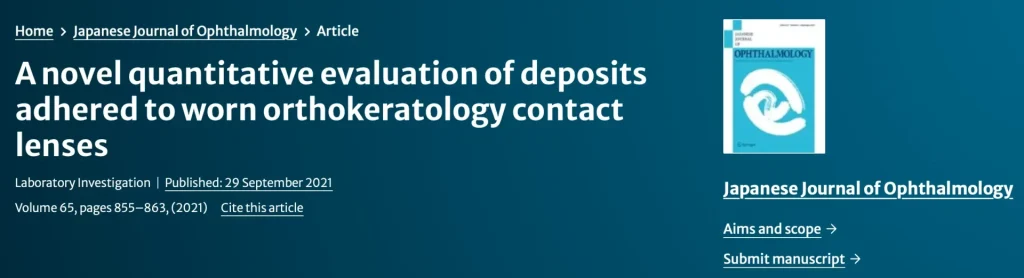
Hiraoka, T., Yoshimitsu, M., Santodomingo-Rubido, J., Kondo, H., Oshika, T., 2021. A novel quantitative evaluation of deposits adhered to worn orthokeratology contact lenses. Jpn J Ophthalmol 65, 855–863. https://doi.org/10.1007/s10384-021-00873-1
As a follow-up,
a study found that when the components of orthokeratology dirt and deposits were reproduced in the laboratory, microorganisms that cause corneal infection attached more easily.
Given the above, I think the condition of the orthokeratology lens is very important.
At regular checkups, we look for corneal injuries and inflammation of the corneal epithelium.
At the same time, we check the orthokeratology lens for dirt under the microscope.
If necessary, we talk about using a stronger cleaning agent.